print, engraving
# print
#
figuration
#
line
#
history-painting
#
northern-renaissance
#
engraving
Dimensions: height 150 mm, width 89 mm
Copyright: Rijks Museum: Open Domain
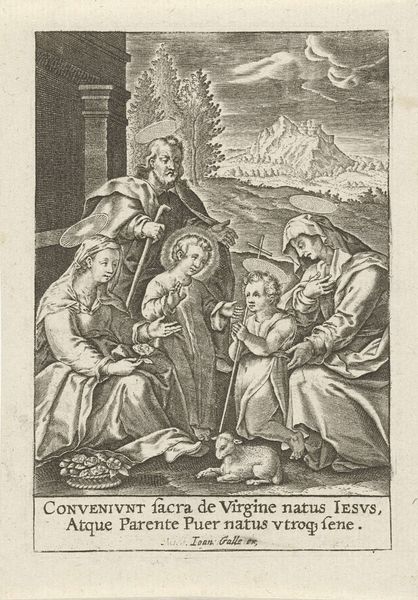
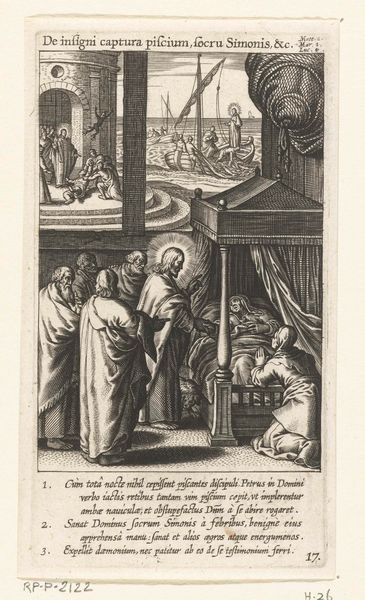
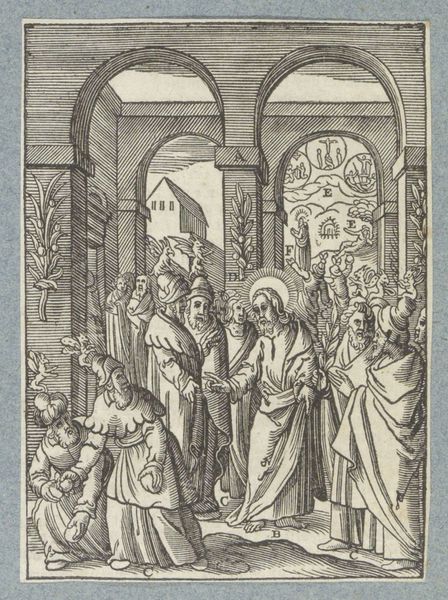
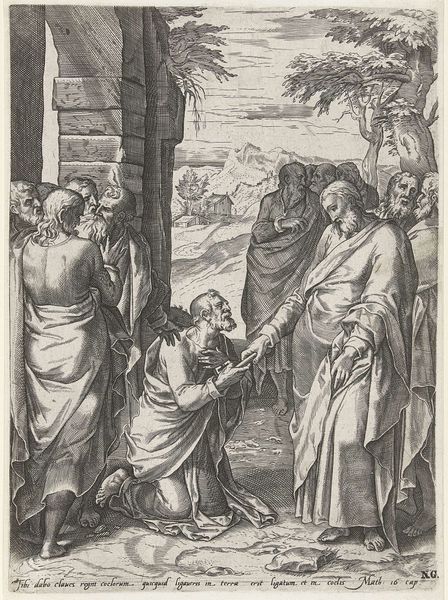
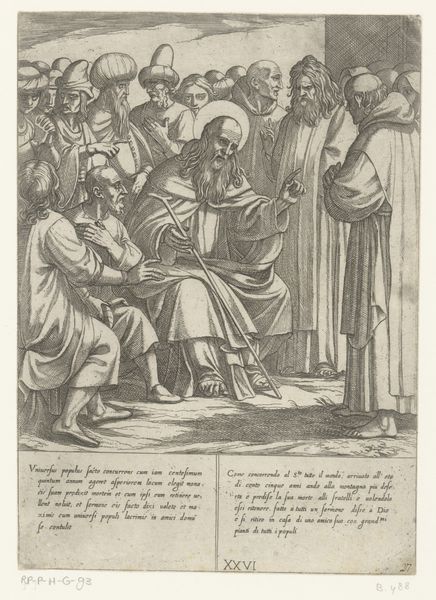
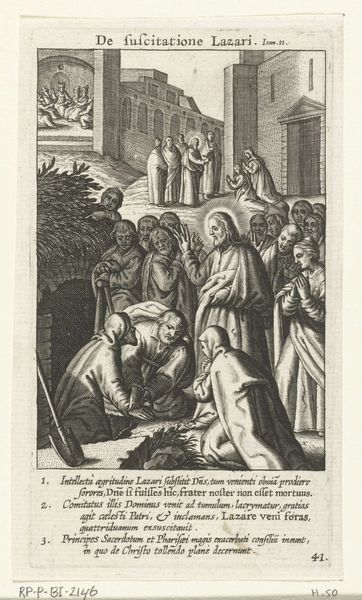
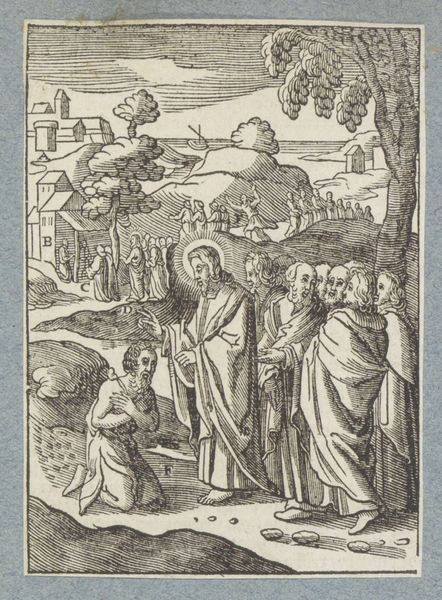
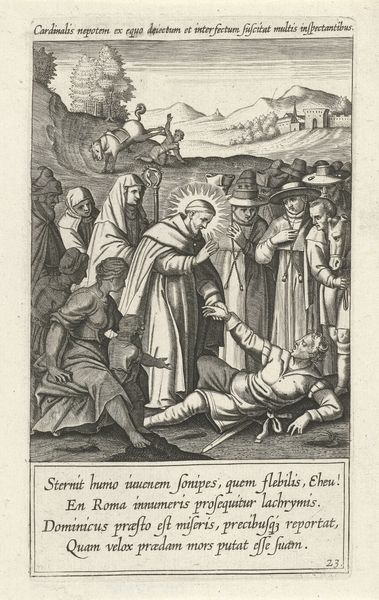
Editor: This engraving is called "Mirakel van het doopsel in de stal," created by Theodoor Galle around 1610. It depicts a birthing scene in a stable, quite literally surrounded by animals! The line work is incredibly detailed. What historical context am I missing that would allow me to better interpret this work? Curator: This print participates in the rich visual culture surrounding female saints and their ability to provide divine intercession. Consider how the composition – the miraculous birth, baptism in a stable, saints officiating – is designed to both teach and reinforce certain socio-political structures that shaped perceptions of religious power. How does this image shape our understanding of a saint’s public role within the early 17th century? Editor: So, you're suggesting that it's not just a literal depiction, but a commentary on the power and accessibility of female saints within society? I'm looking at the lower text panel; what insights does it offer about that period’s religious sensitivities and expectations? Curator: The Latin text further explains the print’s imagery by situating it within the narrative of Saint Lucy's miraculous intervention. Consider the function of such prints during the Counter-Reformation as well. Are they merely devotional, or might they serve broader institutional purposes, reinforcing the Church's authority in a changing world? Editor: I see. So, the image may simultaneously address both the spiritual and political spheres of the time, serving as a medium of religious empowerment and societal influence. Curator: Precisely. And think about the public accessibility of printed images versus larger-scale paintings during this time. Editor: It's incredible how a simple print can reveal so much about the culture and power dynamics of its time. Thanks for shedding light on that.
Comments
No comments
Be the first to comment and join the conversation on the ultimate creative platform.
 Collect
 React
React Comment
More like this