mixed-media, painting
portrait
mixed-media
narrative-art
painting
graffiti art
folk-art
naive art
painting art
mixed media
watercolor
Copyright: Robert Qualters,Fair Use
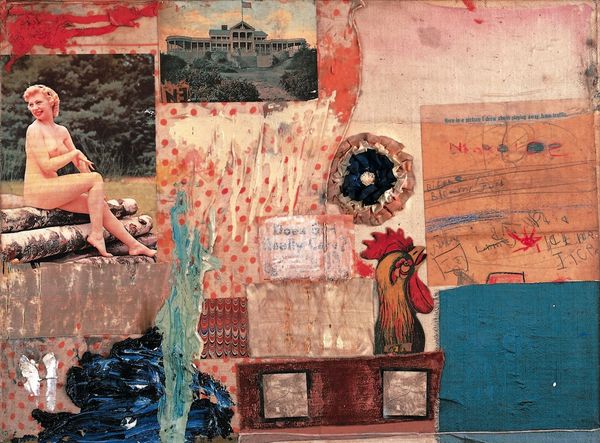
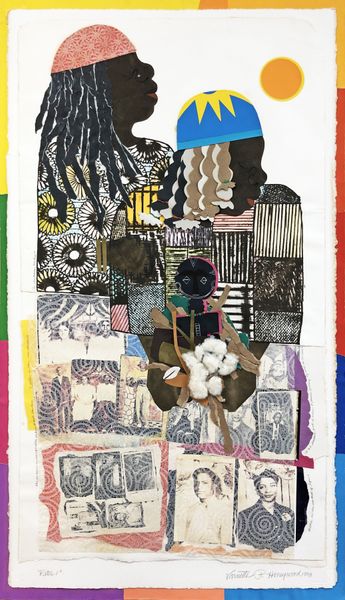
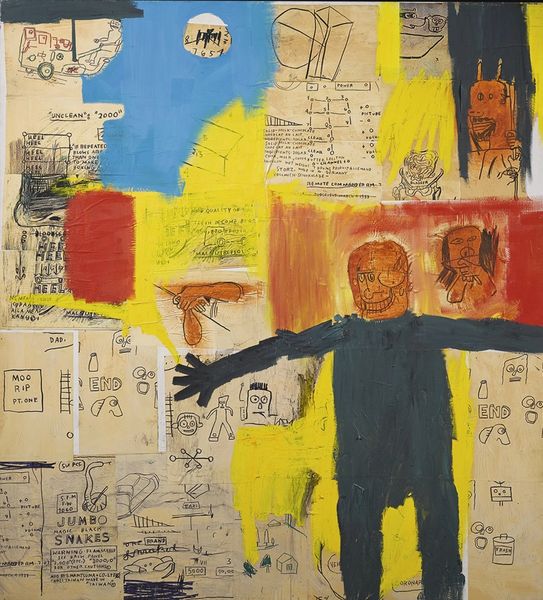
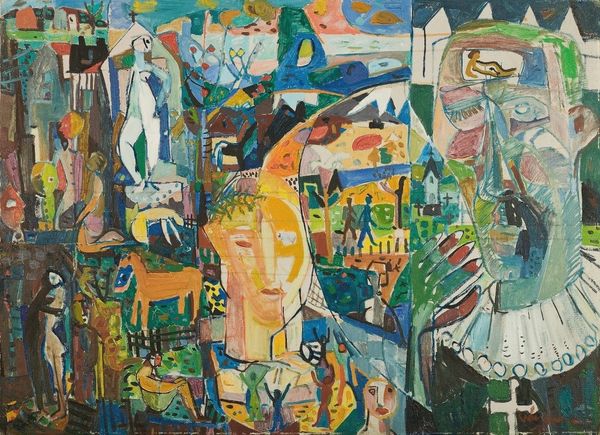
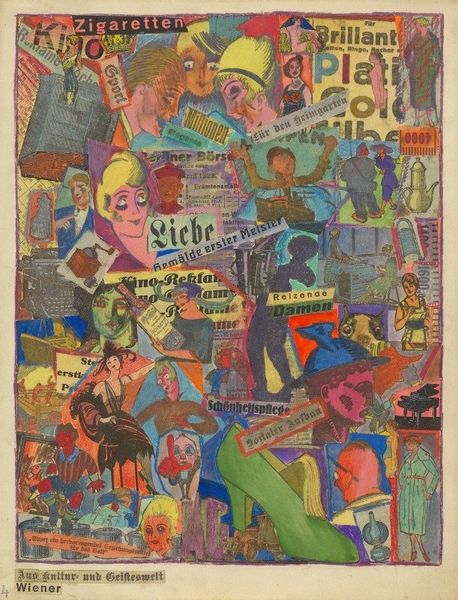
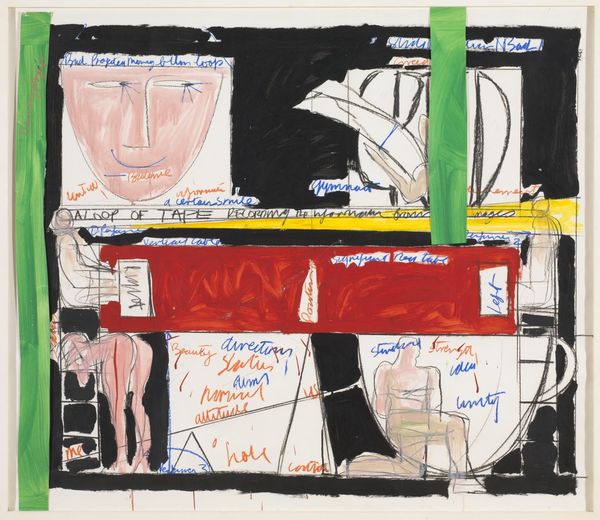
Editor: So this is *Mary Shaw*, a mixed-media piece by Robert Qualters, created in 1980. It’s like a collage of different scenes and portraits of the same woman. The mood feels very intimate and personal, like glimpses into her life. What do you see in this piece, that perhaps I’m missing? Curator: What I find most compelling is how Qualters situates Mary Shaw within overlapping, often contradictory narratives. He's not just painting a portrait; he's constructing a dialogue about aging, memory, and female representation. The "big busty bisque doll" inscription clashes starkly with the lived experience etched on her face. Does this dissonance suggest commentary on the objectification of women across different eras? Editor: That's a good point. I hadn't considered the tension between the text and the image. The handwritten notes add a stream-of-consciousness element too. Curator: Exactly! The writing style alongside naive folk-art aesthetic creates this raw, unfiltered view of Mary Shaw and what it might be like navigating identity through a lifespan marked by change. But who gets to construct her story? Who holds power in the narrative? Even his inclusion of the mask evokes questions around performativity, perhaps even hiding. What do you make of the inclusion of the landscape image at the top of the composition? Editor: It might reference her connection to her home, to a particular place and time. So, Qualters uses the different texts and styles to give voice to Mary Shaw, who maybe didn't have the chance to voice it on her own, in order to reclaim her history? Curator: Precisely! This layered approach underscores art's potential to rewrite, remember, and ultimately, to empower marginalized voices within history. Thank you for helping me unpack that! Editor: Absolutely, seeing it as a process of reclaiming power is incredibly helpful. I feel like I’m leaving with more questions than answers!
Comments
No comments
Be the first to comment and join the conversation on the ultimate creative platform.
 React
React Comment