About this artwork
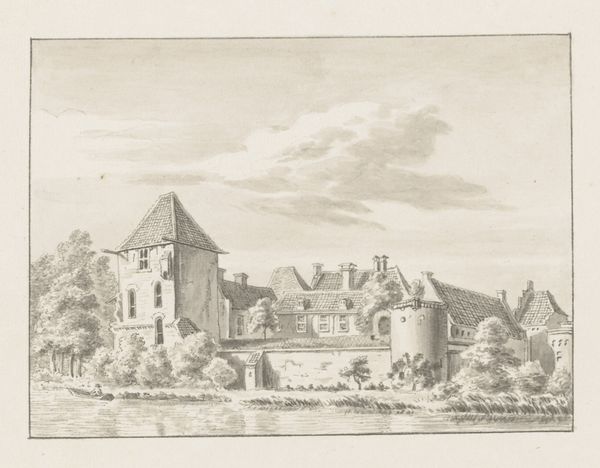
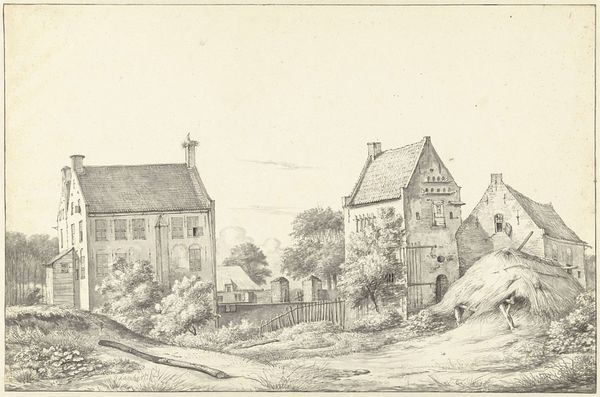
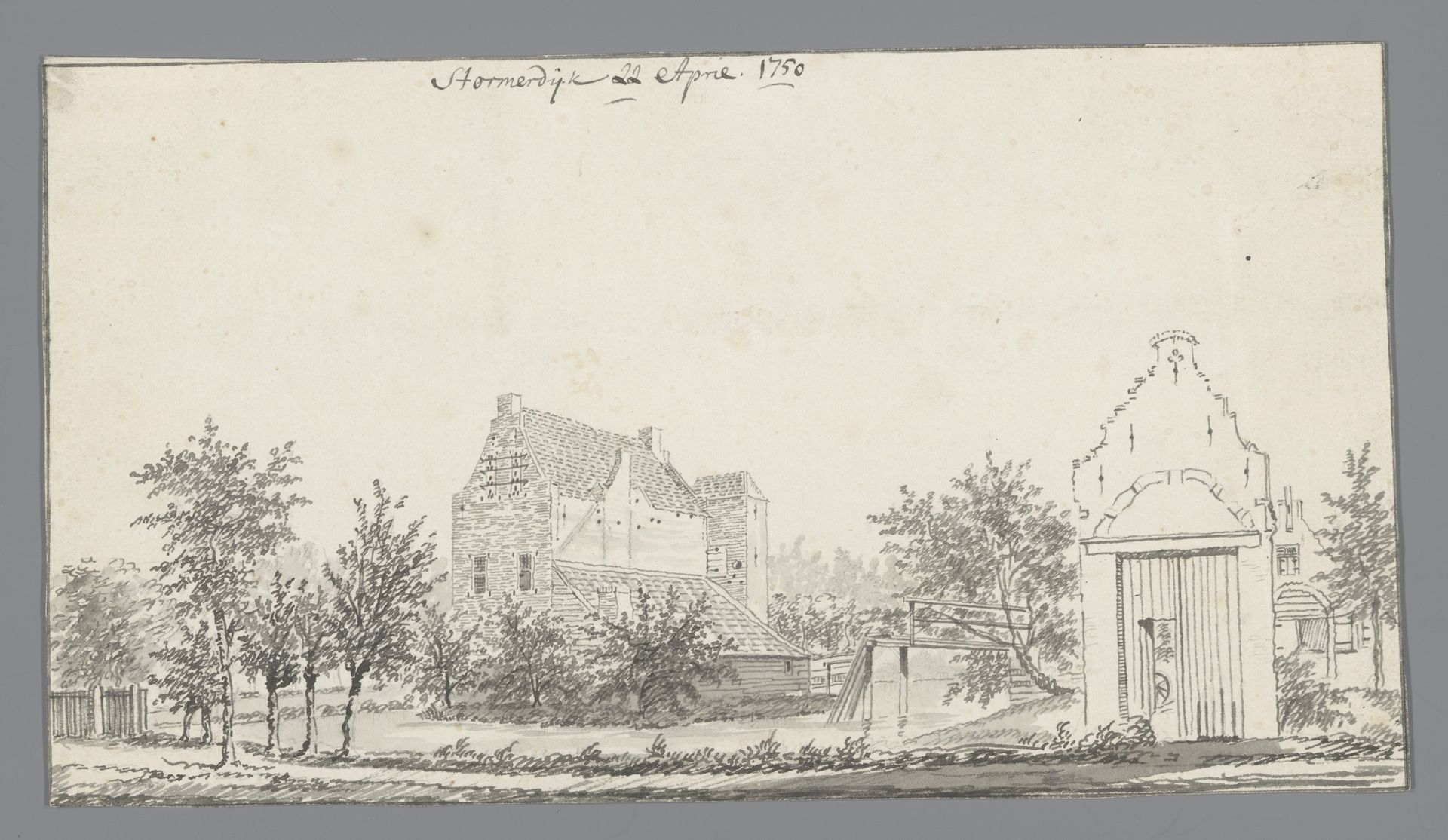
Jan de Beijer made this drawing of Stormerdijk Castle near Nieuwegein with pen in 1750, a time when the Dutch Republic was a major economic power, yet increasingly aware of its own decline. De Beijer specialized in topographical drawings of castles, cities, and villages. These detailed depictions played a crucial role in shaping Dutch identity and collective memory. Such images catered to the pride of the Dutch burghers, who defined themselves by their local and regional ties. This drawing participates in the cultural practice of mapping and documenting the Dutch landscape. It is both an artistic representation and a form of historical record. The emphasis on accuracy and detail reflects the values of the Enlightenment, where empirical observation and documentation were highly valued. To understand the role of the artwork, we might look at period travel journals, local histories, and estate records. In doing so, we can appreciate how this image offers insight into Dutch society and its relationship to the land.
Gezicht op kasteel Stormerdijk bij Nieuwegein
1750

Jan de Beijer
1703 - 1780Location
RijksmuseumArtwork details
- Medium
- drawing, pen
- Dimensions
- height 127 mm, width 226 mm
- Location
- Rijksmuseum
- Copyright
- Rijks Museum: Open Domain
Tags
Comments
Share your thoughts
About this artwork
Jan de Beijer made this drawing of Stormerdijk Castle near Nieuwegein with pen in 1750, a time when the Dutch Republic was a major economic power, yet increasingly aware of its own decline. De Beijer specialized in topographical drawings of castles, cities, and villages. These detailed depictions played a crucial role in shaping Dutch identity and collective memory. Such images catered to the pride of the Dutch burghers, who defined themselves by their local and regional ties. This drawing participates in the cultural practice of mapping and documenting the Dutch landscape. It is both an artistic representation and a form of historical record. The emphasis on accuracy and detail reflects the values of the Enlightenment, where empirical observation and documentation were highly valued. To understand the role of the artwork, we might look at period travel journals, local histories, and estate records. In doing so, we can appreciate how this image offers insight into Dutch society and its relationship to the land.
Comments
Share your thoughts