1743
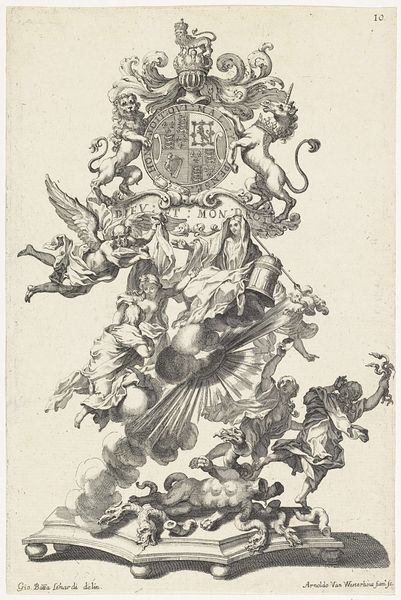
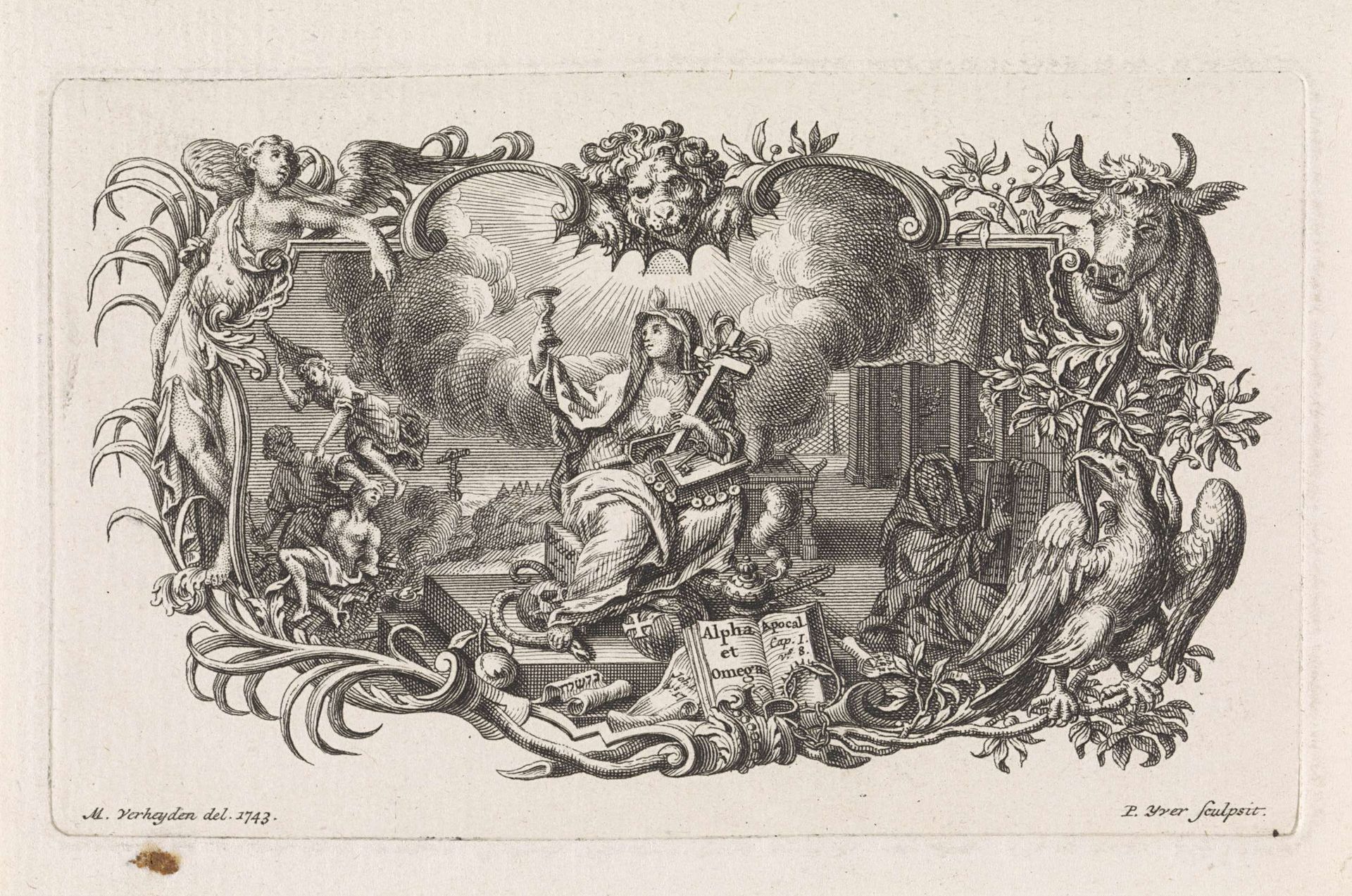
Allegorie op het christelijk geloof

Pieter Yver
1712 - 1787Location
RijksmuseumListen to curator's interpretation
Curatorial notes
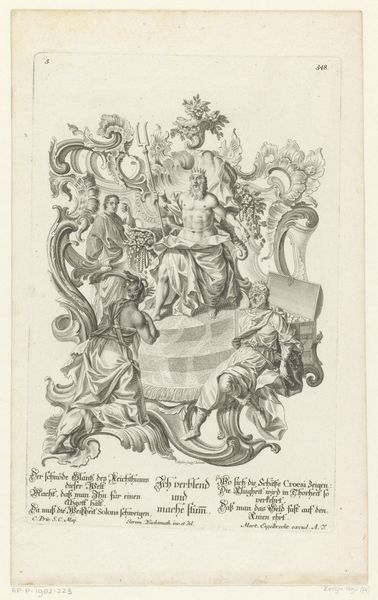
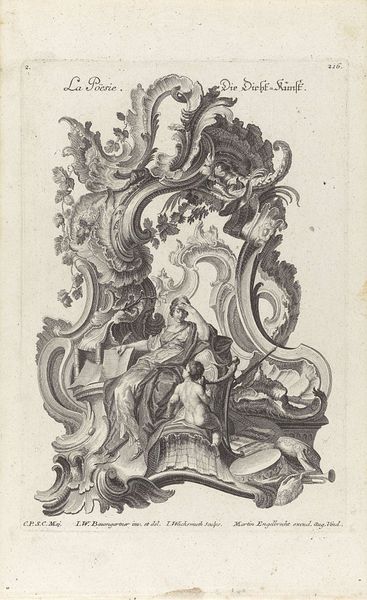
Pieter Yver made this print, "Allegory on the Christian Faith," sometime in the 18th century. It's an engraving, meaning the design was incised into a metal plate, likely copper, using a tool called a burin. Ink was then applied to the plate, and the excess wiped away, leaving ink only in the etched lines. Finally, the image was transferred to paper under high pressure. The crispness of the lines and the subtle tonal variations are a testament to Yver's skill. But beyond technical expertise, consider the cultural significance of printmaking during this period. It was a crucial means of disseminating ideas, religious beliefs included, to a wider audience. Prints were relatively inexpensive to produce, making them accessible to a broader segment of society than original paintings. So, while this may seem like a small, detailed image, it’s connected to larger issues of labor, access to information, and the spread of religious doctrine in 18th-century Europe. It reminds us that even seemingly simple objects can carry complex cultural weight.