About this artwork
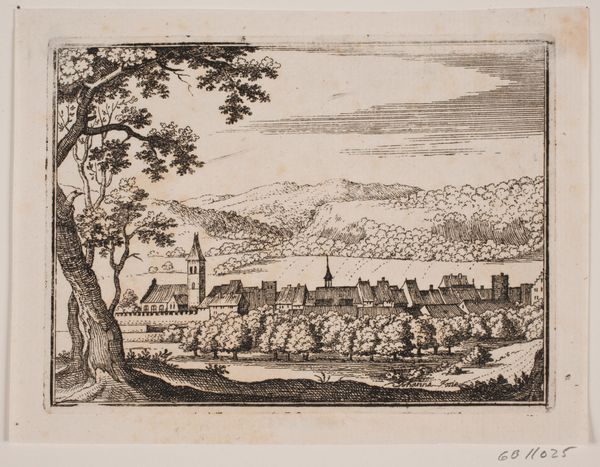
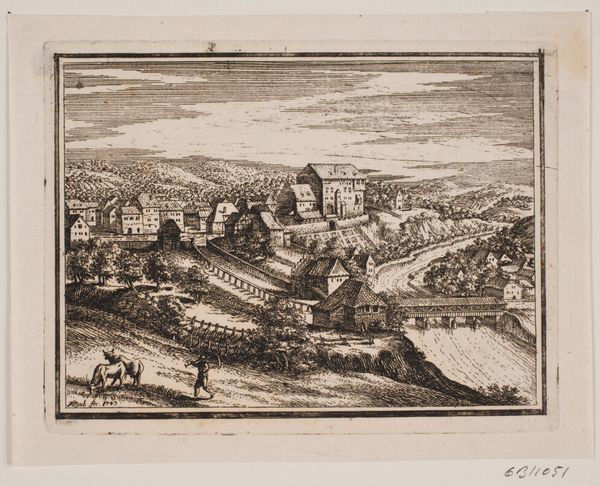
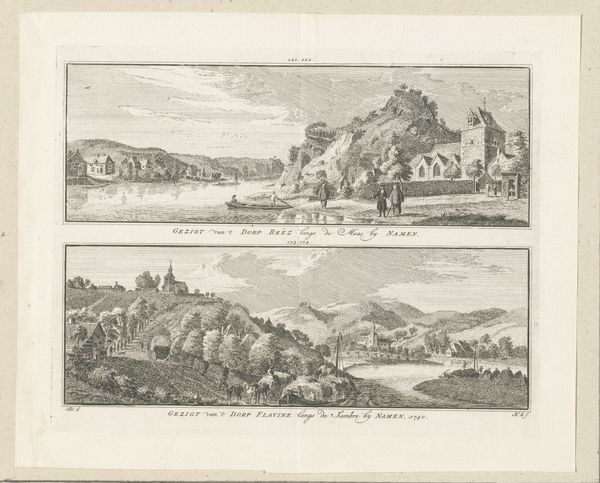
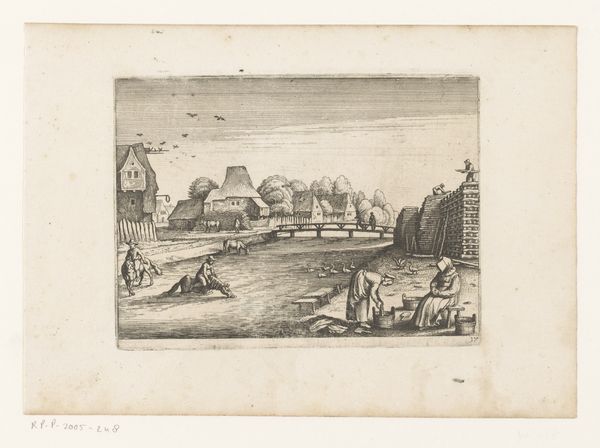
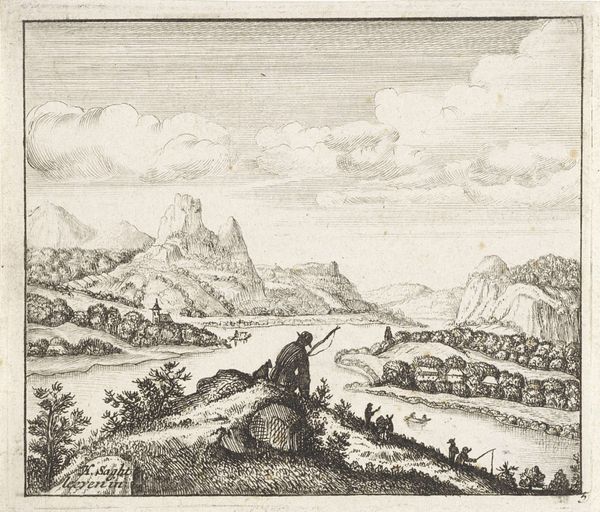
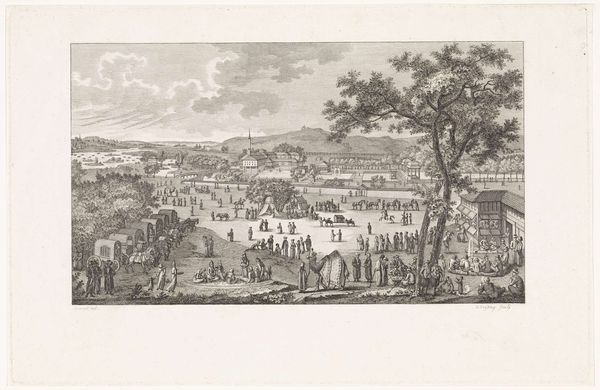
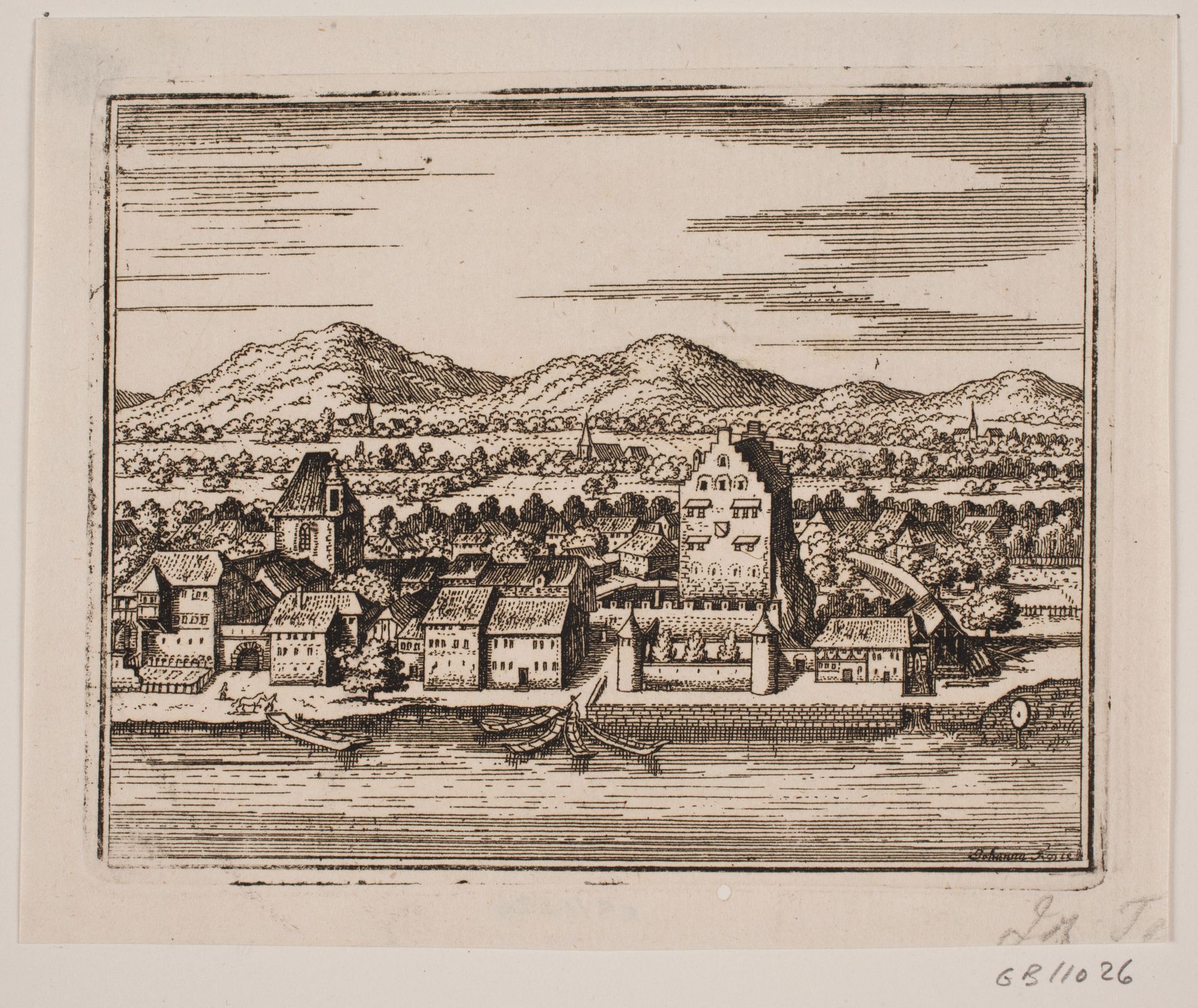
"En by med en flod" (A town by a river) is an etching made by Johanna Fosie sometime between 1726 and 1764. Fosie was a rare female artist in 18th-century Denmark, a time when women faced significant barriers to artistic training and recognition. This small, detailed print offers a glimpse into the era's fascination with landscape and the rise of urban spaces. Fosie's choice to depict a town, rather than a grand historical scene, hints at the growing importance of everyday life and the emerging middle class. Consider the perspective from which Fosie positions us: we are outside, looking in, on the margins. We see the town from across the river. The river itself, a source of commerce and connection, also acts as a boundary. "En by med en flod" invites us to reflect on how the physical and social landscapes of the 18th century shaped individual experiences and collective identities. It is a quiet, but compelling reflection of a world in transition, seen through the eyes of a woman artist navigating her own path.
En by med en flod
1746


Artwork details
- Medium
- print, etching, engraving
- Dimensions
- 100 mm (height) x 127 mm (width) (plademaal)
- Location
- SMK - Statens Museum for Kunst
Tags
Comments
Share your thoughts
About this artwork
"En by med en flod" (A town by a river) is an etching made by Johanna Fosie sometime between 1726 and 1764. Fosie was a rare female artist in 18th-century Denmark, a time when women faced significant barriers to artistic training and recognition. This small, detailed print offers a glimpse into the era's fascination with landscape and the rise of urban spaces. Fosie's choice to depict a town, rather than a grand historical scene, hints at the growing importance of everyday life and the emerging middle class. Consider the perspective from which Fosie positions us: we are outside, looking in, on the margins. We see the town from across the river. The river itself, a source of commerce and connection, also acts as a boundary. "En by med en flod" invites us to reflect on how the physical and social landscapes of the 18th century shaped individual experiences and collective identities. It is a quiet, but compelling reflection of a world in transition, seen through the eyes of a woman artist navigating her own path.
Comments
Share your thoughts