1620
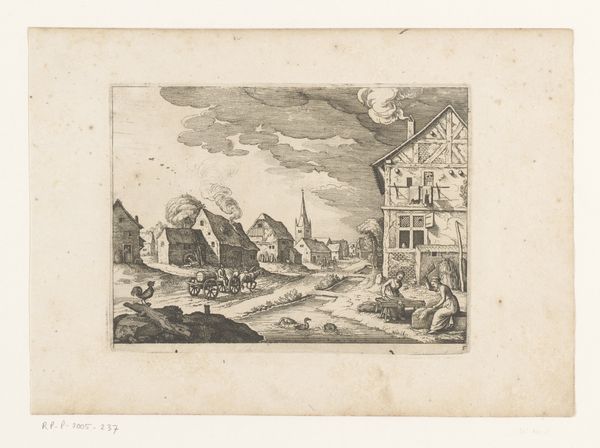
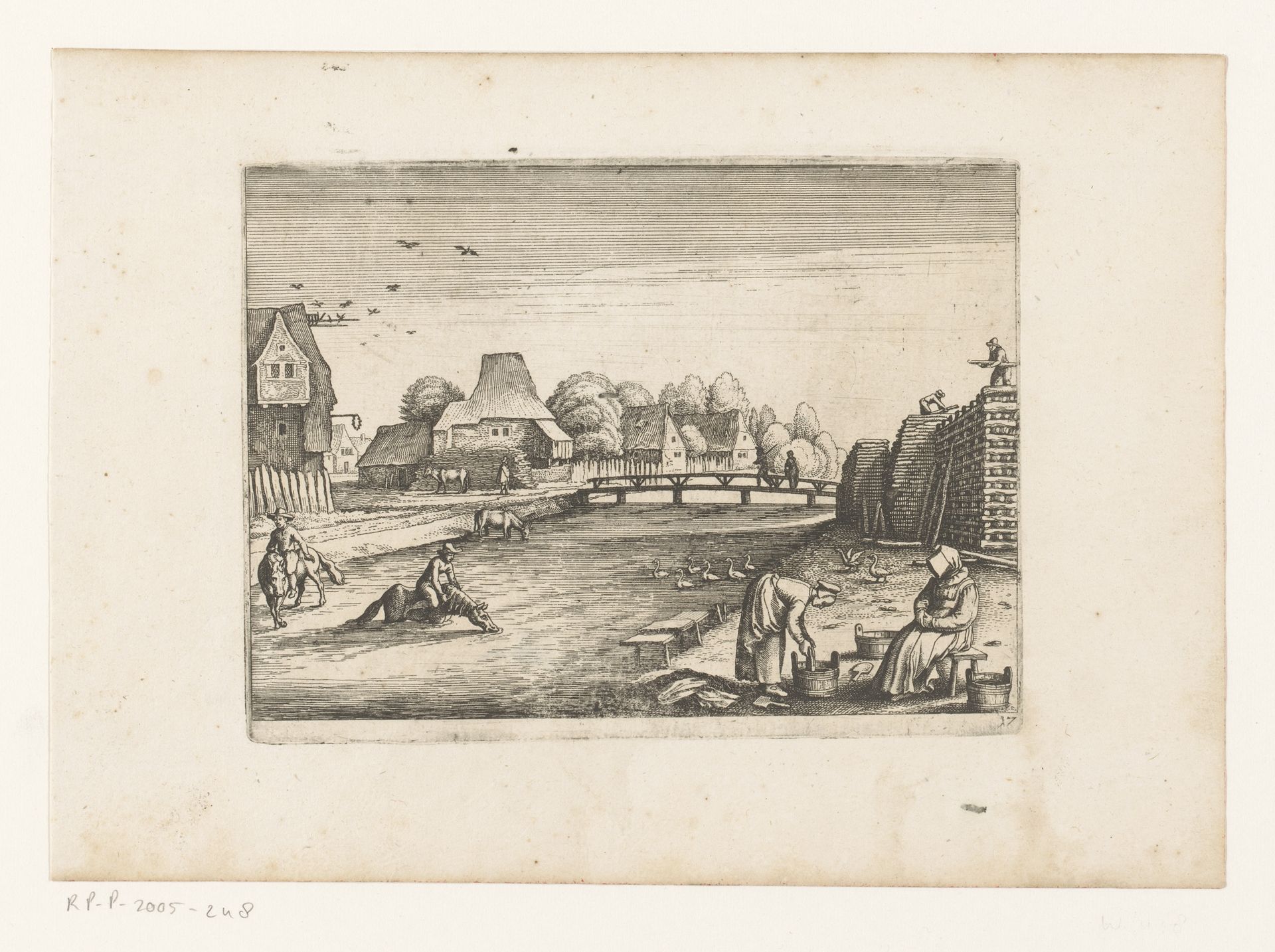
Dorpsgezicht met houtopslag aan rivier

Matthäus (I) Merian
1593 - 1650Location
RijksmuseumListen to curator's interpretation
Curatorial notes
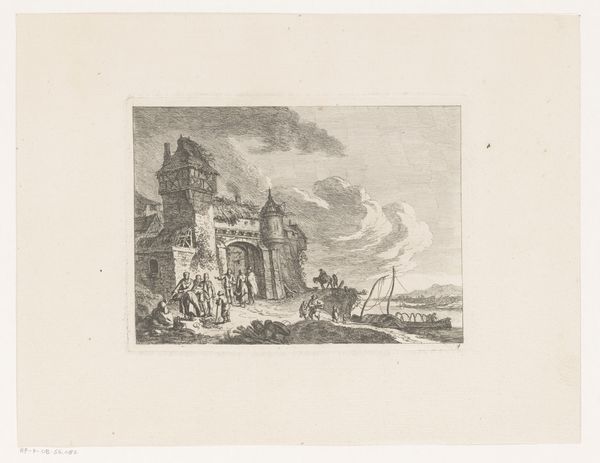
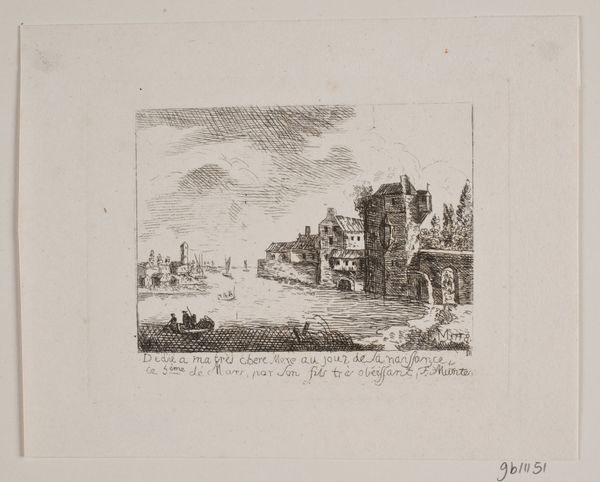
Curator: This piece before us, dating back to 1620, is an etching and engraving entitled "Village Scene with Wood Storage by a River" by Matthäus Merian. Editor: The immediate impression is one of labor, a feeling of everyday life playing out under a perpetually overcast sky. I can practically feel the dampness in the air and hear the murmur of the water. Curator: Absolutely. Merian has captured a slice of Northern Renaissance life with a remarkable attention to detail. Look at the way he renders the wood pile, the timber scaffolding... the very structure itself speaks to a culture built quite literally on material production. It is so tactile, isn't it? Editor: Very much so. I am compelled by the wood stack reaching up into the sky – and how people engage in such difficult, collective and possibly dehumanizing construction. Wood equals trade, equals warmth, equals survival – a constant human transaction! How many hands were involved? What was the cost of those labor hours? Curator: You’re prompting such interesting questions. Notice how the villagers are engaged in their distinct tasks - tending to horses, washing laundry, managing resources… Merian subtly weaves together elements of genre painting with broader landscape conventions. In a strange sense, he captures how all materials present – from those worn wooden beams to soft goose feathers bobbing down the river – speak of life and labor's intricate dance. Editor: And while there's no obvious moralizing or critique in the depiction, that doesn't diminish the very real story of survival and toil present. Curator: Ultimately, Merian created an atmospheric scene – it makes you imagine the everyday world around 17th century. Editor: A beautiful testament to everyday moments etched in time. Curator: Indeed. A powerful illustration of how artistic ingenuity can immortalize the materials, practices, and social structures that shaped society.