About this artwork
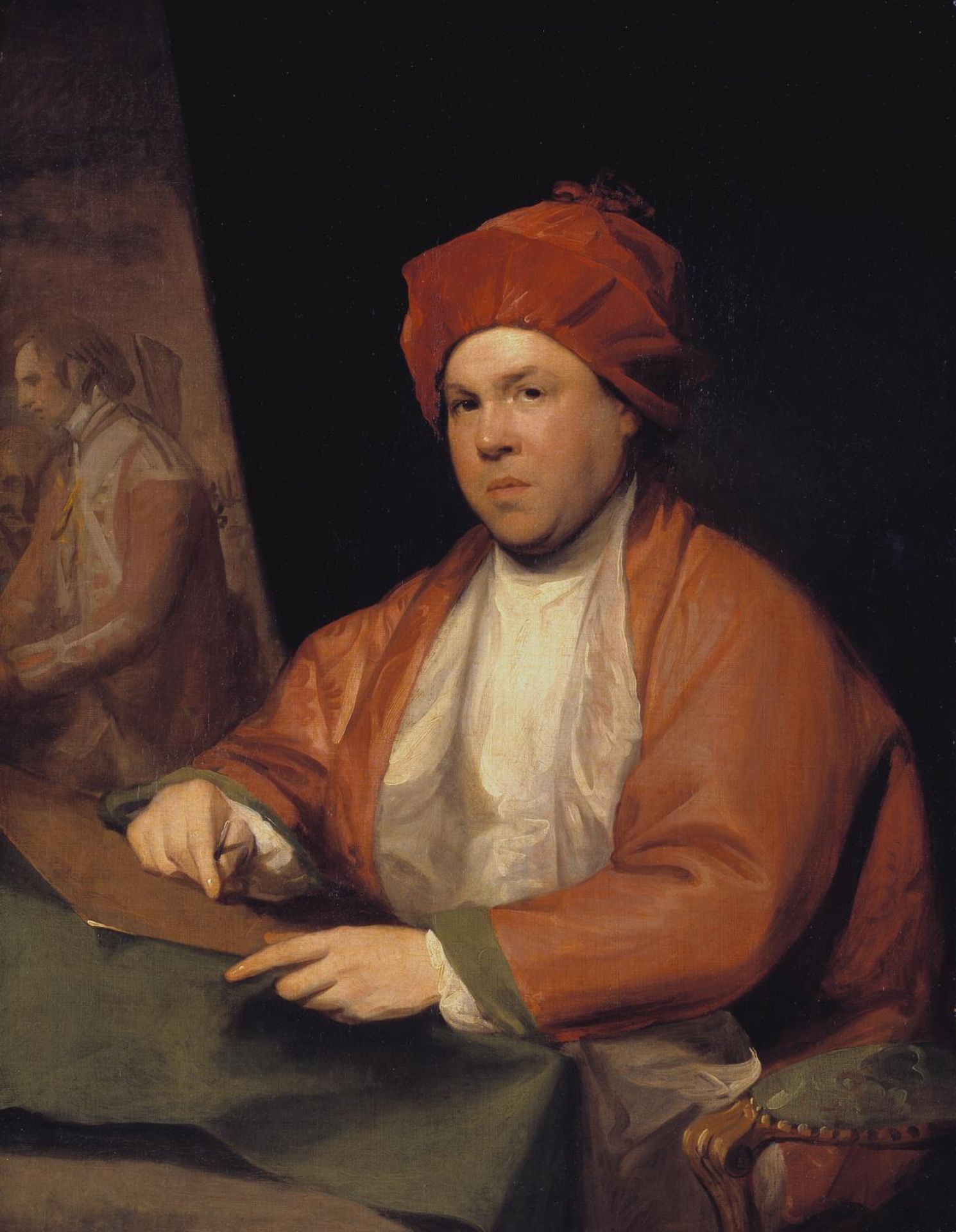
Editor: Here we have Gilbert Stuart's "William Woollett the Engraver," whose date is unavailable, residing in Tate Britain. He's holding a copper plate, presumably for engraving. What can you tell me about this piece? Curator: Stuart presents Woollett not simply as an artist, but specifically as an engraver, emphasizing the material process of art production. The copper plate signifies the means of his labor, the very tool through which art is made accessible and reproducible for consumption. Editor: That's fascinating! So, it's about more than just portraying the man himself? Curator: Precisely. It invites us to consider the social context of art. Who is it for? How is it made? And what role does labor play in its creation and distribution? Editor: I never thought of it that way! Thanks for shedding light on that. Curator: My pleasure! It is always useful to think about art and its place in society.


Artwork details
- Dimensions
- support: 902 x 705 mm
- Location
- Tate Britain
- Copyright
- CC-BY-NC-ND 4.0 DEED, Photo: Tate
Comments

http://www.tate.org.uk/art/artworks/stuart-william-woollett-the-engraver-n00217
This striking portrait depicts the engraver, William Woollett. With a copper plate in front of him and a burin or graver in hand, he looks up as if momentarily distracted from his work. The painting in the background offers the clue to his activity – it is recognisable as the acclaimed Death of General Wolfe by Benjamin West, which Woollett engraved in 1776. This was Woollett’s most commercially successful print. Gilbert Stuart’s portrait not only celebrates the engravers’ achievements, but also an important artistic collaboration. When Stuart exhibited the painting in 1783, it was praised for showing ‘the man himself’. Gallery label, February 2024
About this artwork
Editor: Here we have Gilbert Stuart's "William Woollett the Engraver," whose date is unavailable, residing in Tate Britain. He's holding a copper plate, presumably for engraving. What can you tell me about this piece? Curator: Stuart presents Woollett not simply as an artist, but specifically as an engraver, emphasizing the material process of art production. The copper plate signifies the means of his labor, the very tool through which art is made accessible and reproducible for consumption. Editor: That's fascinating! So, it's about more than just portraying the man himself? Curator: Precisely. It invites us to consider the social context of art. Who is it for? How is it made? And what role does labor play in its creation and distribution? Editor: I never thought of it that way! Thanks for shedding light on that. Curator: My pleasure! It is always useful to think about art and its place in society.
Comments
http://www.tate.org.uk/art/artworks/stuart-william-woollett-the-engraver-n00217
This striking portrait depicts the engraver, William Woollett. With a copper plate in front of him and a burin or graver in hand, he looks up as if momentarily distracted from his work. The painting in the background offers the clue to his activity – it is recognisable as the acclaimed Death of General Wolfe by Benjamin West, which Woollett engraved in 1776. This was Woollett’s most commercially successful print. Gilbert Stuart’s portrait not only celebrates the engravers’ achievements, but also an important artistic collaboration. When Stuart exhibited the painting in 1783, it was praised for showing ‘the man himself’. Gallery label, February 2024