About this artwork
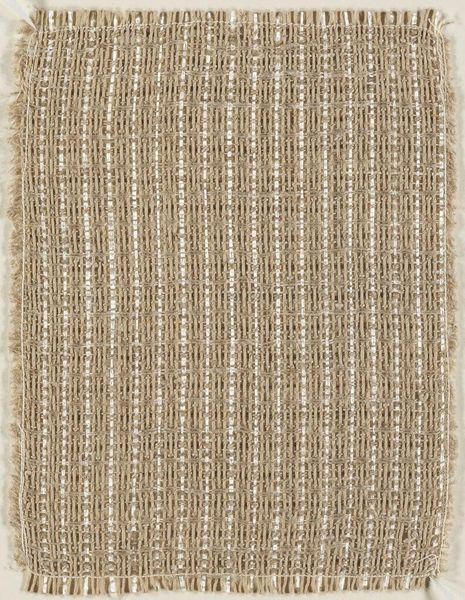
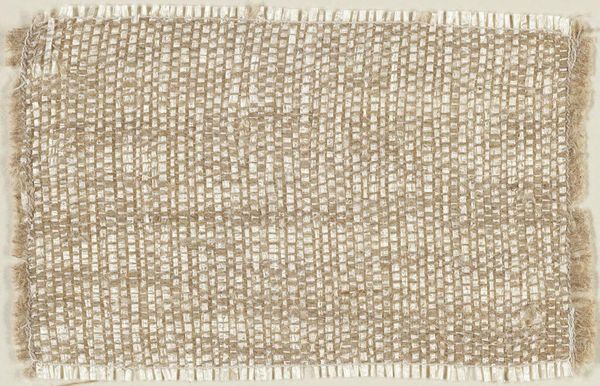
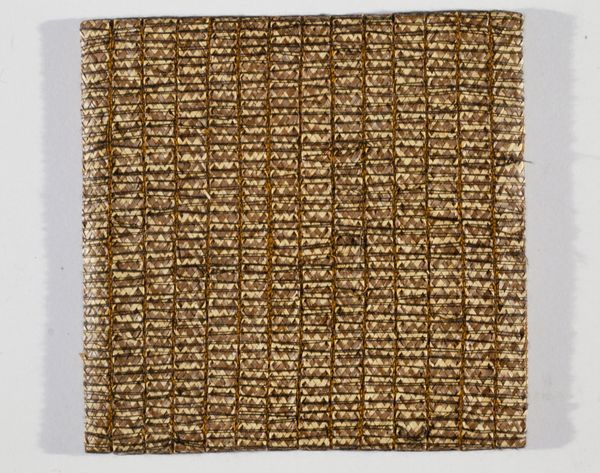
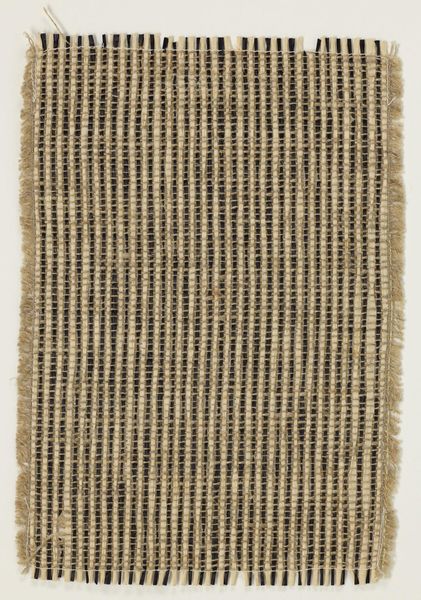
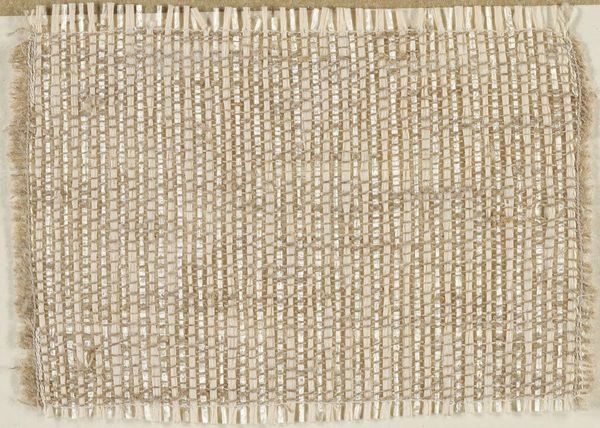
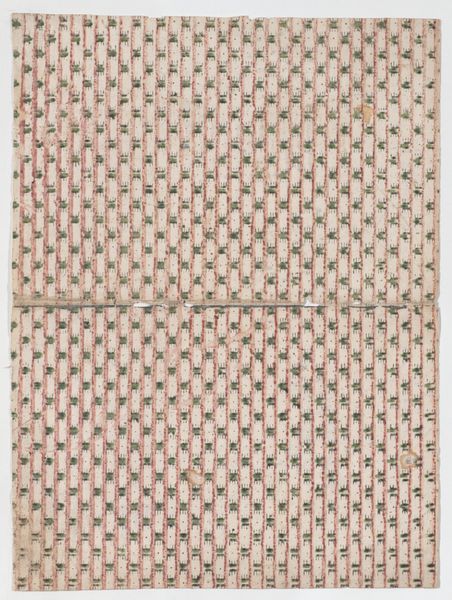
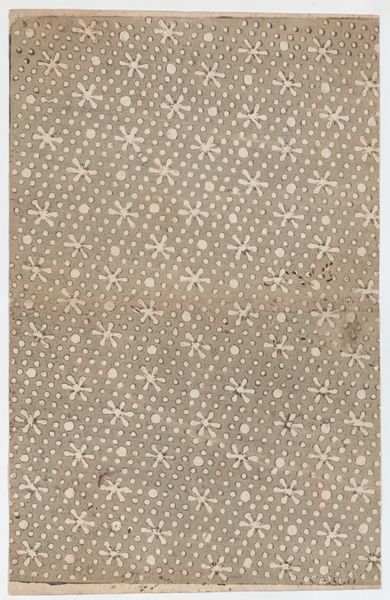
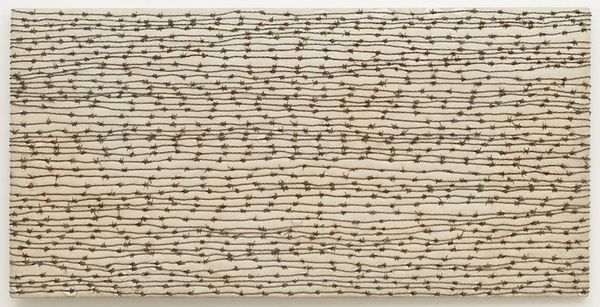
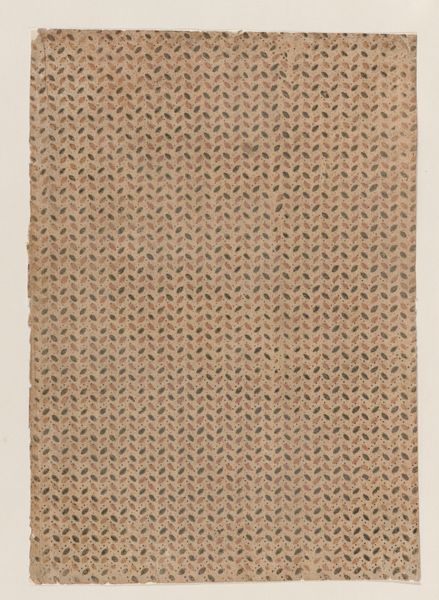
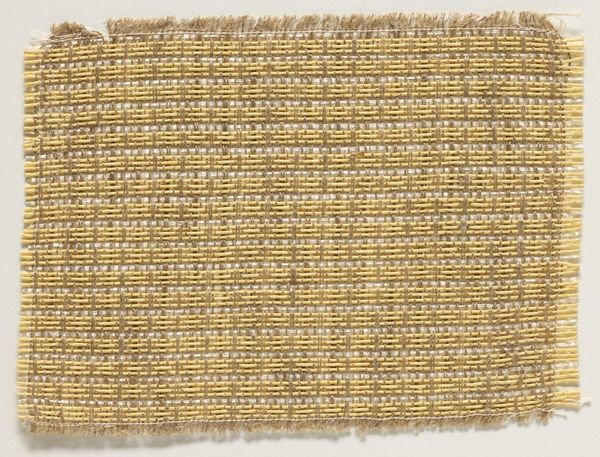
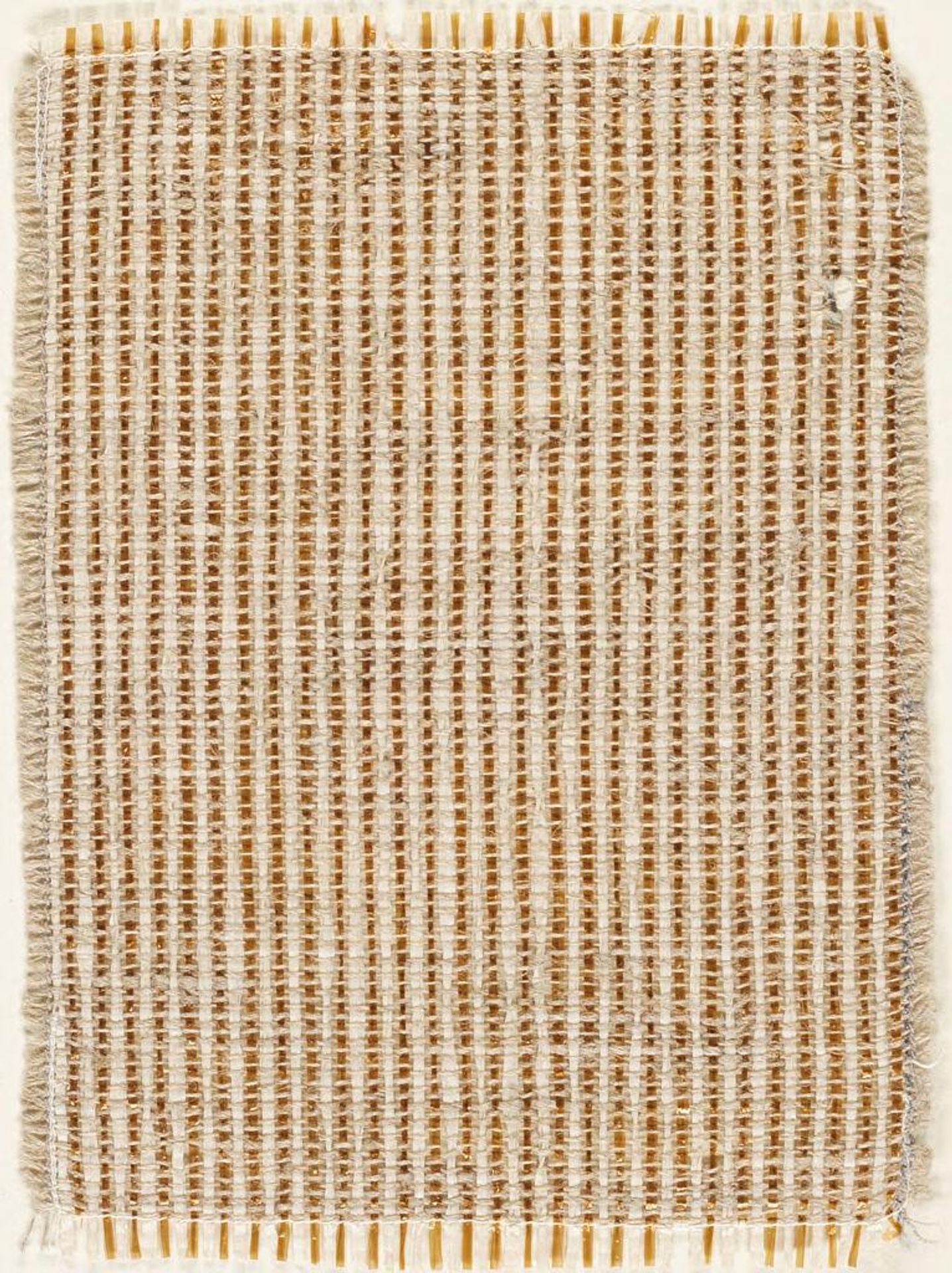
Editor: This is Anni Albers' "Sample of Bronze and White Wall Material." It's a small woven piece, very tactile. It makes me think about domestic spaces and functionality. What’s your interpretation of Albers’ work? Curator: Albers challenges the hierarchy of art and craft. Weaving, historically associated with women's labor, becomes a powerful medium for exploring modernist abstraction. How does its repetitive structure speak to larger social systems of production? Editor: It's like a grid, but softened. Maybe the imperfections represent resistance? Curator: Precisely. Albers is subverting the rigid, male-dominated Bauhaus ideals through a traditionally "feminine" craft. It's a quiet but insistent act of rebellion. Editor: So, it's not just a sample; it's a statement! Curator: Exactly! It encourages us to question what we value and why, and to recognize the political power of marginalized art forms.
Sample of Bronze and White Wall Material c. 20th century


Artwork details
- Dimensions
- 15.3 x 11.1 cm (6 x 4 3/8 in.)
- Location
- Harvard Art Museums
- Copyright
- CC0 1.0
Tags
black-mountain-college
Comments
No comments
About this artwork
Editor: This is Anni Albers' "Sample of Bronze and White Wall Material." It's a small woven piece, very tactile. It makes me think about domestic spaces and functionality. What’s your interpretation of Albers’ work? Curator: Albers challenges the hierarchy of art and craft. Weaving, historically associated with women's labor, becomes a powerful medium for exploring modernist abstraction. How does its repetitive structure speak to larger social systems of production? Editor: It's like a grid, but softened. Maybe the imperfections represent resistance? Curator: Precisely. Albers is subverting the rigid, male-dominated Bauhaus ideals through a traditionally "feminine" craft. It's a quiet but insistent act of rebellion. Editor: So, it's not just a sample; it's a statement! Curator: Exactly! It encourages us to question what we value and why, and to recognize the political power of marginalized art forms.
Comments
No comments