About this artwork
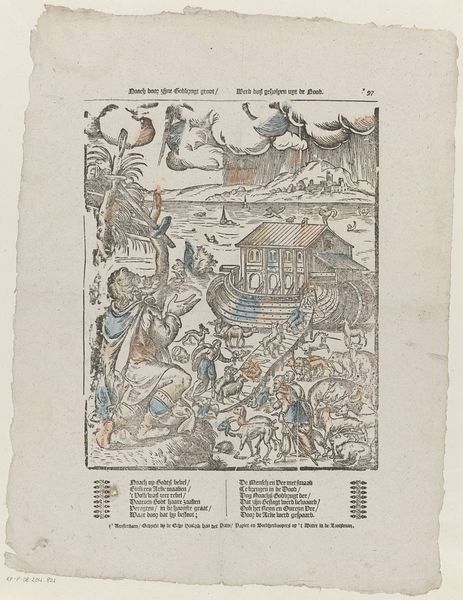
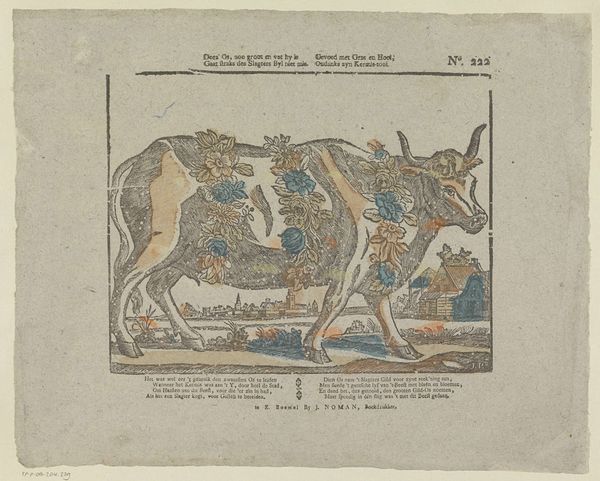
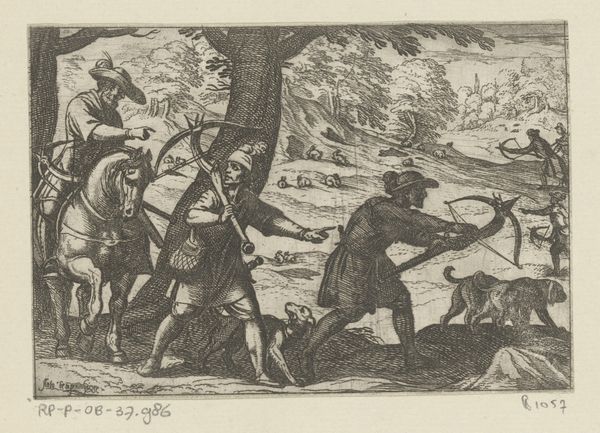
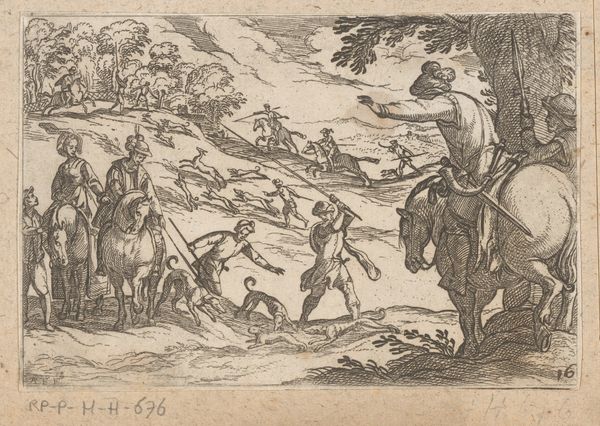
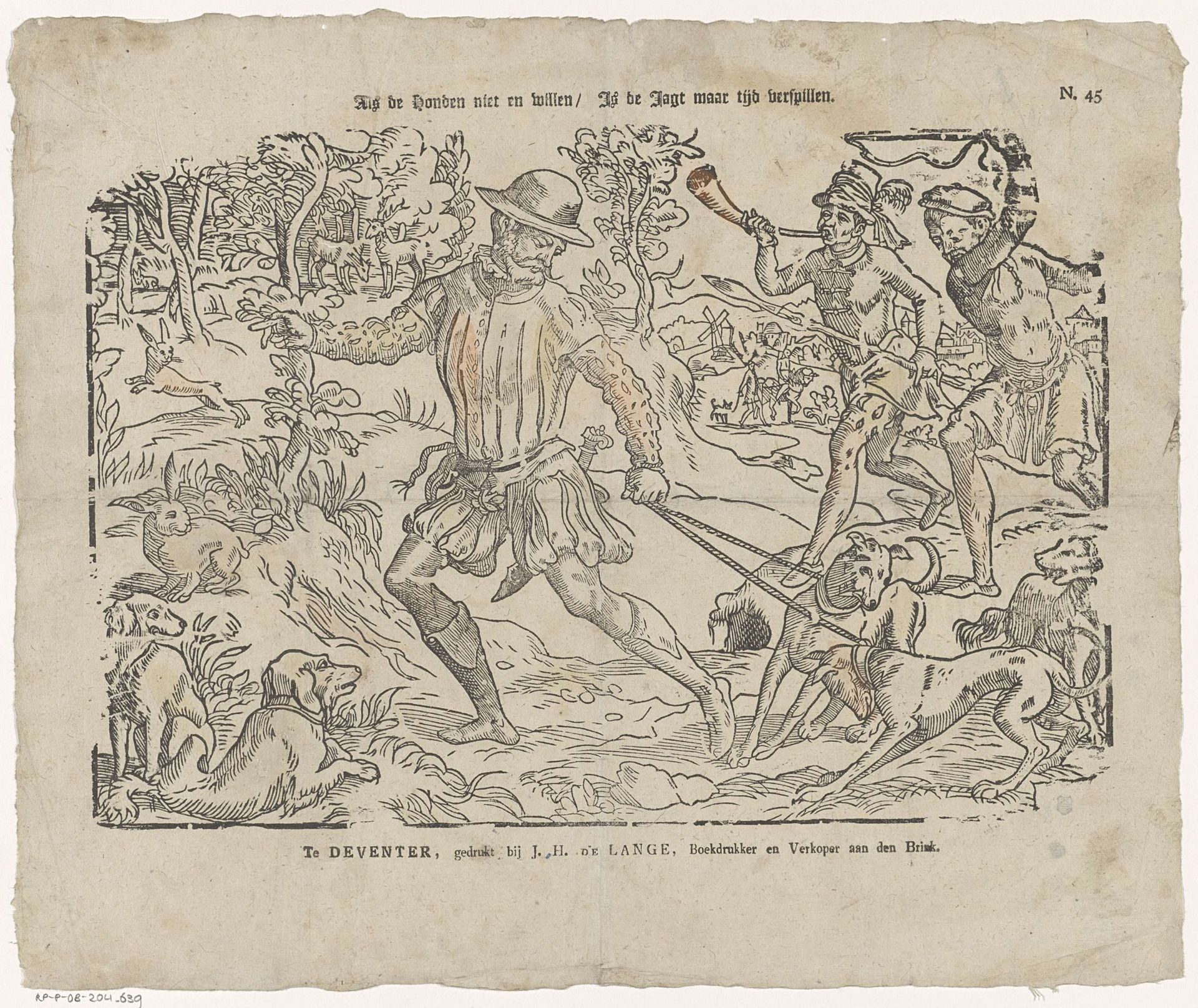
This print, "Als de honden niet en willen / Is de jagt maar tijd verspillen," was created by Jan Hendrik de Lange. It presents a scene dominated by strong, contrasting lines and a composition that invites us to consider the relationships between its elements. The eye is immediately drawn to the hunter, whose figure establishes a focal point from which the hunt unfolds. Notice how the linear quality of the print emphasizes movement: the dogs straining at their leashes, the fleeing rabbits. The inscription at the top introduces a semiotic dimension, where the visual components and cultural codes come together to engage with broader philosophical ideas about the futility of effort when cooperation is lacking. The print operates as a structured sign, where the relationships between hunter, dogs, and prey challenge fixed meanings. The detailed lines and dynamic composition function not merely as aesthetic elements, but as a lens through which we can explore themes of collaboration, resistance, and the inherent tensions within systems of power.
Als de honden niet en willen / Is de jagt maar tijd verspillen
Possibly 1600 - 1822

Jan Hendrik de Lange
1822Location
RijksmuseumArtwork details
- Medium
- drawing, print, ink, pen, engraving
- Dimensions
- height 328 mm, width 394 mm
- Location
- Rijksmuseum
- Copyright
- Rijks Museum: Open Domain
Tags
Comments
Share your thoughts
About this artwork
This print, "Als de honden niet en willen / Is de jagt maar tijd verspillen," was created by Jan Hendrik de Lange. It presents a scene dominated by strong, contrasting lines and a composition that invites us to consider the relationships between its elements. The eye is immediately drawn to the hunter, whose figure establishes a focal point from which the hunt unfolds. Notice how the linear quality of the print emphasizes movement: the dogs straining at their leashes, the fleeing rabbits. The inscription at the top introduces a semiotic dimension, where the visual components and cultural codes come together to engage with broader philosophical ideas about the futility of effort when cooperation is lacking. The print operates as a structured sign, where the relationships between hunter, dogs, and prey challenge fixed meanings. The detailed lines and dynamic composition function not merely as aesthetic elements, but as a lens through which we can explore themes of collaboration, resistance, and the inherent tensions within systems of power.
Comments
Share your thoughts