About this artwork
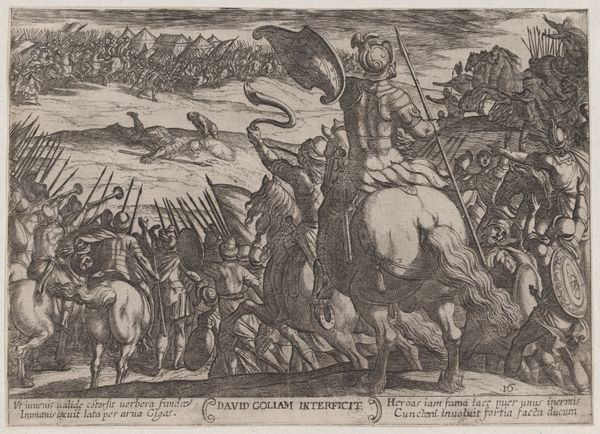
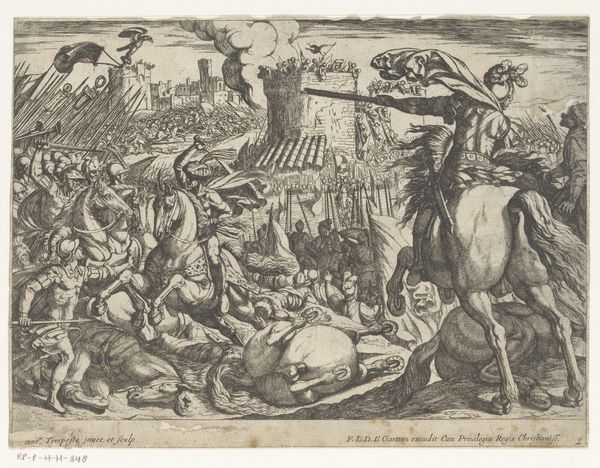
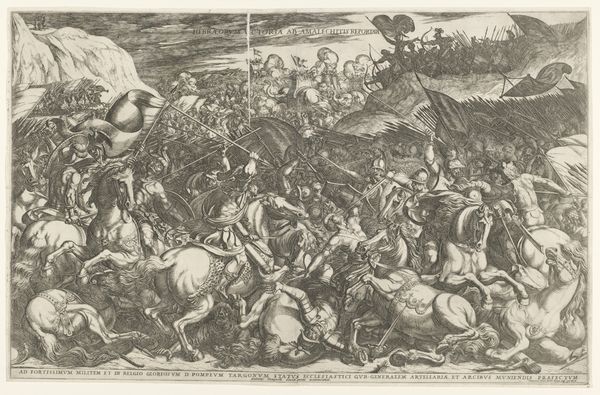
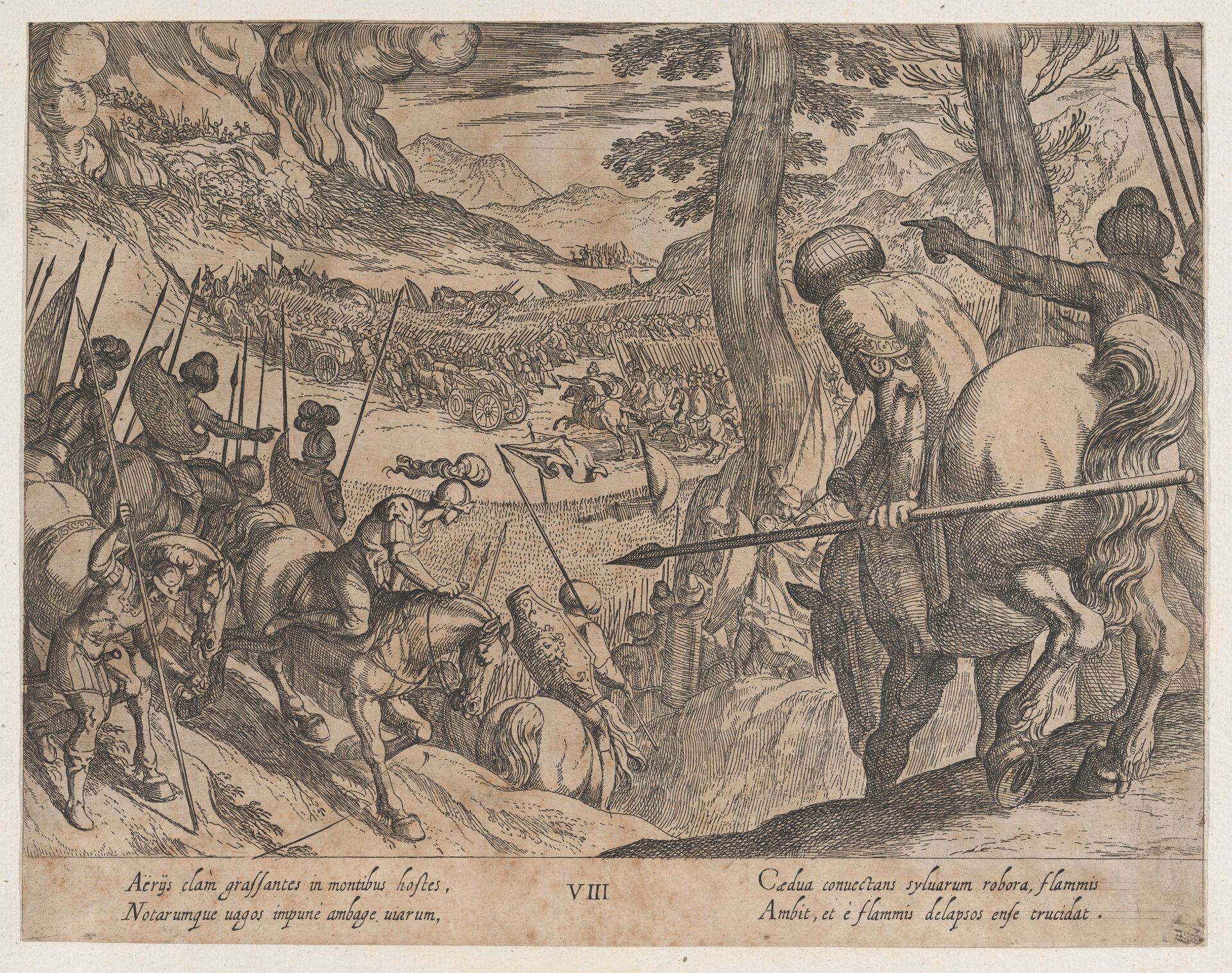
Antonio Tempesta made this engraving, "Alexander Encircling the Enemy Troops with Fire," as part of a series called "The Deeds of Alexander the Great." It depicts an episode from the ancient narratives of Alexander's military campaigns. Made in Italy around 1600, Tempesta’s image presents Alexander as a near-mythical commander, able to use the landscape itself as a weapon. It’s worth remembering that the 16th and 17th centuries in Europe saw constant military conflict, often justified by reference to classical history. Alexander, in particular, provided a model for ambitious rulers and generals. Note how Tempesta employs a bird’s-eye perspective to survey the chaotic battle, framing Alexander as a master strategist. To understand this print better, we might look at illustrated books of military history that circulated at the time, or even stage designs for theatrical productions that celebrated military heroes. In these ways, we can learn more about how people in the 17th century understood war, leadership, and the role of the individual in shaping history.
Plate 8: Alexander Encircling the Enemy Troops with Fire, from The Deeds of Alexander the Great
1608


Artwork details
- Medium
- drawing, print, intaglio, engraving
- Dimensions
- Sheet: 8 3/4 × 11 1/4 in. (22.3 × 28.5 cm)
- Location
- Metropolitan Museum of Art, New York, NY
- Copyright
- Public Domain
Tags
Comments
Share your thoughts
About this artwork
Antonio Tempesta made this engraving, "Alexander Encircling the Enemy Troops with Fire," as part of a series called "The Deeds of Alexander the Great." It depicts an episode from the ancient narratives of Alexander's military campaigns. Made in Italy around 1600, Tempesta’s image presents Alexander as a near-mythical commander, able to use the landscape itself as a weapon. It’s worth remembering that the 16th and 17th centuries in Europe saw constant military conflict, often justified by reference to classical history. Alexander, in particular, provided a model for ambitious rulers and generals. Note how Tempesta employs a bird’s-eye perspective to survey the chaotic battle, framing Alexander as a master strategist. To understand this print better, we might look at illustrated books of military history that circulated at the time, or even stage designs for theatrical productions that celebrated military heroes. In these ways, we can learn more about how people in the 17th century understood war, leadership, and the role of the individual in shaping history.
Comments
Share your thoughts