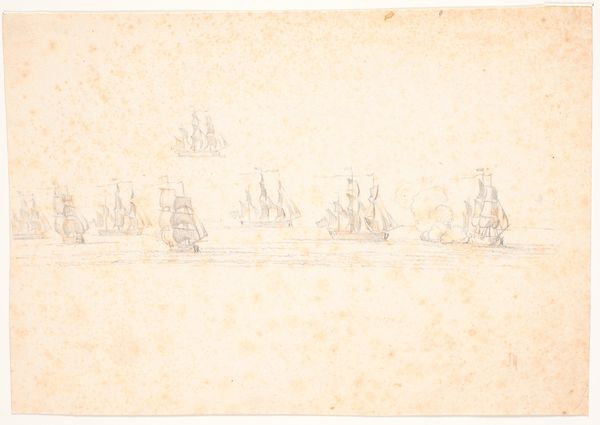
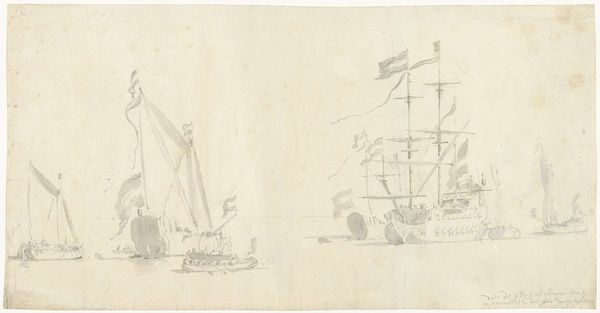
Studier af engelske orlogsskibe med navnebetegnelse og vimpler 1799 - 1802
0:00
0:00


drawing, watercolor
#
portrait
#
drawing
#
water colours
#
landscape
#
watercolor
#
academic-art
Dimensions: 229 mm (height) x 308 mm (width) (bladmaal)
Curator: This is "Studies of English Warships with Names and Pendants" by C.A. Lorentzen, created between 1799 and 1802. The artist employed watercolor and drawing techniques. What’s your initial impression? Editor: It's strikingly delicate for a study of warships! Almost ethereal. The ghostly ship outlines and pastel-like flags create a very specific, almost dreamlike atmosphere. Curator: Indeed. Lorentzen was, after all, working during a time of great naval conflict. These studies likely served a practical purpose, documenting British naval power, and reflecting Danish maritime concerns at the time. Consider how readily the image translates as both a landscape and a portrait. Editor: That's interesting. To me, the watercolor medium feels integral. It prevents any sense of bombast; instead, the drawing feels like a quiet act of observation. It even feels… collaborative. Are we meant to be the artist studying them as well? Curator: That's an interesting consideration. There's certainly an element of surveying the field. What materials could he readily access at the time, and how did the limitations affect his artistry? Editor: A fair point! And consider the societal function— were these displayed? Commissioned? That definitely would impact the materials employed. Curator: Exactly! It speaks to the public's awareness of naval affairs and Lorentzen's own place within that. His work becomes part of that very moment in maritime history. Editor: Thinking about this drawing's place in the broader visual culture— it helps one to ponder not just what is being depicted, but *why* and *for whom*. The delicacy makes it so much more contemplative. Curator: And considering the production, even a seemingly simple study opens a lens onto vast webs of cultural and economic relationships. Thank you, this has helped me see the piece with a renewed appreciation for the nuances it contains. Editor: My pleasure, it’s truly enlightening to recognize that such simple work can illuminate so much about both artistic practices and historical perception.
Comments
No comments
Be the first to comment and join the conversation on the ultimate creative platform.
 Collect
 React
React Comment
More like this