Dimensions: height 106 mm, width 129 mm
Copyright: Rijks Museum: Open Domain
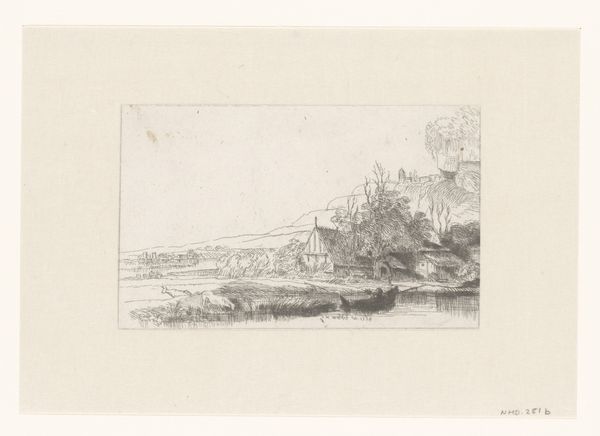
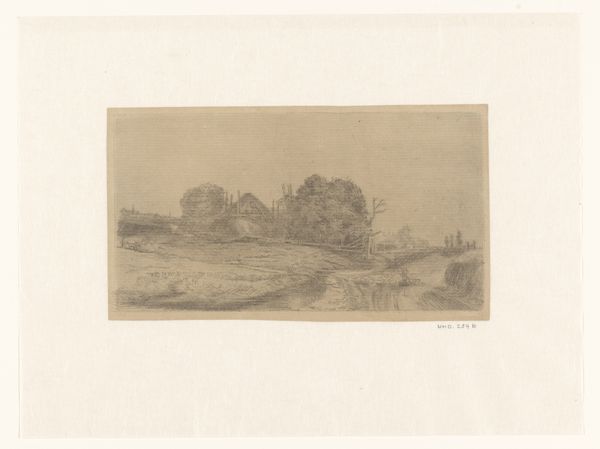
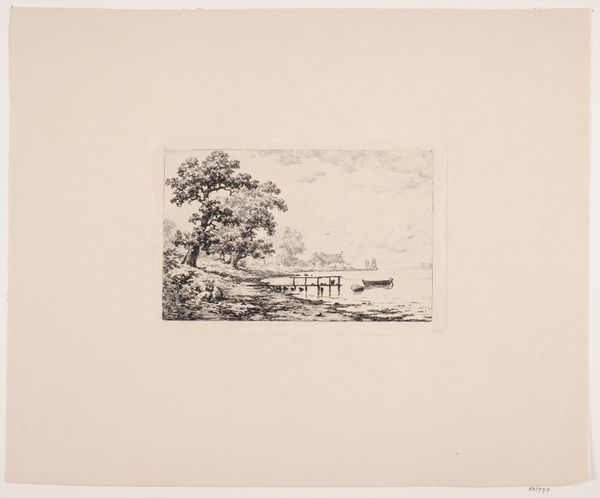
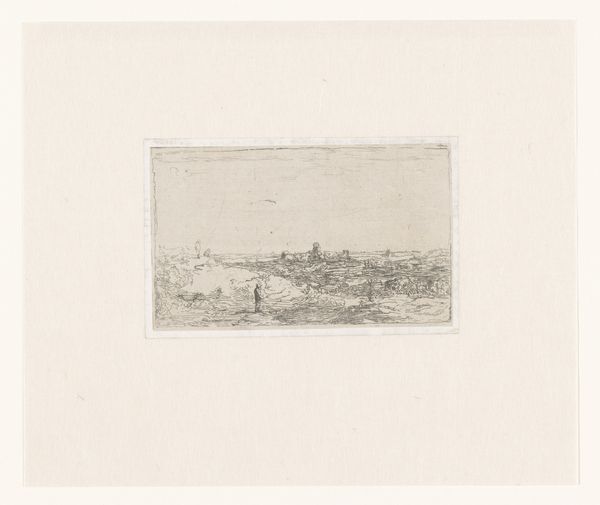
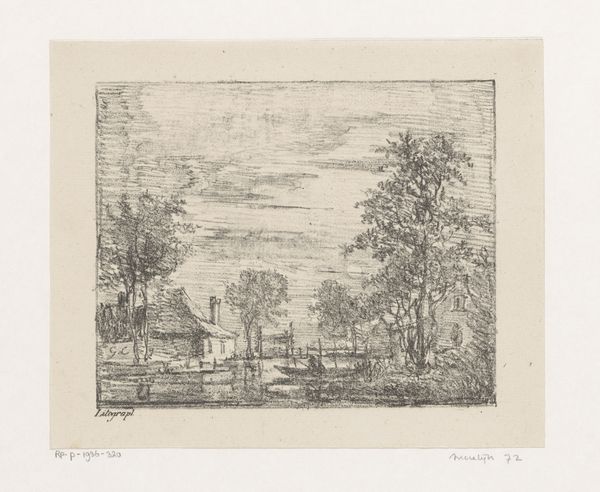
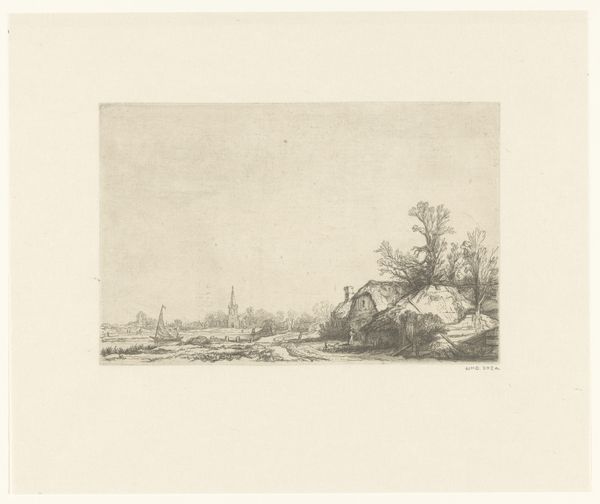
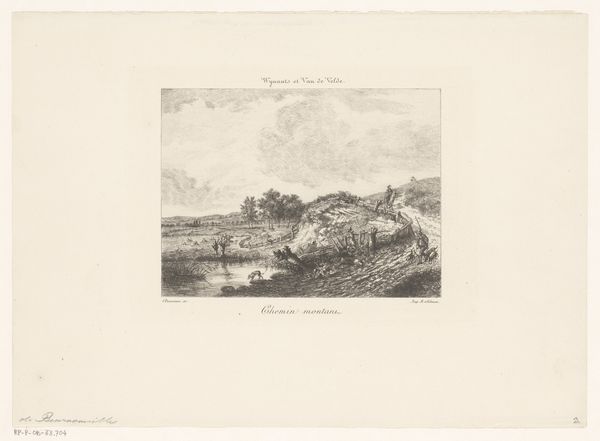
Editor: Here we have Richard Byron's "Landscape with a cow drinking," made sometime between 1750 and 1799. It's an etching on paper, with such delicate lines. It feels almost dreamlike. What strikes you most about it? Curator: I am immediately drawn to the material reality of this etching. Byron's choice of etching—a process reliant on acid and precise labor—elevates it. Paper wasn't simply a passive support; its texture interacted with the ink, creating subtle tonal variations. Editor: That’s interesting, I hadn’t considered the paper itself as an active element. Curator: Consider too the social context of printmaking. Etchings, unlike unique paintings, were reproducible. This lowered the art’s cost, making landscape scenes available to a broader audience. How does this reproduction influence your perspective? Editor: I suppose that makes it less precious, and also maybe invites people to see it in different contexts, and allows art to enter into more domestic spaces? Curator: Exactly. And doesn't the depiction of everyday life—a humble cow drinking—also speak to a broader consumption of art? This art is accessible in its theme as well as its form. How does its relative simplicity play into this availability? Editor: The simplicity maybe brings it down to earth a bit? Opens it up, keeps it relatable... I hadn't thought of landscape art being part of the material culture in that way. Curator: These landscapes, reproduced and distributed, helped shape how people perceived and valued the natural world, reinforcing societal views of the landscape as a site of both production and leisure. The material shapes the view, in essence. Editor: It changes the way you see it! I learned to think more about it not just as a scene, but an object within society itself. Thanks.
Comments
No comments
Be the first to comment and join the conversation on the ultimate creative platform.
 Collect
 React
React Comment
More like this