1913
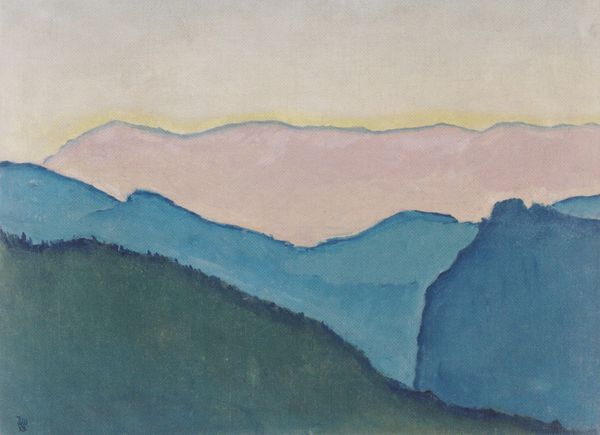
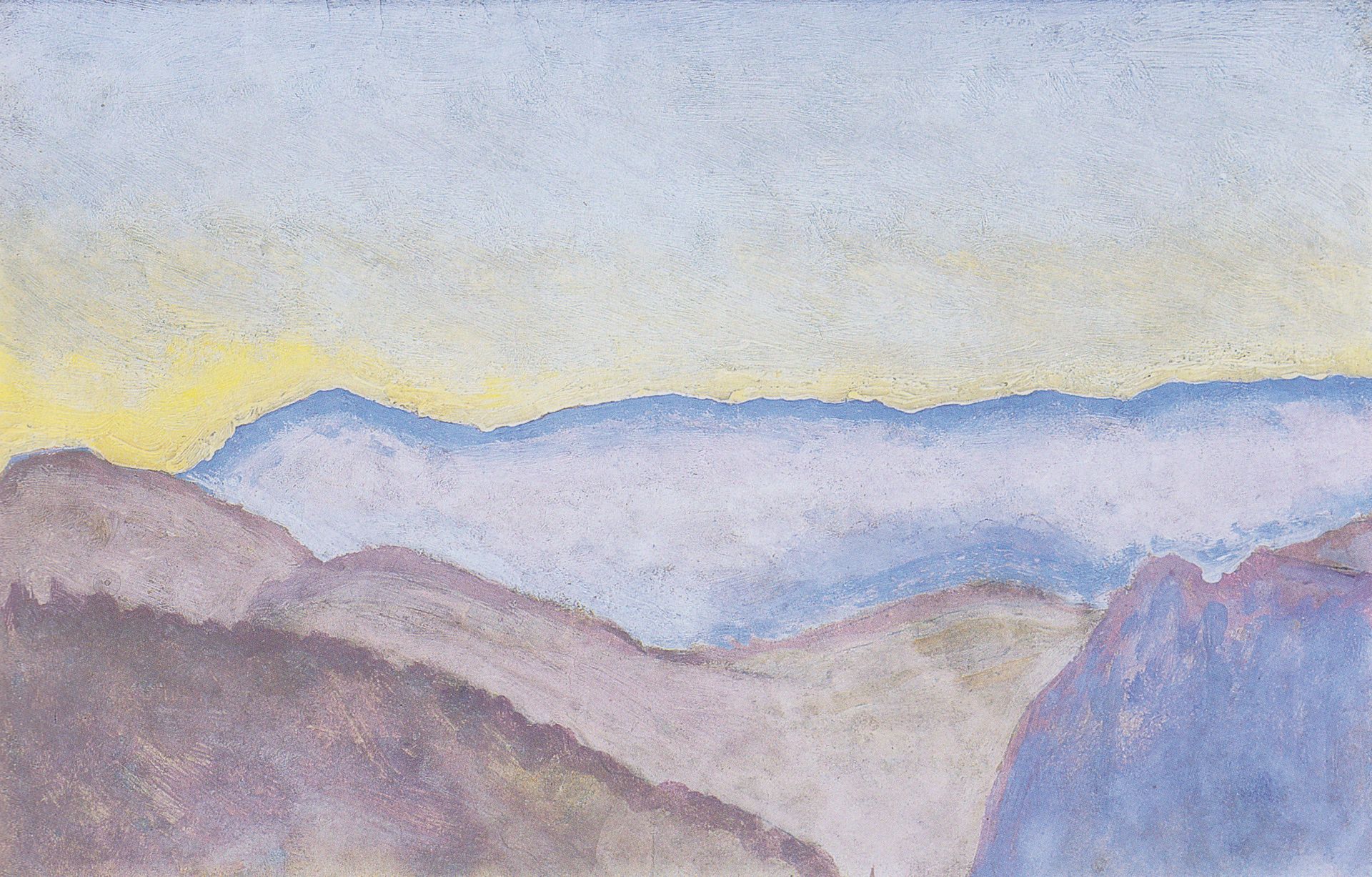
Landscape in Semmering with view of Rax

Listen to curator's interpretation
Curatorial notes
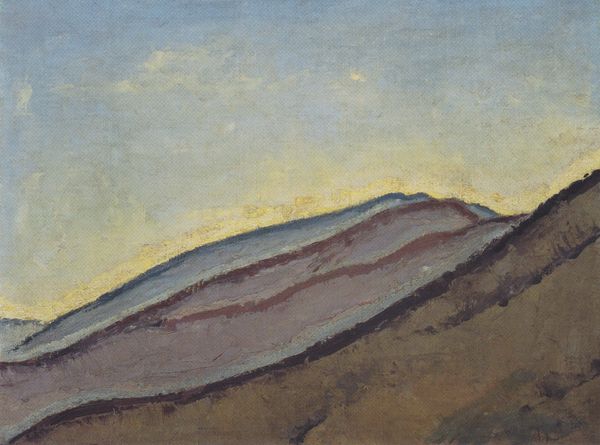
Editor: Here we have Koloman Moser's "Landscape in Semmering with view of Rax," painted in 1913, using oil paints. There's a muted, almost dreamlike quality to it, especially in the way the mountains fade into the sky. What formal qualities strike you in this piece? Curator: I am intrigued by the interplay of color. Notice the progression from the darker, earthier tones at the base to the ethereal blues and yellows in the upper register. Moser isn't attempting a realistic depiction but is instead exploring the expressive potential of color relationships to suggest depth and atmosphere. Editor: I see that. It’s almost like a gradient, but broken up by the mountain shapes. What about the composition? It seems almost flattened. Curator: Indeed. The perspective is deliberately compressed. Moser flattens the pictorial space, minimizing the illusion of three-dimensionality. Observe how the layers of mountains seem stacked upon each other, creating a decorative effect rather than a naturalistic one. The outlines are soft, contributing to the overall hazy effect, almost negating the distinction between form and background. Do you agree? Editor: Absolutely. It does feel very decorative. Like a tapestry almost. Curator: Precisely. The artist prioritizes the formal elements—color, line, and composition—over a faithful representation of the landscape, reflecting the Modernist sensibility of the time. Editor: This focus on the formal elements really opens up how to approach landscape painting beyond just realism. Curator: Agreed, considering form allows a more expressive relationship to the subject and materials. It creates opportunities for new perceptions of this landscape.