1755
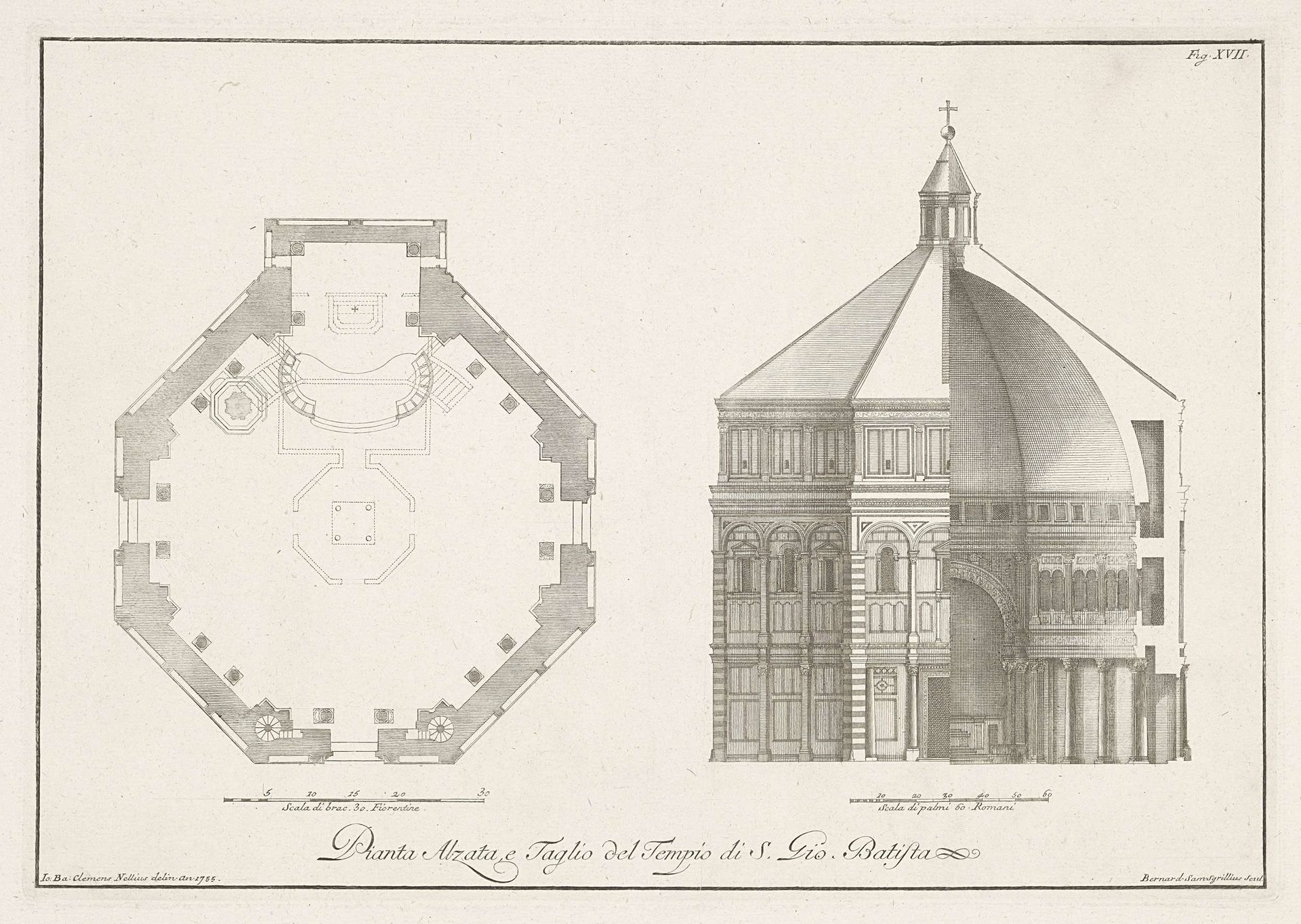
Dwarsdoorsnedes van het Battistero di San Giovanni te Florence

Bernardo Sansone Sgrilli
1733 - 1755Location
RijksmuseumListen to curator's interpretation
Curatorial notes
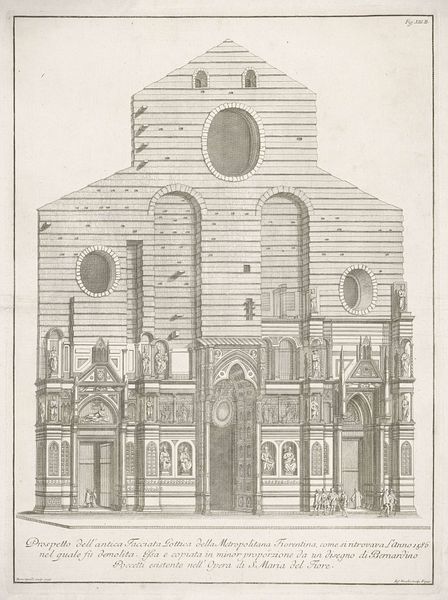
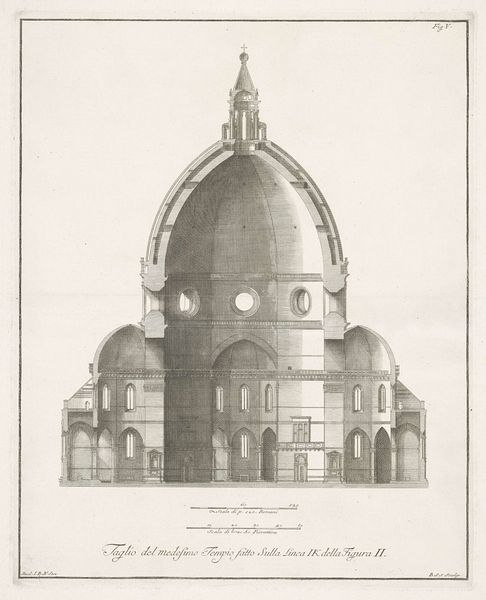
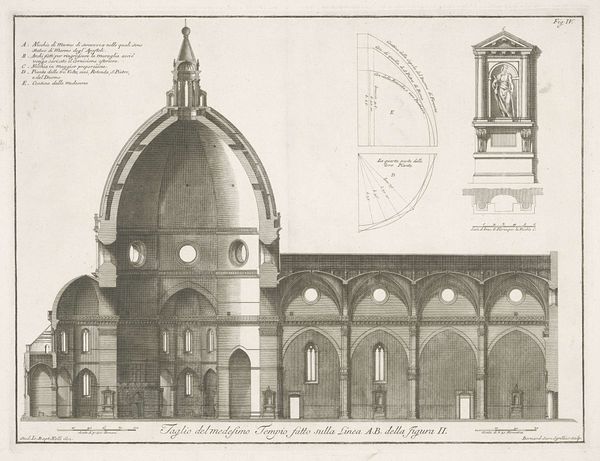
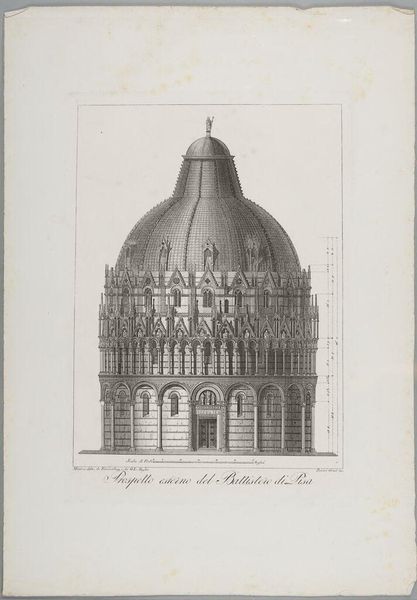
Editor: This is "Cross-sections of the Battistero di San Giovanni in Florence" by Bernardo Sansone Sgrilli, created in 1755. It's an etching, housed at the Rijksmuseum. It's really interesting how the architectural drawing gives us a glimpse into the interior and exterior at once. What strikes you most about this print? Curator: It’s compelling how Sgrilli presents both the plan and elevation. Note the octagonal shape. Eight, as a symbolic number, speaks volumes. Think of the eight days between Christ’s entrance into Jerusalem and his resurrection, baptismal fonts throughout Christendom replicate it. The geometry carries so much cultural memory. Does the use of line to create depth spark anything for you? Editor: Yes, definitely! The cross-hatching creates a sense of solidity, even though it's just lines on paper. But the symbolism of eight… I hadn't thought of that! It’s interesting how something seemingly so mathematical can also be so deeply spiritual. Do you see other symbolic connections in the structure itself? Curator: Consider the dome, an upward striving gesture that echoes the heavens. Architecture becomes a symbolic microcosm. The building is an attempt to depict the macrocosm, it is a mediator between divine and human. Do you notice the tension between the objective architectural rendering and the emotional, almost spiritual weight of the building’s form? Editor: Absolutely. The clean lines feel so precise, but the overall effect is quite powerful, almost reverent. Curator: It reminds us how deeply entwined art and belief have been throughout history. Visual language like this imprints collective values. Editor: I never would have picked up on so much of the symbolism without your insights. Curator: And I was prompted to think about it as a mediator, as a depiction of a grander idea. It's a reminder of how symbols can quietly yet powerfully shape our understanding.