tempera, painting, oil-paint
#
portrait
#
allegories
#
medieval
#
allegory
#
tempera
#
symbol
#
painting
#
oil-paint
#
landscape
#
figuration
#
oil painting
#
vanitas
#
christianity
#
painting painterly
#
history-painting
#
facial portrait
#
northern-renaissance
#
portrait art
Copyright: Public domain
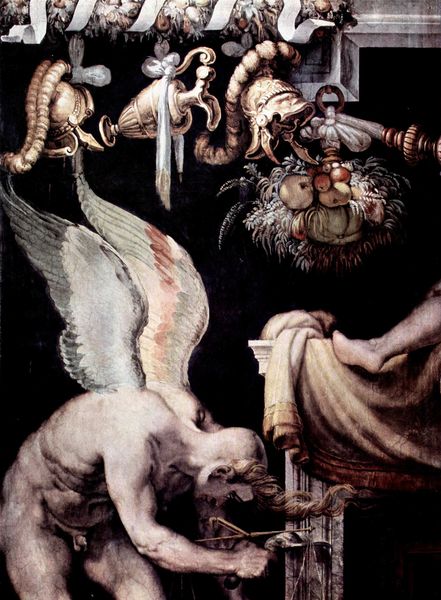
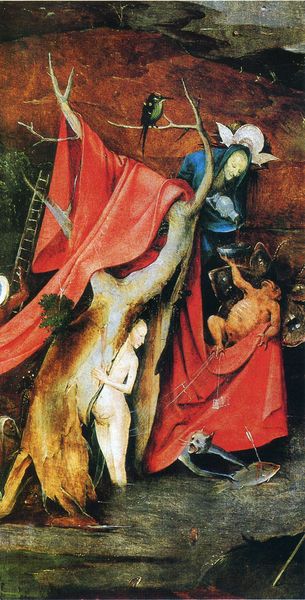
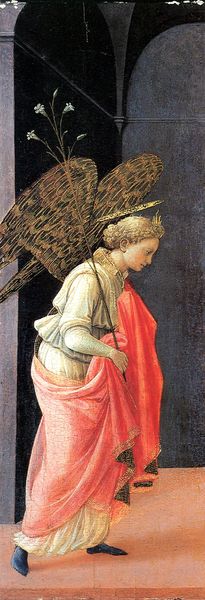
Curator: Let's examine a detail from Hieronymus Bosch’s circa 1490 painting, "Death and the Miser." This oil on wood panel presents a chilling allegory. What are your initial thoughts? Editor: There's something incredibly unsettling about the wings in particular—they're not feathery or divine. Instead, they appear mechanical, constructed almost like part of a machine. It clashes terribly with the frailty of the miser. Curator: That contrast is at the heart of the artwork's message. Bosch was deeply engaged with the social anxieties of his time, where the burgeoning merchant class faced moral scrutiny from the church. Images like this were didactic, warning against the corrupting influence of wealth. Editor: Absolutely. The miser clutches his bag of coins, but I'm really struck by the materiality here. It is meticulously rendered in oil paint to make one concentrate on details: the metallic gleam of the coins to the texture of his worn robe. It highlights his labor, and what exactly he hoards so desperately. Curator: The details underscore Bosch’s skillful technique, yes. But, observe how the demon, representing Death, encroaches upon him, pointing towards a crucifix, offering a last chance at redemption, set against the context of 15th-century religious and economic life. Bosch reflects that era's obsession with sin and salvation. The question the artist seems to pose is whether divine imagery will be enough. Editor: Still, I wonder how viewers at the time would have received Bosch’s use of oil paint specifically. It offered this almost hyperrealistic level of detail; wouldn't it deepen the sense of doom by creating an undeniable presence in its artifice? This new way of handling a ubiquitous topic such as "memento mori." Curator: Indeed. It allowed him to create strikingly lifelike and disturbing imagery. It was his skill to communicate these social themes to a broader audience. Editor: Overall, looking at it, I appreciate the detailed labor, care, and production within a very somber moral tale about consumerism. It definitely seems very modern when looked at this way. Curator: Yes, and the artwork offers us a powerful glimpse into a world grappling with the rise of capitalism and the perennial struggle between earthly possessions and spiritual salvation.
Comments
No comments
Be the first to comment and join the conversation on the ultimate creative platform.
 Collect
 React
React Comment
More like this