About this artwork
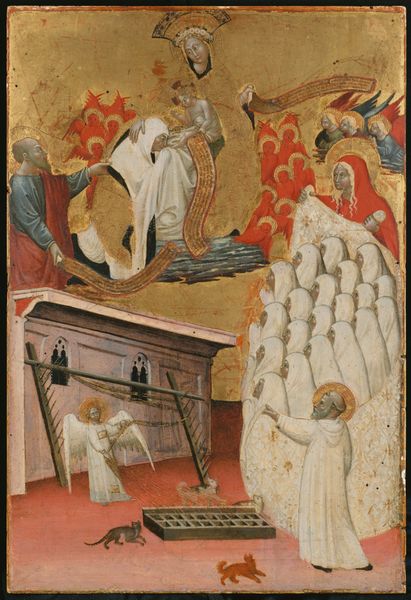
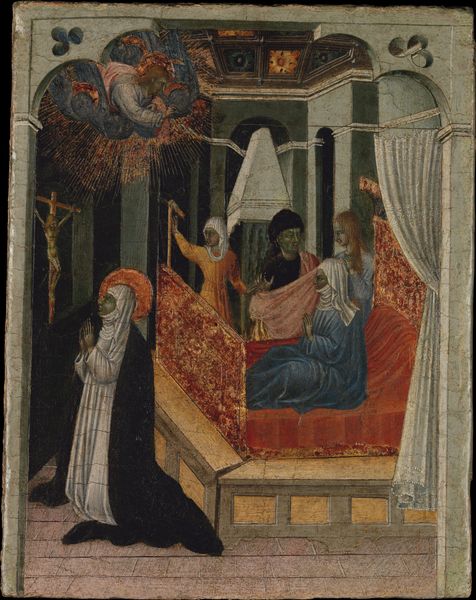
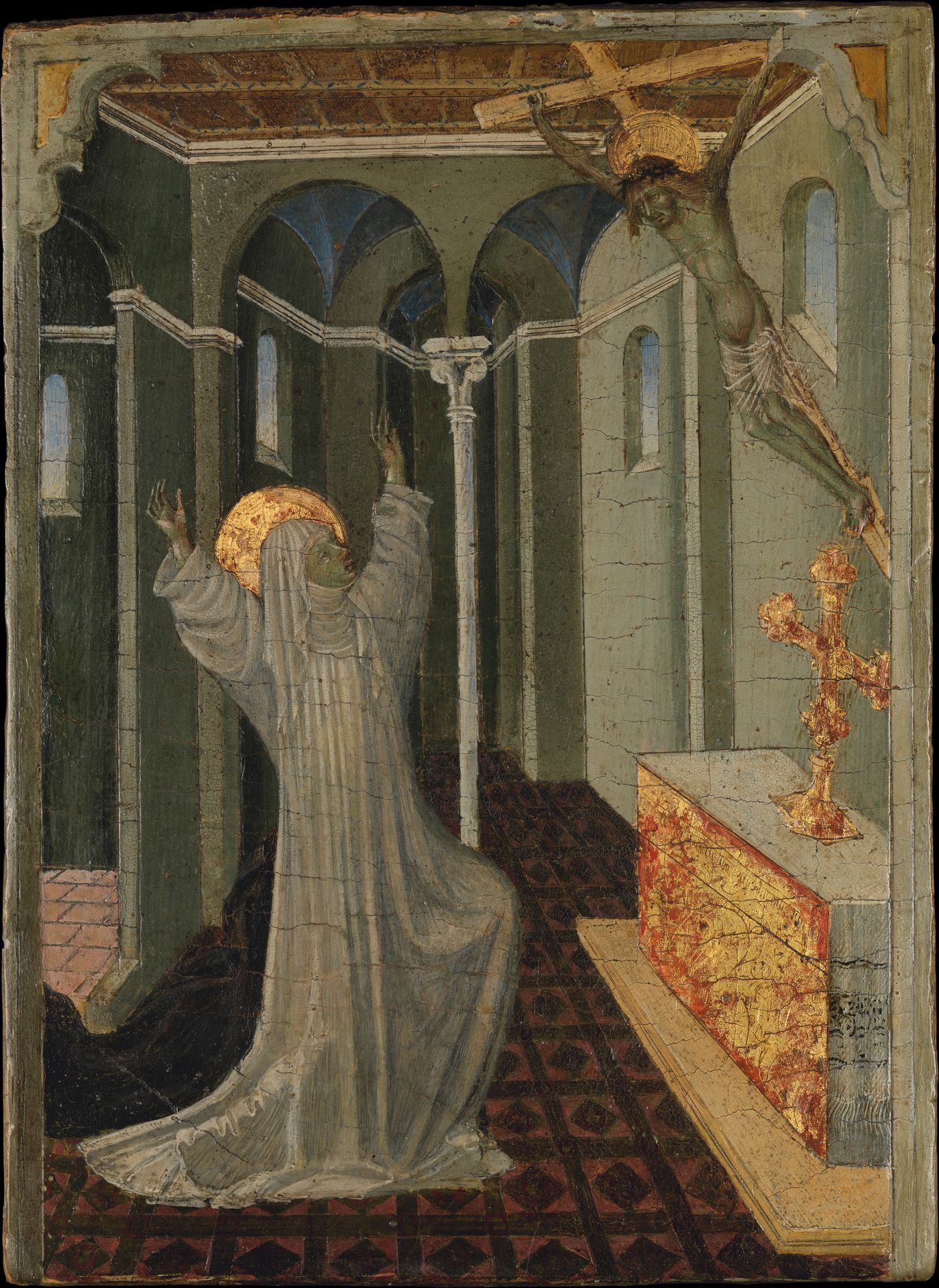
Giovanni di Paolo painted "Saint Catherine of Siena Receiving the Stigmata" with tempera and gold on wood in the early Quattrocento. Saint Catherine, a tertiary of the Dominican Order, was a highly influential philosopher and theologian. Here, the artist captures her spiritual ecstasy as she receives the stigmata, the wounds of Christ. This depiction occurs in the late medieval period, a time when the rise of powerful women within the Catholic church provided new representations of female identity. The ethereal and stylized rendering is typical of Sienese painting. Catherine’s traditional nun’s habit is contrasted with the gold of her halo and the stigmata. Her upturned face is a study in devotion as she gazes upon the crucified Christ. The painting presents an alternative narrative about the power of female spirituality. It invites us to reflect on the historical and cultural forces that shaped both Saint Catherine’s life and the painting itself. This piece transforms the personal into the universal, as it illustrates the profound connection between faith, identity, and the divine.
Saint Catherine of Siena Receiving the Stigmata 1443 - 1468

Giovanni di Paolo (Giovanni di Paolo di Grazia)
1398 - 1482
The Metropolitan Museum of Art
Metropolitan Museum of Art, New York, NYArtwork details
- Medium
- tempera, painting, oil-paint
- Dimensions
- Overall: 11 in. × 7 7/8 in. (27.9 × 20 cm)
- Location
- Metropolitan Museum of Art, New York, NY
- Copyright
- Public Domain
Tags
narrative-art
tempera
painting
oil-paint
figuration
oil painting
cross
crucifixion
history-painting
italian-renaissance
early-renaissance
Comments
No comments
About this artwork
Giovanni di Paolo painted "Saint Catherine of Siena Receiving the Stigmata" with tempera and gold on wood in the early Quattrocento. Saint Catherine, a tertiary of the Dominican Order, was a highly influential philosopher and theologian. Here, the artist captures her spiritual ecstasy as she receives the stigmata, the wounds of Christ. This depiction occurs in the late medieval period, a time when the rise of powerful women within the Catholic church provided new representations of female identity. The ethereal and stylized rendering is typical of Sienese painting. Catherine’s traditional nun’s habit is contrasted with the gold of her halo and the stigmata. Her upturned face is a study in devotion as she gazes upon the crucified Christ. The painting presents an alternative narrative about the power of female spirituality. It invites us to reflect on the historical and cultural forces that shaped both Saint Catherine’s life and the painting itself. This piece transforms the personal into the universal, as it illustrates the profound connection between faith, identity, and the divine.
Comments
No comments