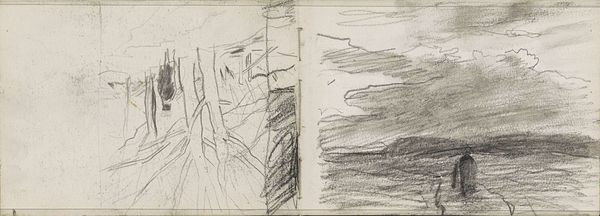
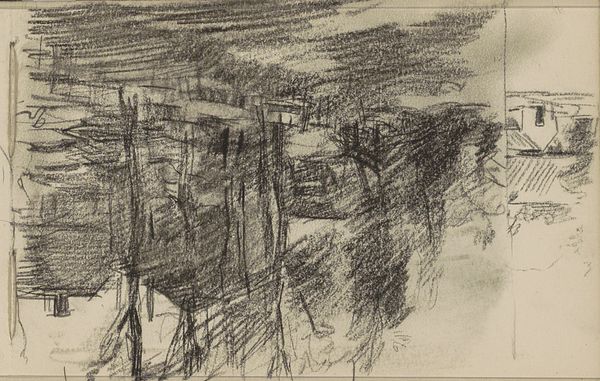
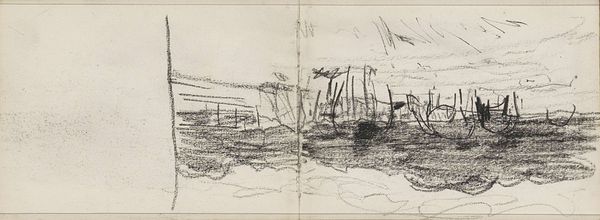
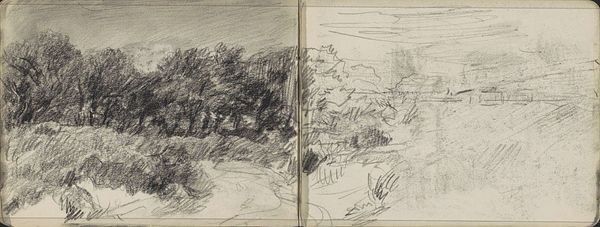
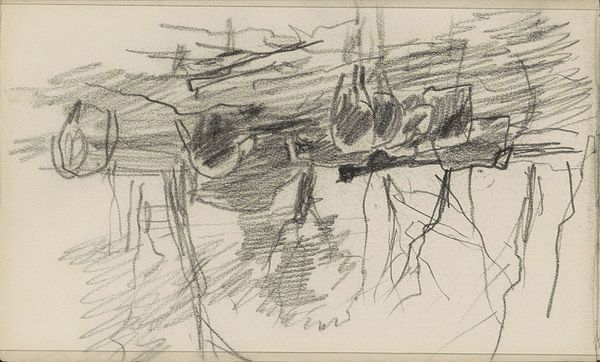
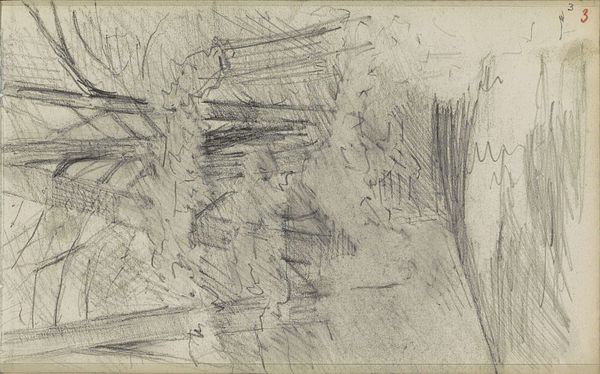
Landschap met bomen en een zittende figuur aan een waterkant 1848 - 1888
0:00
0:00

antonmauve
Rijksmuseum
drawing, pencil
#
drawing
#
amateur sketch
#
light pencil work
#
impressionism
#
pencil sketch
#
incomplete sketchy
#
landscape
#
personal sketchbook
#
pen-ink sketch
#
pencil
#
rough sketch
#
sketchbook drawing
#
sketchbook art
#
initial sketch
Copyright: Rijks Museum: Open Domain
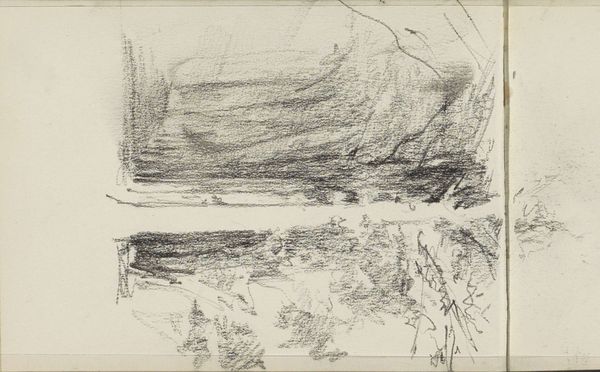
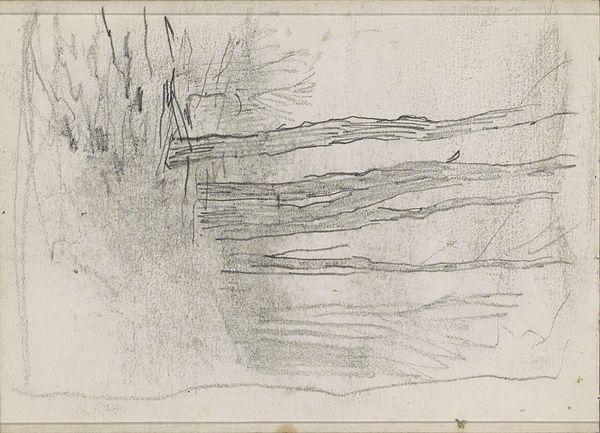
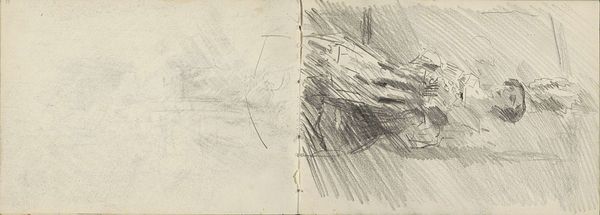
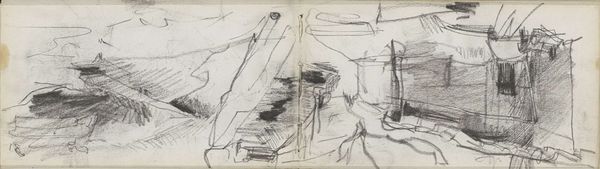
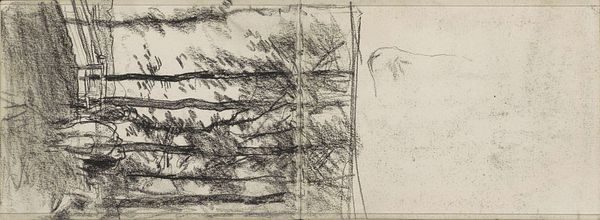
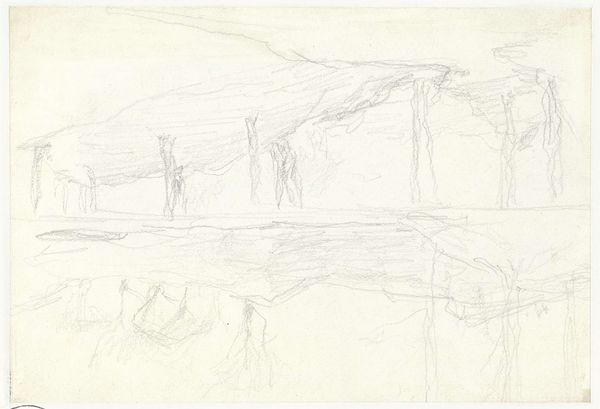
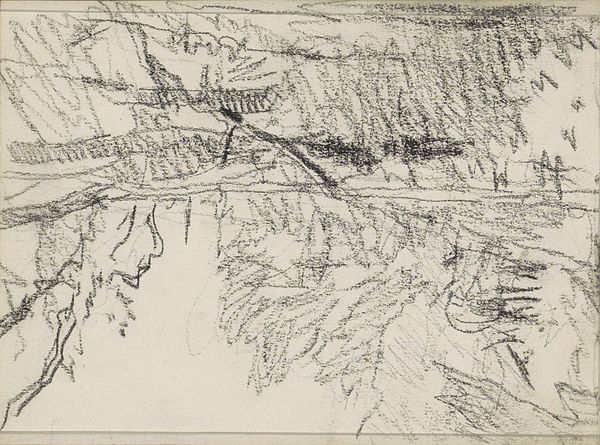
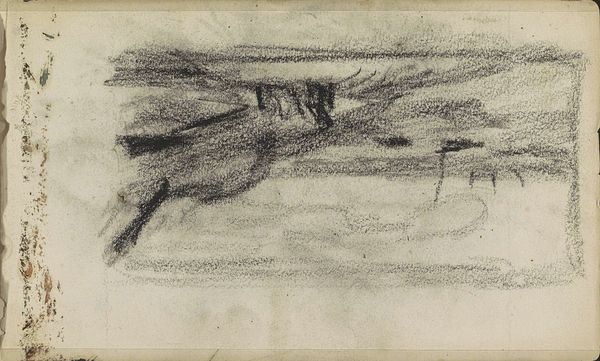
Curator: Here we have Anton Mauve's "Landschap met bomen en een zittende figuur aan een waterkant," dating from 1848 to 1888, rendered in pencil. Editor: My first impression is one of restless energy. There's a dynamism to the marks, a feeling that the scene is captured in a fleeting moment. Curator: Indeed. Considering Mauve’s influence on Vincent van Gogh, his cousin-in-law, this sketch reflects the Hague School's broader socio-political concerns. The figure by the water implies themes of labor and rural life. There's an unidealized portrayal of the working class that resonates with the burgeoning socialist movements of the time. Editor: Perhaps. But looking at the composition, I'm struck by the contrast between the dense, almost chaotic hatching on the left, suggestive of foliage or perhaps the sky, and the relatively calmer depiction of the water’s edge. The rapid, light pencil work also emphasizes the sketch's impermanence. This reinforces the formal elements. Curator: I see the “impermanence” of labor echoed here—the figure exists only as quickly rendered marks, emblematic of their disposability within an industrializing world. There is a subtle commentary of class. The "restless energy" you mentioned is symptomatic of a society undergoing rapid transformation and rife with disparities. Editor: Transformation certainly. However, consider how Mauve uses the stark whiteness of the paper to evoke light. It's almost impressionistic in its treatment of illumination, anticipating future styles by utilizing value relationships and the overall opticality, even in a preliminary form like this. Curator: And the rapid strokes? Beyond mere optical play, it speaks to the temporal constraints faced by those from marginalized backgrounds. Time becomes another luxury denied to this segment. But more so, this gives a certain voice for the voiceless in Dutch society at this time. Editor: A persuasive intersectional point. While I’m compelled by those layers of sociopolitical and gender analysis, what most holds my gaze, however, is its demonstration of an artist exploring the sheer potentiality held within line and tone. Curator: Absolutely. Ultimately, that formal dialogue helps reveal those complex layers of society in flux at that moment.
Comments
No comments
Be the first to comment and join the conversation on the ultimate creative platform.
 Collect
 React
React Comment
More like this