About this artwork
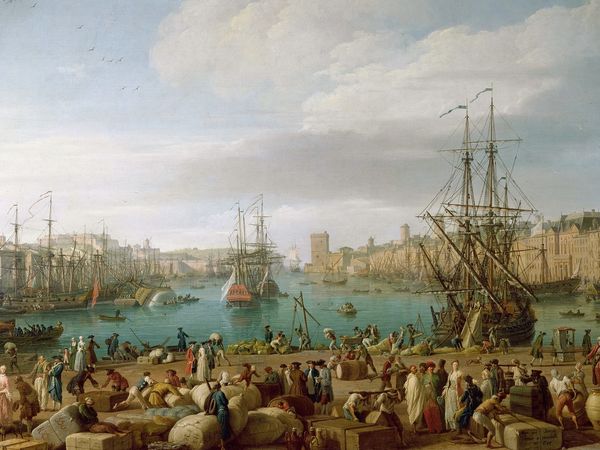
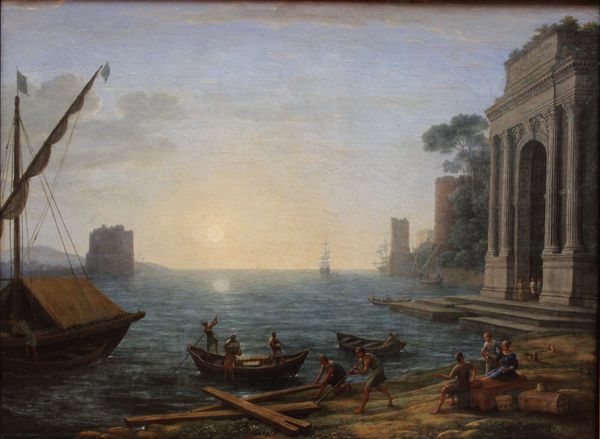
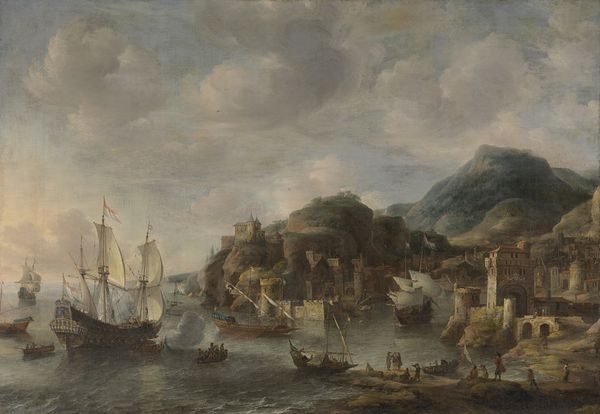
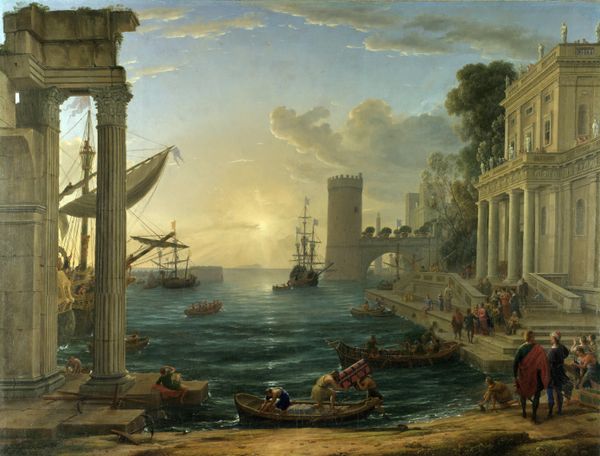
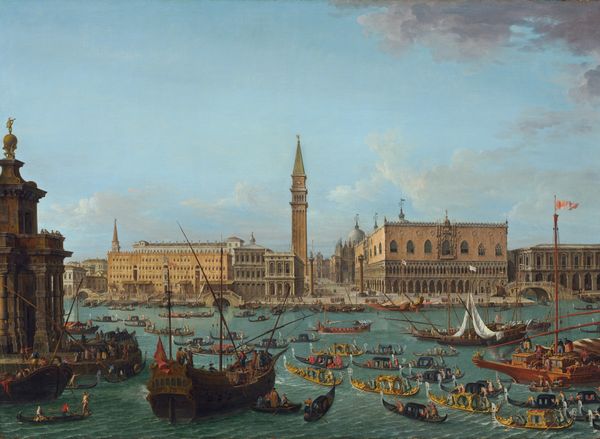
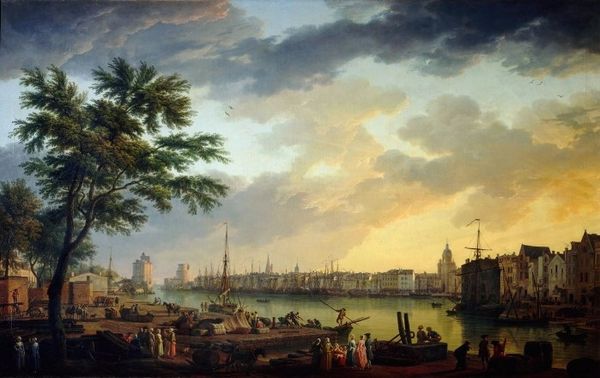
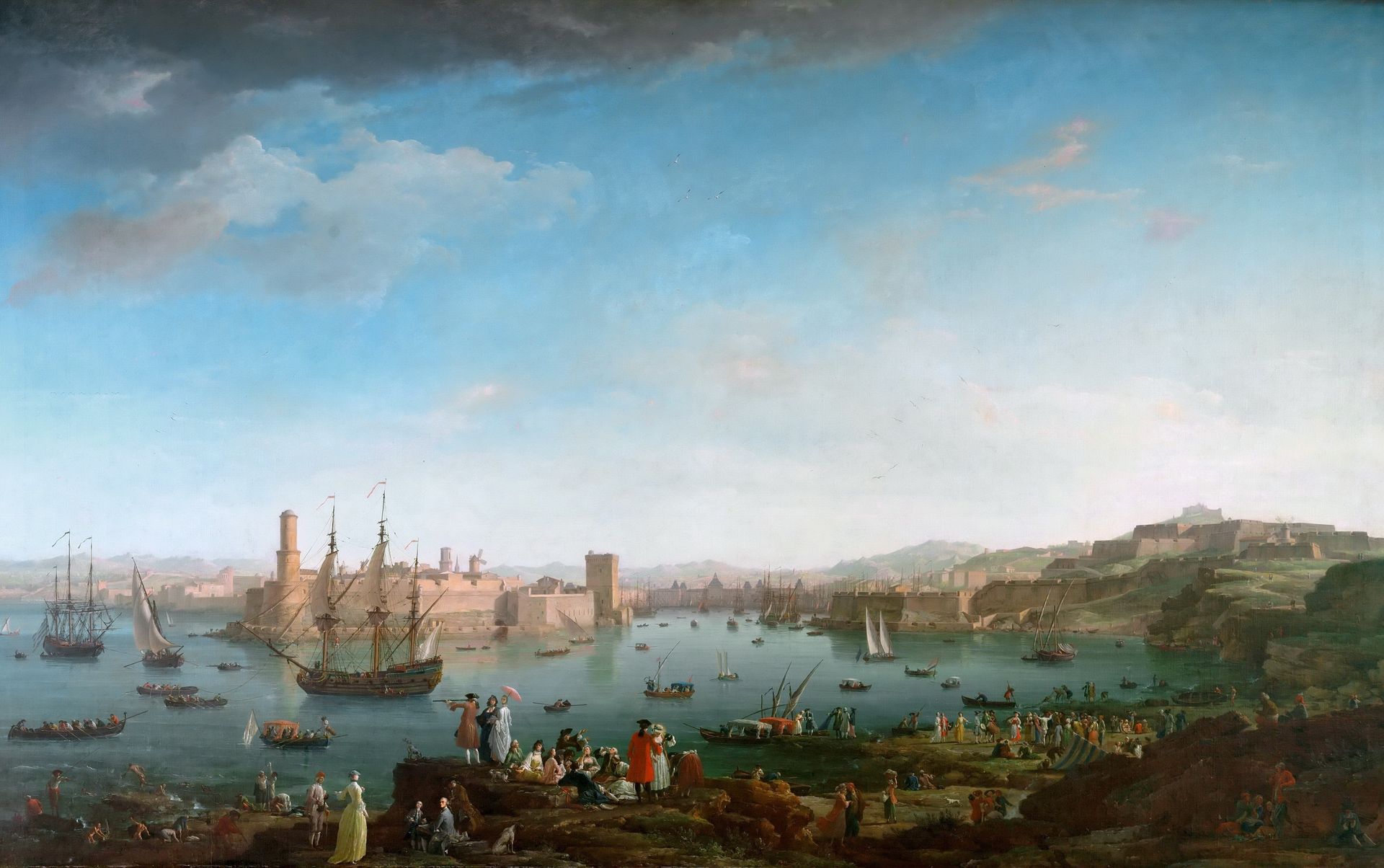
Claude-Joseph Vernet created this large canvas depicting L'entrée du port de Marseille. This painting exemplifies the eighteenth-century fashion for idealized landscapes, but it also speaks to France's growing sense of national and commercial pride. Marseille was, and remains, a vital port city, connecting France to the Mediterranean and the world beyond. Vernet was commissioned by the French crown to produce a series of paintings documenting France's major ports, and this image is both a celebration of Marseille's economic importance, and of France's maritime power. Note the careful arrangement of the scene; the ships at anchor, the bustling quayside, and the solid architecture create a sense of order and prosperity. Vernet's paintings are not simply topographical records, but carefully constructed images that tell a particular story about France's place in the world. To understand this artwork fully, we might consult historical records of French maritime trade, as well as studies of eighteenth-century French national identity. Art like this reminds us that even seemingly straightforward landscape paintings can be powerful statements about national ambition and social order.
L'entrée du port de Marseille
1754


Artwork details
- Medium
- painting, plein-air
- Dimensions
- 165 x 263 cm
- Location
- Louvre, Paris, France
- Copyright
- Public domain
Tags
boat
sky
baroque
ship
painting
plein-air
landscape
ocean
cloud
water
cityscape
sea
Comments
Be the first to share your thoughts about this work.
About this artwork
Claude-Joseph Vernet created this large canvas depicting L'entrée du port de Marseille. This painting exemplifies the eighteenth-century fashion for idealized landscapes, but it also speaks to France's growing sense of national and commercial pride. Marseille was, and remains, a vital port city, connecting France to the Mediterranean and the world beyond. Vernet was commissioned by the French crown to produce a series of paintings documenting France's major ports, and this image is both a celebration of Marseille's economic importance, and of France's maritime power. Note the careful arrangement of the scene; the ships at anchor, the bustling quayside, and the solid architecture create a sense of order and prosperity. Vernet's paintings are not simply topographical records, but carefully constructed images that tell a particular story about France's place in the world. To understand this artwork fully, we might consult historical records of French maritime trade, as well as studies of eighteenth-century French national identity. Art like this reminds us that even seemingly straightforward landscape paintings can be powerful statements about national ambition and social order.
Comments
Be the first to share your thoughts about this work.