About this artwork
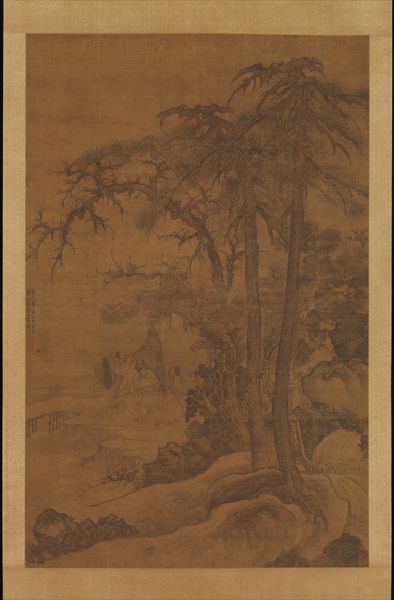
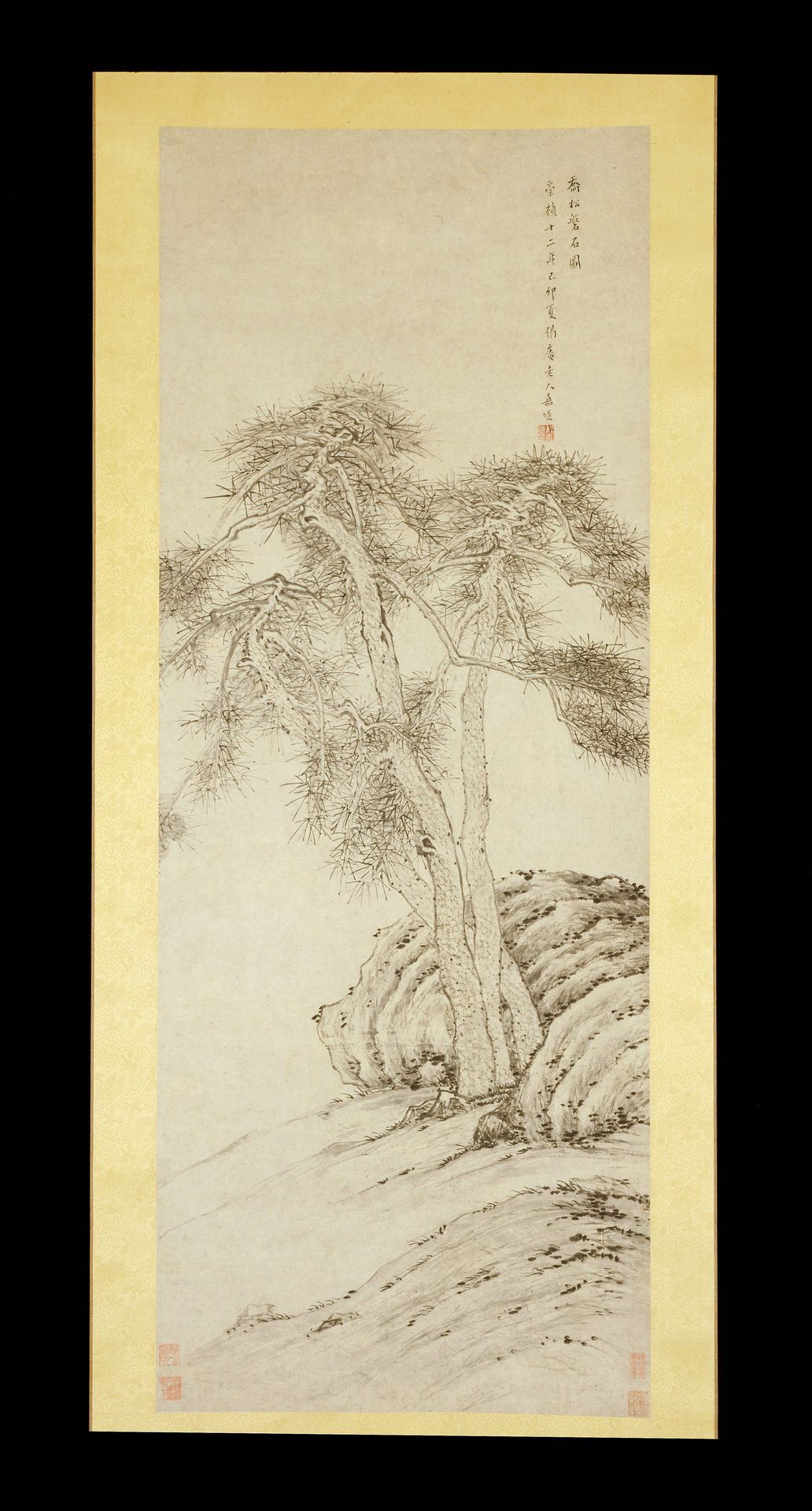
Cheng Jiasui painted *Lofty Pines and Great Rock* with ink on paper, during a period of immense social and political upheaval in China. Cheng, like many scholar-artists of his time, withdrew from public life to focus on art and personal expression. The painting presents an idealized vision of nature, but it also reflects Cheng's longing for stability in turbulent times. Pine trees in Chinese culture are symbols of resilience, longevity, and moral integrity, often representing the virtues of the ideal Confucian scholar. The great rock is a symbol of steadfastness. During the late Ming Dynasty, many artists turned to painting as a form of personal and political commentary. It can be argued that *Lofty Pines and Great Rock* uses nature as a metaphor, reflecting the artist's values and perhaps a subtle critique of the social landscape. The monochrome ink and the calligraphic brushstrokes add to the contemplative, inward-looking nature of the work. This painting invites us to reflect on our own relationship with nature, and the values we seek in times of change.
Lofty Pines and Great Rock
1639


Artwork details
- Medium
- drawing, paper, ink-on-paper, hanging-scroll, ink
- Dimensions
- 62 3/8 x 24 7/8 in. (158.43 x 63.18 cm) (overall, without roller)
- Location
- Minneapolis Institute of Art
- Copyright
- Public Domain
Tags
Comments

Cheng Jiasui was a landscape painter and amateur literatus from Anhui province. Stylistically, he is seen as an extension of the Anhui school and is included in the group of artists known as the Nine Friends of Painting of the late Ming dynasty. Pine and rocks were constant themes of literati painters. Symbolic of strength, endurance, and longevity, they reflected scholarly virtue. This painting is entitled Qiaosong Pan Shi tu (Picture of Lofty Pines and Stable Rock). The name and subject are a symbolic rebus for longevity (Qiaosong) and endurance (Pan Shi).
About this artwork
Cheng Jiasui painted *Lofty Pines and Great Rock* with ink on paper, during a period of immense social and political upheaval in China. Cheng, like many scholar-artists of his time, withdrew from public life to focus on art and personal expression. The painting presents an idealized vision of nature, but it also reflects Cheng's longing for stability in turbulent times. Pine trees in Chinese culture are symbols of resilience, longevity, and moral integrity, often representing the virtues of the ideal Confucian scholar. The great rock is a symbol of steadfastness. During the late Ming Dynasty, many artists turned to painting as a form of personal and political commentary. It can be argued that *Lofty Pines and Great Rock* uses nature as a metaphor, reflecting the artist's values and perhaps a subtle critique of the social landscape. The monochrome ink and the calligraphic brushstrokes add to the contemplative, inward-looking nature of the work. This painting invites us to reflect on our own relationship with nature, and the values we seek in times of change.
Comments
Cheng Jiasui was a landscape painter and amateur literatus from Anhui province. Stylistically, he is seen as an extension of the Anhui school and is included in the group of artists known as the Nine Friends of Painting of the late Ming dynasty. Pine and rocks were constant themes of literati painters. Symbolic of strength, endurance, and longevity, they reflected scholarly virtue. This painting is entitled Qiaosong Pan Shi tu (Picture of Lofty Pines and Stable Rock). The name and subject are a symbolic rebus for longevity (Qiaosong) and endurance (Pan Shi).