photography
#
greek-and-roman-art
#
landscape
#
photography
#
ancient-mediterranean
#
cityscape
Dimensions: height 202 mm, width 253 mm, height 254 mm, width 355 mm
Copyright: Rijks Museum: Open Domain
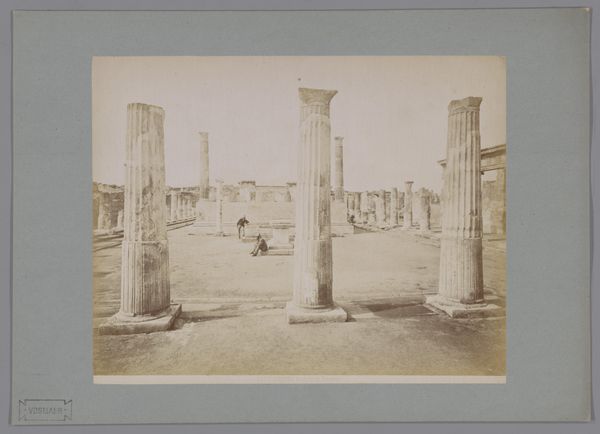
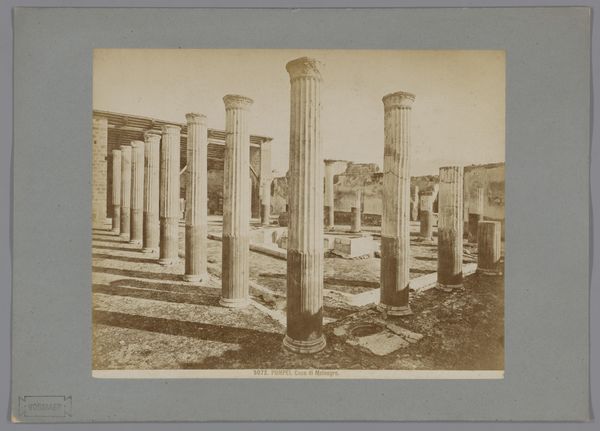
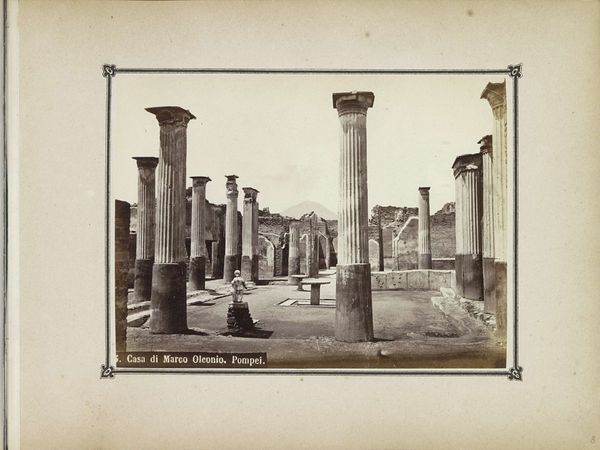
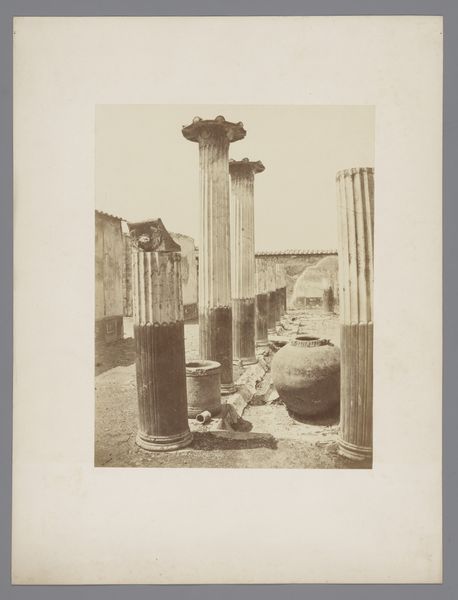
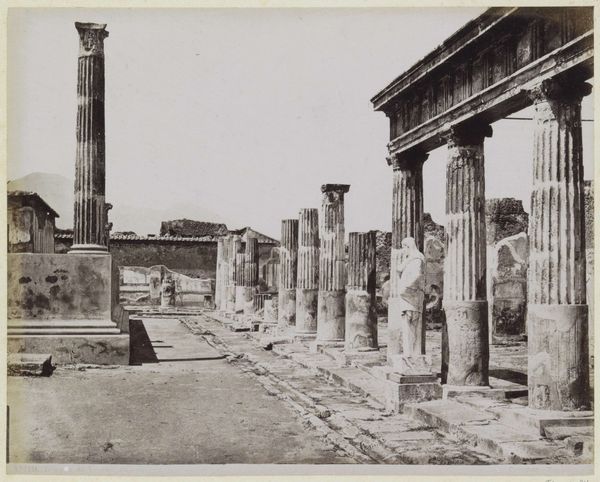
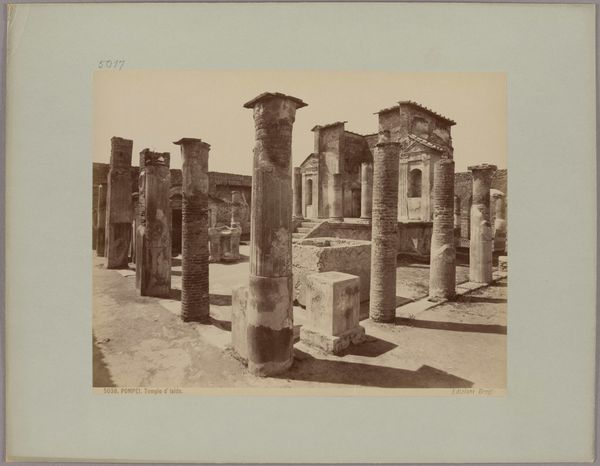
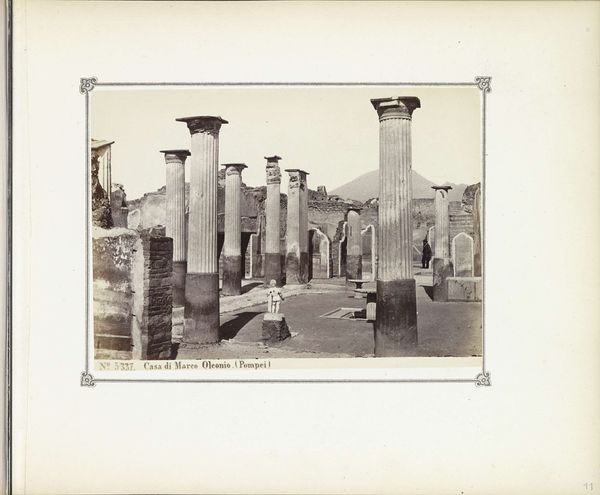
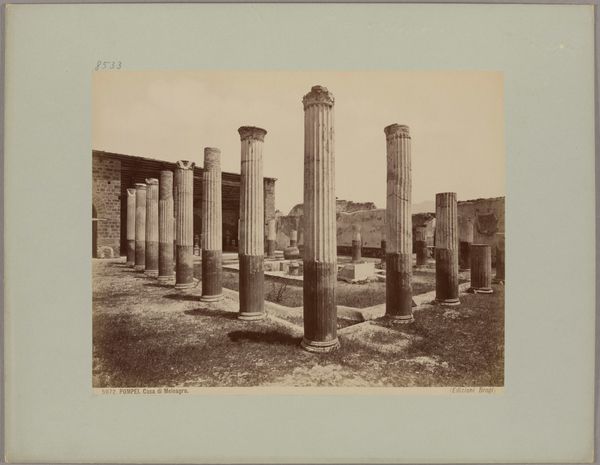
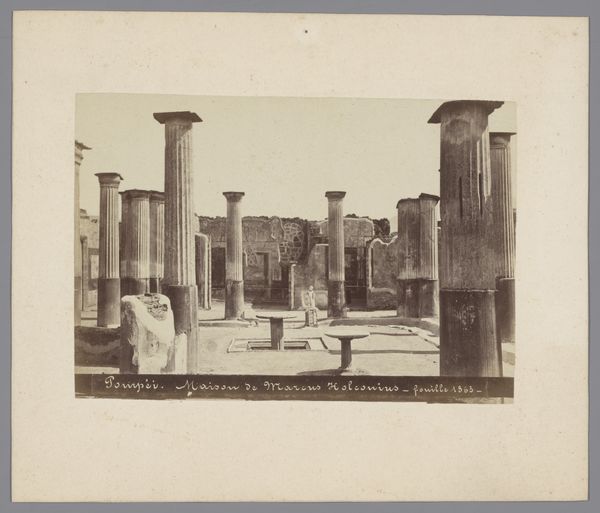
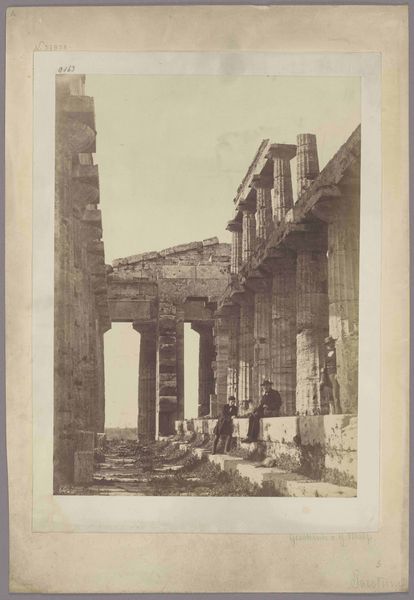
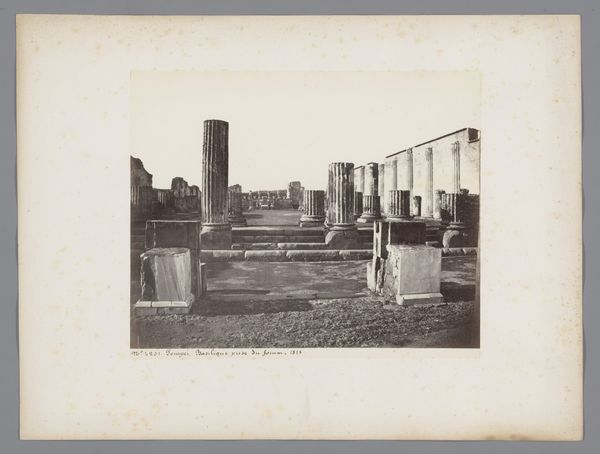
Giacomo Brogi created this albumen print of the remains of the House of Marco Olconio in Pompeii. Captured sometime in the mid-19th century, this photograph of the ancient ruins speaks volumes about the visual culture of its own time. With its stark clarity and calculated composition, Brogi’s image is not merely a record of a bygone era. Instead, the ruins of Pompeii served as a potent symbol for European audiences, evoking a sense of historical grandeur and romantic nostalgia, connecting contemporary viewers to the glories of the Roman Empire. Photographs like this one catered to the burgeoning tourism industry, allowing visitors to possess a tangible memento of their travels. But, it also contributed to a broader cultural project: the construction of a shared European identity rooted in a classical past. As historians, we can look to travel accounts, guidebooks, and other visual materials to understand the ways in which Pompeii was perceived and consumed in the 19th century. Art is contingent on social and institutional contexts.
Comments
No comments
Be the first to comment and join the conversation on the ultimate creative platform.
 Collect
 React
React Comment
More like this