About this artwork
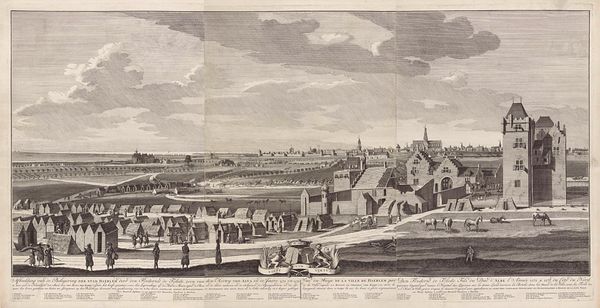
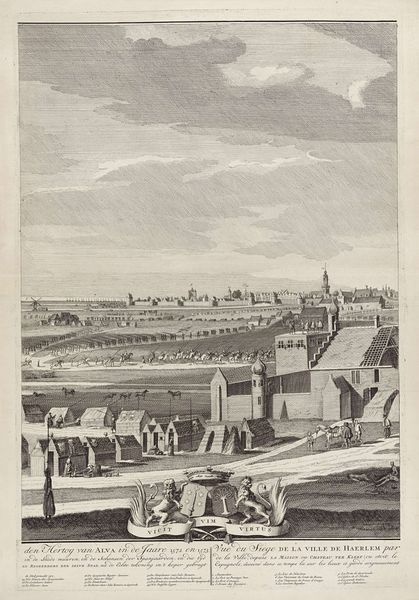
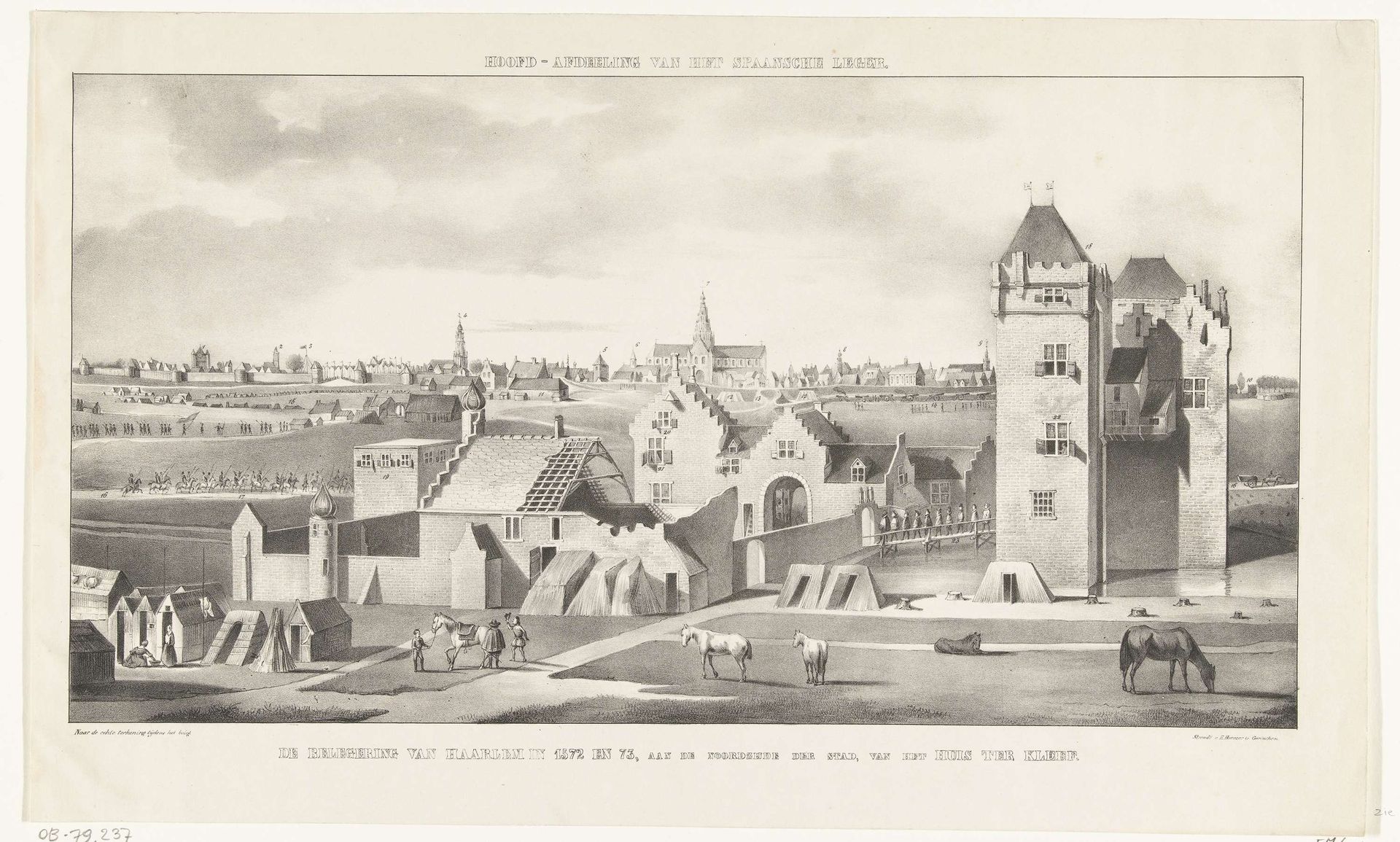
Huibert Horneer created this print of the Spanish army headquarters during the siege of Haarlem in the 19th century. The neutral tones and precise lines create a detailed, panoramic view of the historical event. The composition is structured in horizontal layers. A high horizon line divides the settlement from the sky, emphasizing the architectural structures. The artist uses linear perspective to guide the viewer's eye from the foreground, where figures and horses are visible, to the distant, densely packed town. This technique creates a sense of depth and invites contemplation on the spatial relationship between the besieging army and the besieged city. Horneer presents a formal arrangement that frames the historical conflict. The detailed rendering of buildings, fortifications, and landscapes reduces human suffering to elements in a landscape, therefore challenging viewers to reflect on the broader structures that shape historical narratives.
Hoofdkwartier van het Spaanse leger in het Huis ter Kleef tijdens het beleg van Haarlem, 1572-1573
1841 - 1843

Artwork details
- Medium
- print, engraving
- Dimensions
- height 270 mm, width 445 mm
- Copyright
- Rijks Museum: Open Domain
Tags
Comments
Share your thoughts
About this artwork
Huibert Horneer created this print of the Spanish army headquarters during the siege of Haarlem in the 19th century. The neutral tones and precise lines create a detailed, panoramic view of the historical event. The composition is structured in horizontal layers. A high horizon line divides the settlement from the sky, emphasizing the architectural structures. The artist uses linear perspective to guide the viewer's eye from the foreground, where figures and horses are visible, to the distant, densely packed town. This technique creates a sense of depth and invites contemplation on the spatial relationship between the besieging army and the besieged city. Horneer presents a formal arrangement that frames the historical conflict. The detailed rendering of buildings, fortifications, and landscapes reduces human suffering to elements in a landscape, therefore challenging viewers to reflect on the broader structures that shape historical narratives.
Comments
Share your thoughts