drawing
#
drawing
#
landscape
#
charcoal drawing
#
romanticism
#
watercolor
Dimensions: 160 mm (height) x 242 mm (width) (bladmaal)
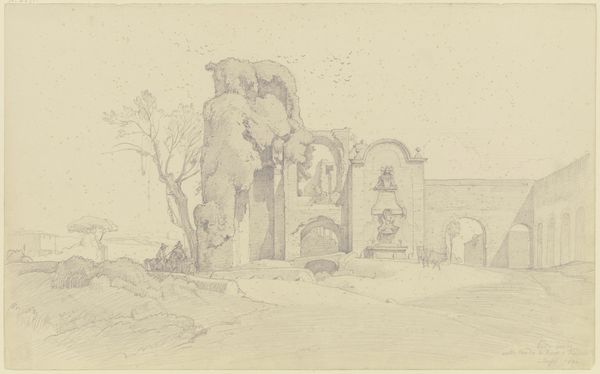
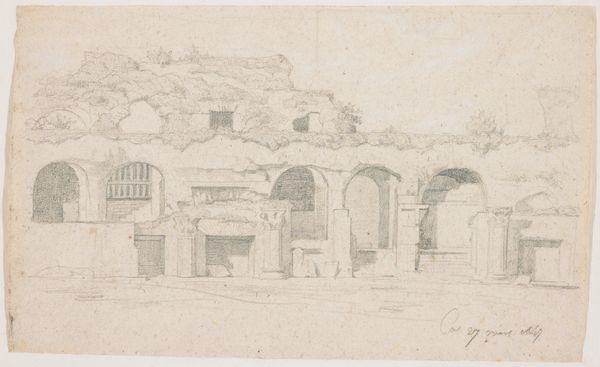
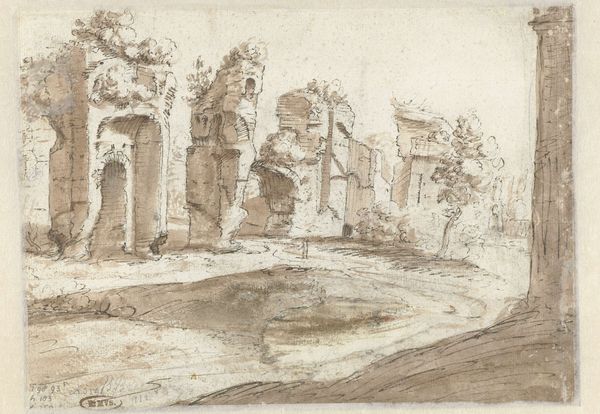
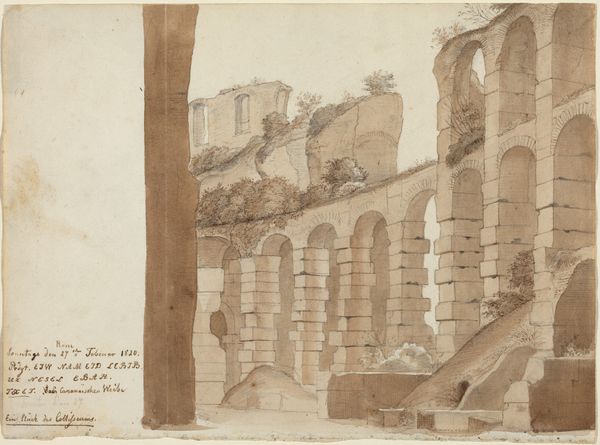
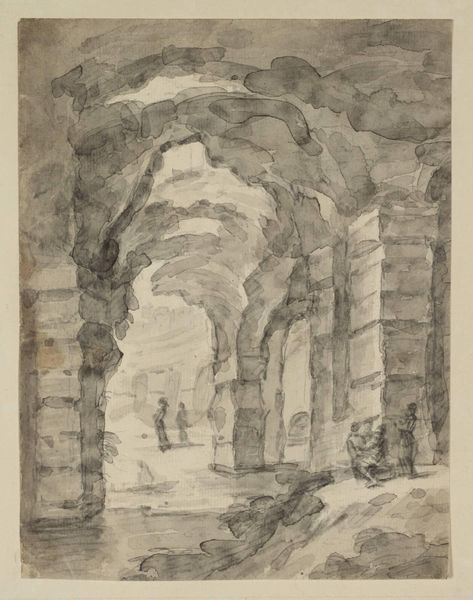
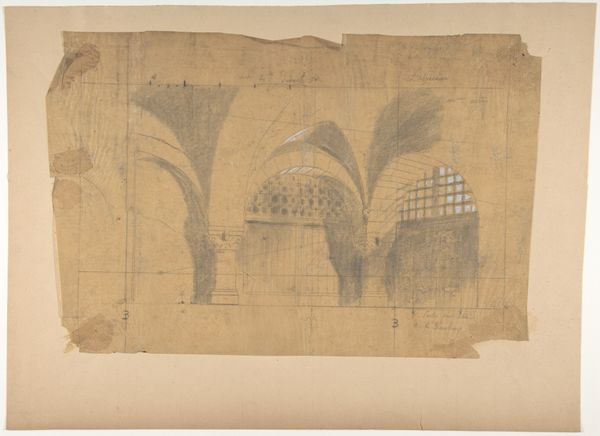
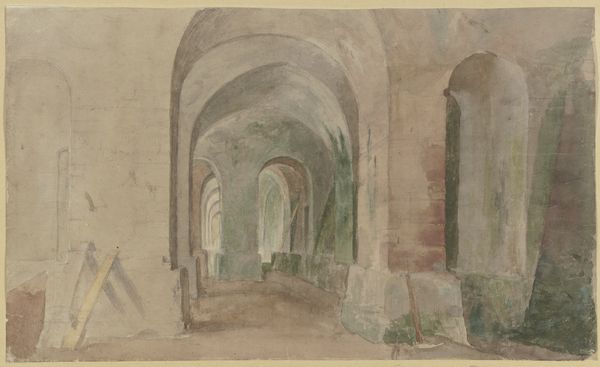
Curator: Let’s discuss “En grotte,” or "In the Cave," a drawing from between 1810 and 1865, currently residing here at the SMK, Statens Museum for Kunst. The artist, Francesco Cocchi, has rendered what appears to be a grotto scene in watercolor and charcoal. Editor: My immediate impression is of something somber. The stark contrast between the light stone and the dark washes of what I assume is the cave mouth creates a striking, almost unsettling composition. It feels weighty. Curator: Precisely. The artist employs a strategic manipulation of light and shadow to build the depth of field, establishing the mood as dark and secluded, almost mournful. Structurally, we see a classical Romantic composition, using nature to convey intense emotion. Editor: Focusing on the materials, the texture achieved through charcoal and watercolor lends a raw, almost unfinished feel to the piece, echoing the roughness of a natural cave environment. I’m thinking about the labor involved in pigment creation at the time, connecting us to the artistic process directly. It's tangible. Curator: Considering Romanticism, the rough-hewn appearance aligns with the period's reverence for nature's power, its sublime, overwhelming effect on humanity. Notice the rendering of architectural elements: their forms, though suggestive of human intervention, are ultimately overtaken by the wild environment. Editor: And looking at those suggestive forms, they do reference architecture, classical motifs… but executed with what you mentioned as the unfinished, raw method. The interplay hints at a relationship between constructed space and the landscape in this time period. The way these media were processed adds further significance, reflecting available tools of production. Curator: I agree completely. Cocchi presents us with an almost dialectical vision of Romanticism, of structure and feeling, through form and, now knowing a bit about the material's source, also through texture. Editor: So while diving into production, use of the materials and context brings its own new layer, in conversation with how you see the work structurally. A landscape pregnant with dualities between feeling and form, the crafted and the elemental, made stark through the material realities.
Comments
No comments
Be the first to comment and join the conversation on the ultimate creative platform.
 Collect
 React
React Comment
More like this