About this artwork
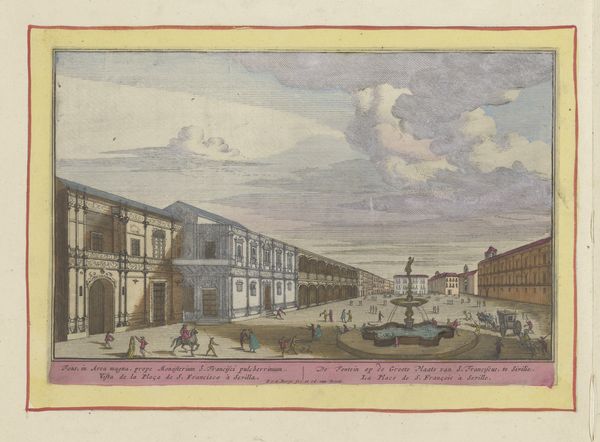
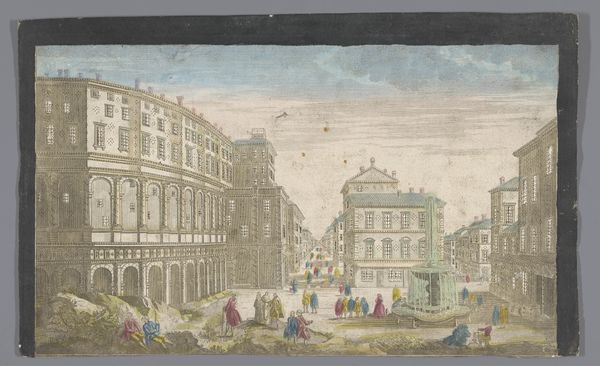
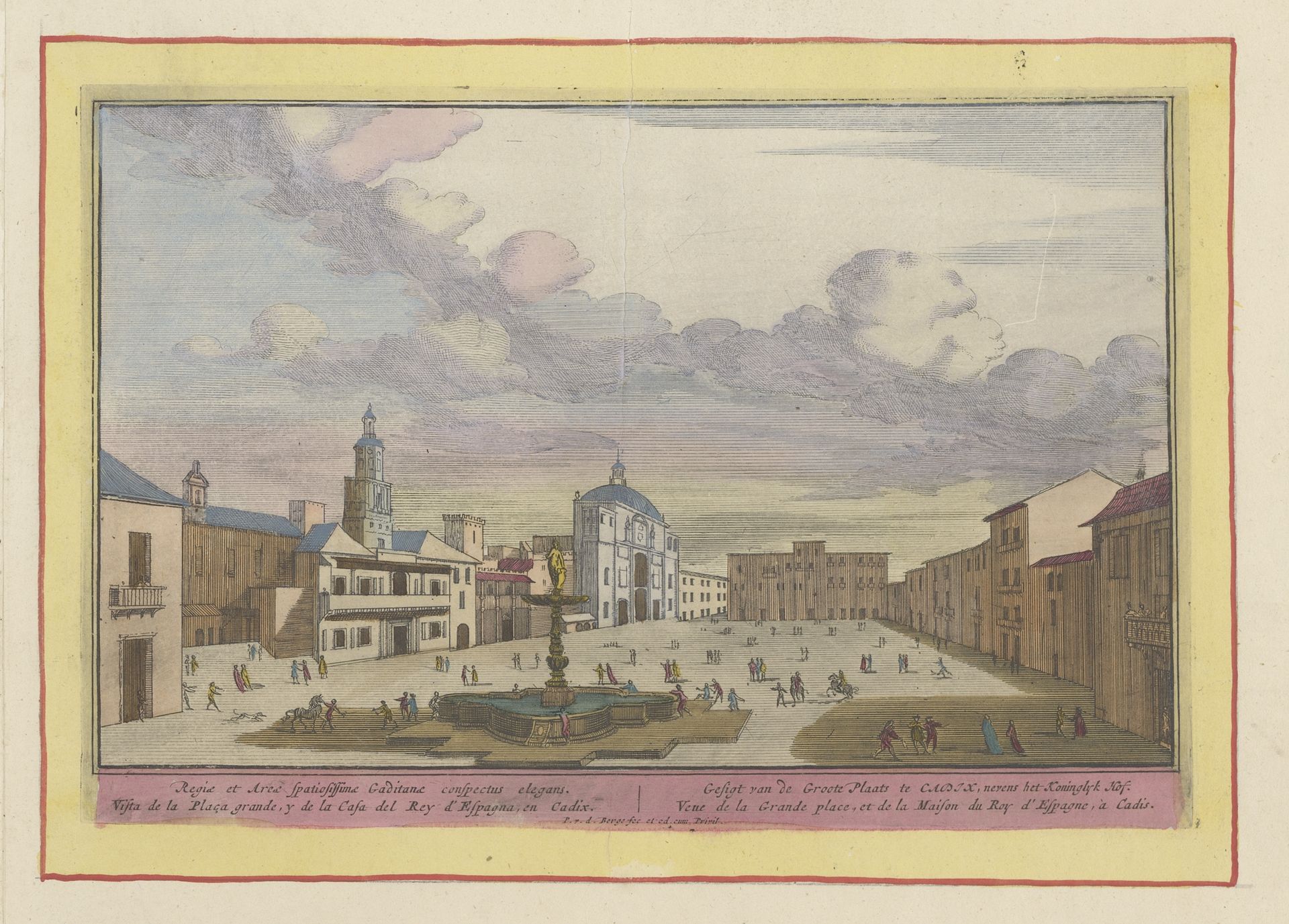
Pieter van den Berge created this print of the Great Square in Cádiz. It invites us to reflect on Spain's global influence during the 17th and 18th centuries. Consider how Cádiz was a crucial port for Spanish trade with the Americas. This print is not just a depiction of a physical space, but also a representation of economic power, colonial ambition, and cross-cultural exchange. The figures populating the square, rendered with a delicate hand, hint at the diverse social fabric of Cádiz. How might the identities and experiences of these individuals—merchants, sailors, and enslaved peoples—intersect within this space? As you observe the orderly architecture and open expanse of the square, consider its role in shaping the collective identity and social interactions of the city's inhabitants. Does this image reinforce a sense of imperial authority, or does it offer a glimpse into the lived experiences of those who navigated the complexities of a colonial society?
Gezicht op het grote plein in Cádiz 1694 - 1737

Pieter van den Berge
1659 - 1737Location
RijksmuseumArtwork details
- Medium
- drawing, print, etching, watercolor, engraving
- Dimensions
- height 170 mm, width 254 mm
- Location
- Rijksmuseum
- Copyright
- Rijks Museum: Open Domain
Tags
drawing
water colours
baroque
etching
landscape
watercolor
coloured pencil
cityscape
engraving
Comments
No comments
About this artwork
Pieter van den Berge created this print of the Great Square in Cádiz. It invites us to reflect on Spain's global influence during the 17th and 18th centuries. Consider how Cádiz was a crucial port for Spanish trade with the Americas. This print is not just a depiction of a physical space, but also a representation of economic power, colonial ambition, and cross-cultural exchange. The figures populating the square, rendered with a delicate hand, hint at the diverse social fabric of Cádiz. How might the identities and experiences of these individuals—merchants, sailors, and enslaved peoples—intersect within this space? As you observe the orderly architecture and open expanse of the square, consider its role in shaping the collective identity and social interactions of the city's inhabitants. Does this image reinforce a sense of imperial authority, or does it offer a glimpse into the lived experiences of those who navigated the complexities of a colonial society?
Comments
No comments