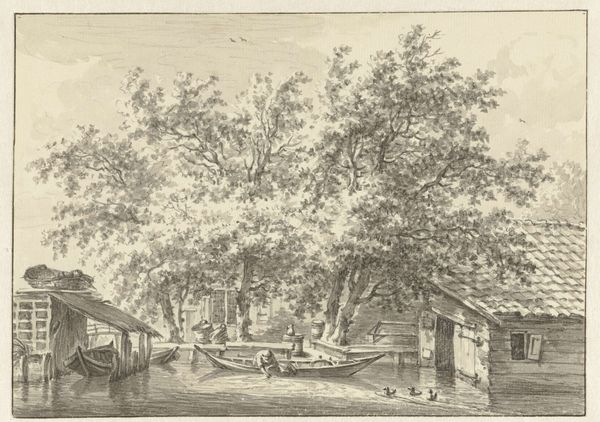
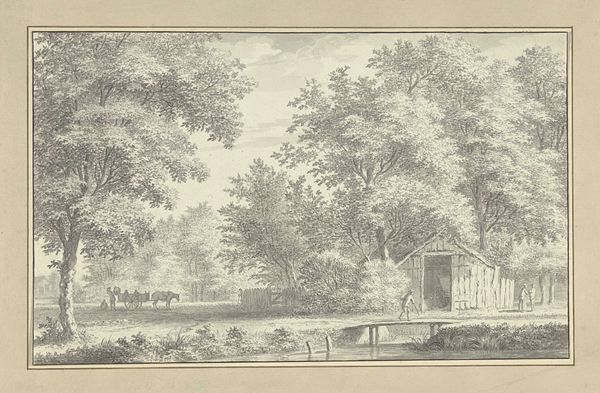
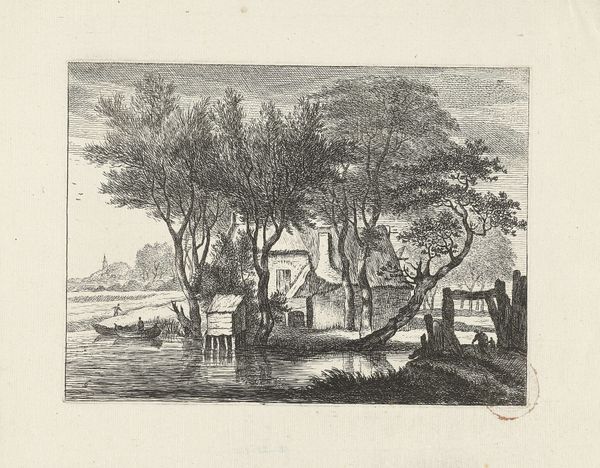
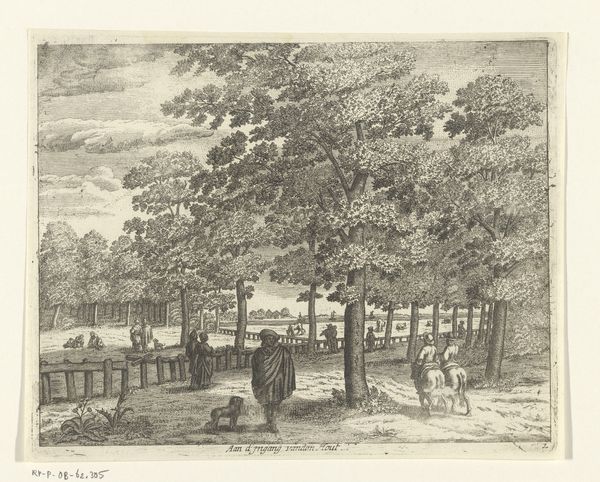
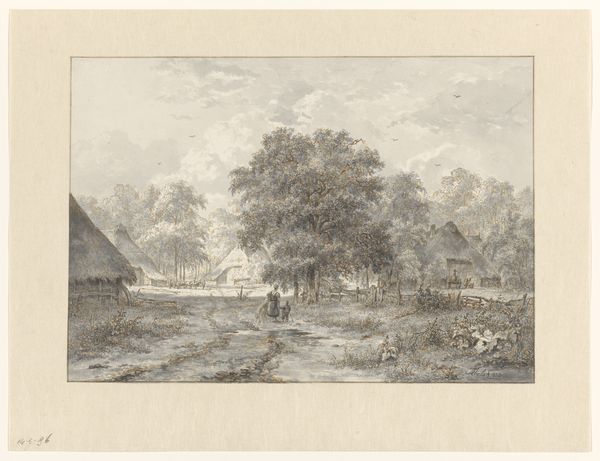
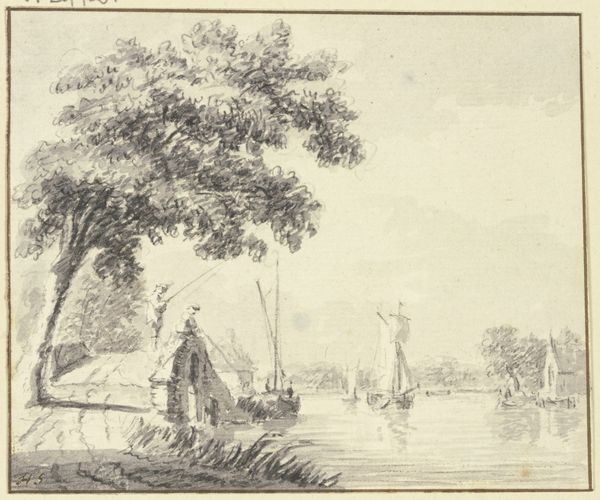
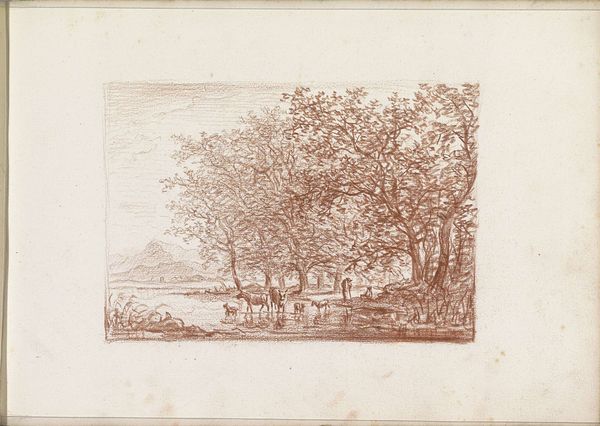
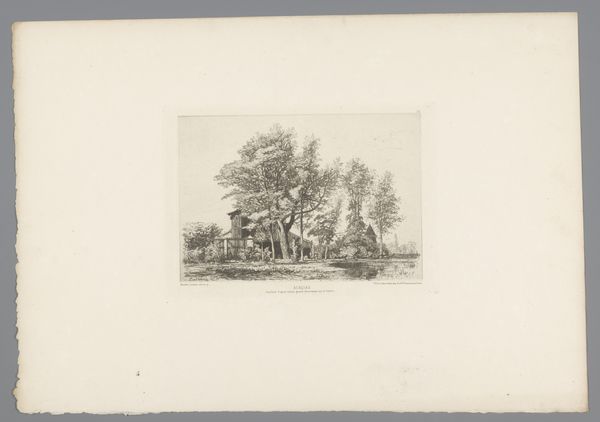
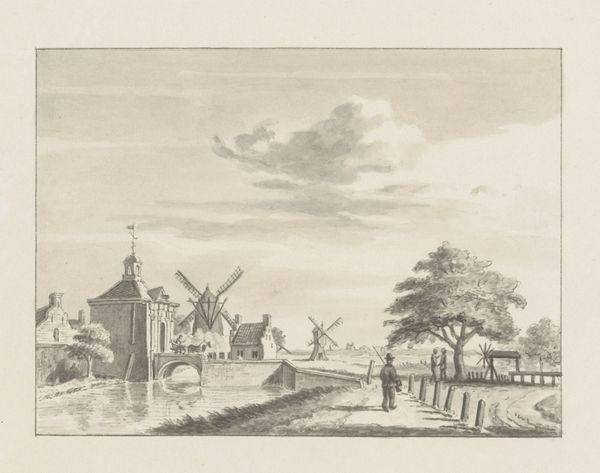
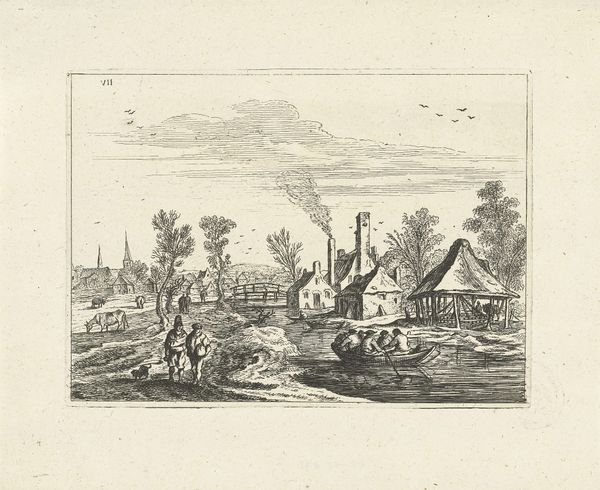
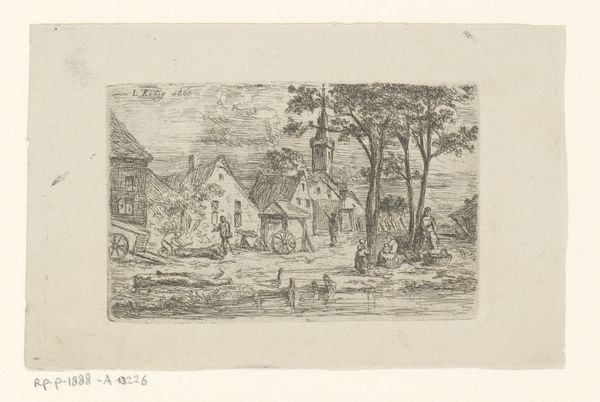
Vrouw en een man werkend in een boomgaard aan het water 1836 - 1912
0:00
0:00

isaacweissenbruch
Rijksmuseum
drawing, ink
#
drawing
#
landscape
#
ink
#
genre-painting
#
realism
Dimensions: height 65 mm, width 90 mm
Copyright: Rijks Museum: Open Domain
Curator: Looking at Isaac Weissenbruch's "Vrouw en een man werkend in een boomgaard aan het water," created sometime between 1836 and 1912, my first impression is of tranquility amidst labor. Editor: It feels like a vignette from a bygone era, almost dreamlike despite the everyday subject matter. There is an underlying sense of the sacred woven into the ordinary labor being depicted here. Curator: Indeed. As an iconographer, the way Weissenbruch arranges the composition reminds me of early landscape art; figures nestled within nature, partaking in honest labor, almost like Adam and Eve maintaining their garden. There’s a resonance with earlier modes of seeing humanity within nature's embrace. Editor: It’s a familiar theme during the nineteenth century. This image seems connected to the romanticization of rural labor which in the socio-political climate was frequently idealized by urban elites yearning for simpler, more 'authentic' ways of life. Curator: Note the use of ink to describe texture. Observe how he defines each leaf or wooden plank. One can sense how his engagement is rooted in careful attention, evoking associations with humility, groundedness, and patience that speak of an ancient sensibility towards working the earth. Editor: It’s intriguing to note that such an intimate portrayal finds a place in the Rijksmuseum's collection. It reminds us that artistic appreciation and documentation were shifting to find beauty in common life beyond history painting, contributing toward more modern sensibilities and ways of celebrating folk culture. Curator: Exactly. In his landscapes and his dedication to realistically illustrating agrarian work, the symbols weave an eternal story of co-dependence between nature and human existence. It is still alive today in our contemporary context, thus demanding continuous appreciation. Editor: It really does urge one to see the deeper socio-historical roots behind contemporary life, where work, culture, and nature's beauty continuously converge. This seemingly unassuming piece invites reflection upon such intersections that continuously play into what it means to coexist peacefully together with nature and society, thus speaking to us throughout centuries.
Comments
No comments
Be the first to comment and join the conversation on the ultimate creative platform.
 Collect
 React
React Comment
More like this