engraving
portrait
baroque
old engraving style
history-painting
academic-art
engraving
Dimensions: height 458 mm, width 590 mm
Copyright: Rijks Museum: Open Domain
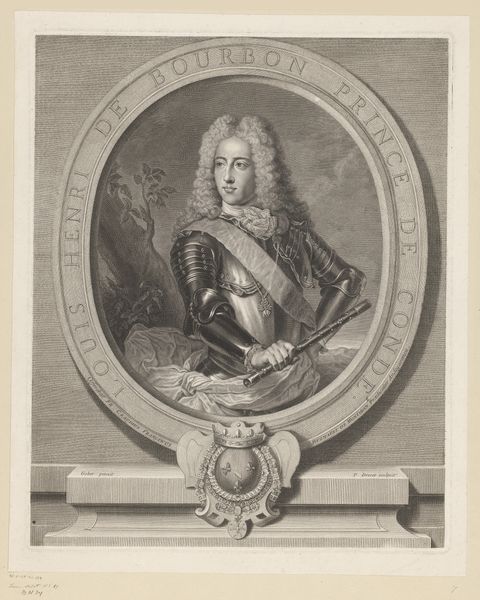
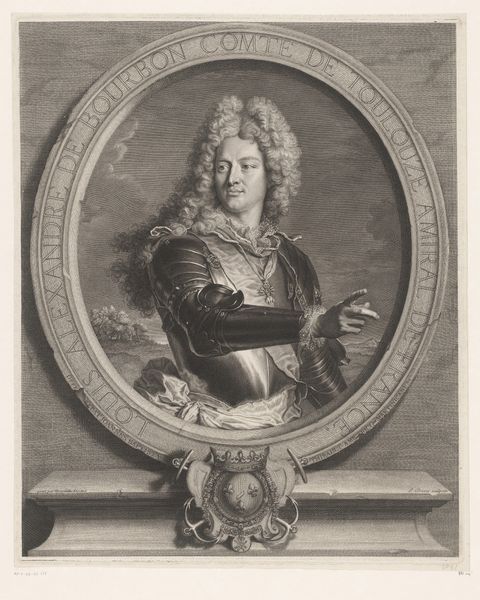
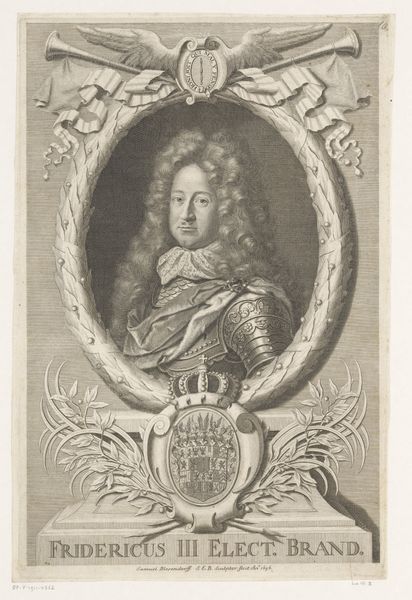
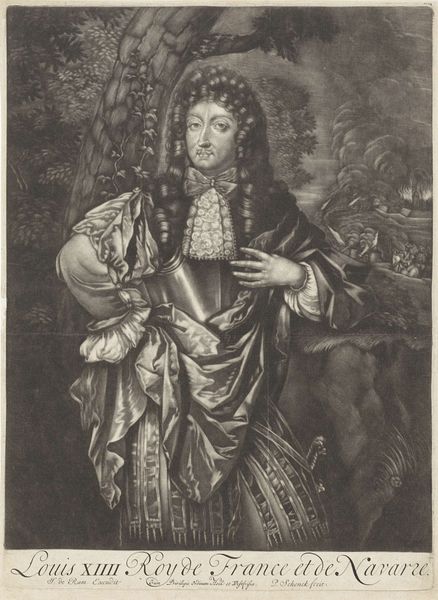
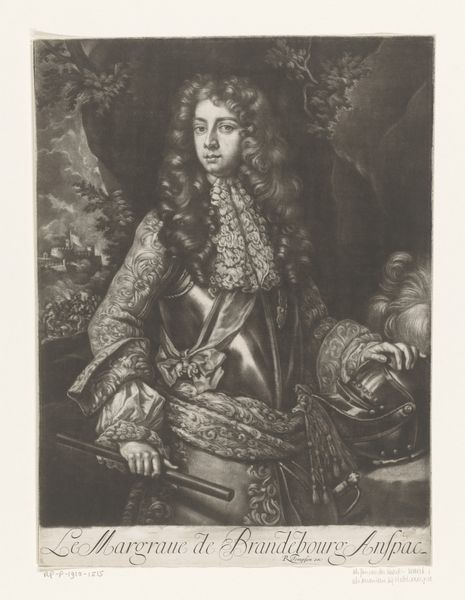
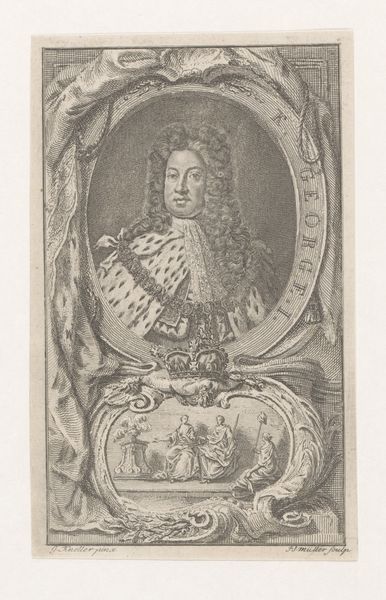
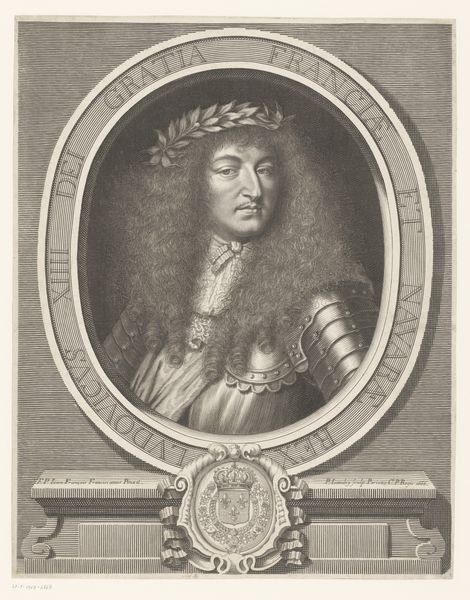
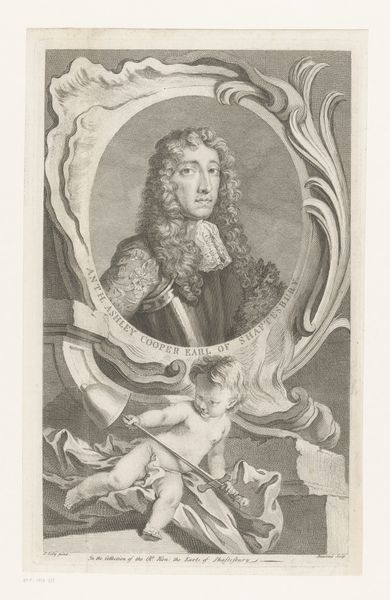
Curator: What strikes me immediately about this engraving is its air of theatricality. Look at the ornate frame and the cascade of banners. Editor: Indeed. I am interested in the labor required to produce such an elaborate image. The detail is astounding when you consider this is all achieved through the relatively simple process of carving into a metal plate. Curator: The Rijksmuseum holds this portrayal of Louis Alexander of Bourbon, made by Gerard Edelinck in the late 17th, early 18th century. There's something powerful in how the artist positions him within that oval frame, almost as if he were a relic. The iconography just adds to it, don't you think? Editor: Absolutely. I’m drawn to the juxtaposition of the relatively soft rendering of the face against the sharper depiction of armor and weapons. There's a tension there between the individual and the tools of power. What kind of cultural weight would these signifiers bear? Curator: Enormous weight. This image reinforces Louis Alexander's status, reflecting the era’s focus on authority, but also its ideal of masculinity tied to both warfare and intellect. The surrounding symbols like flags and spears tell of a life intertwined with governance and the sea. Think about the Fleur-de-lis! Editor: Right, the process of repetition becomes potent: countless lines cut to produce an image replicated en masse. Consumption of images like these must have bolstered a shared belief system—in power, lineage, and perhaps even divine right. Curator: I agree entirely. What’s remarkable to me is that these images, distributed widely, reinforced his importance but also reshaped collective memory and perception. Visual language was, and still is, an active force. Editor: And it highlights a fascinating aspect of the art world: the means of distribution as a powerful instrument for shaping societal values, influencing perceptions, and disseminating propaganda, for a select audience. Thanks to Edelinck, Louis Alexander wasn’t simply powerful—he *appeared* powerful. Curator: Exactly, through careful choices of imagery and style. This was definitely interesting! Editor: I’d say this discussion brought home just how crucial understanding materials and processes is to revealing cultural history!
Comments
No comments
Be the first to comment and join the conversation on the ultimate creative platform.
 React
React Comment