c. 17th century
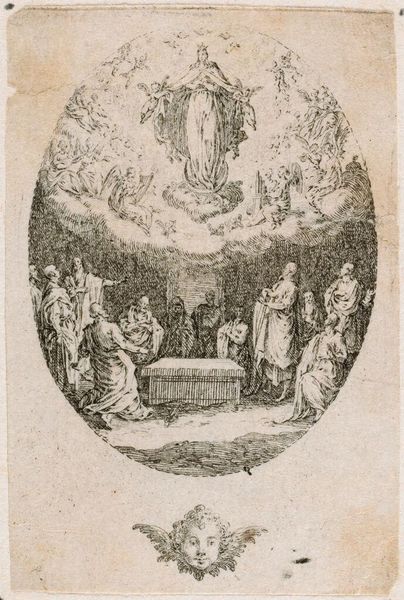
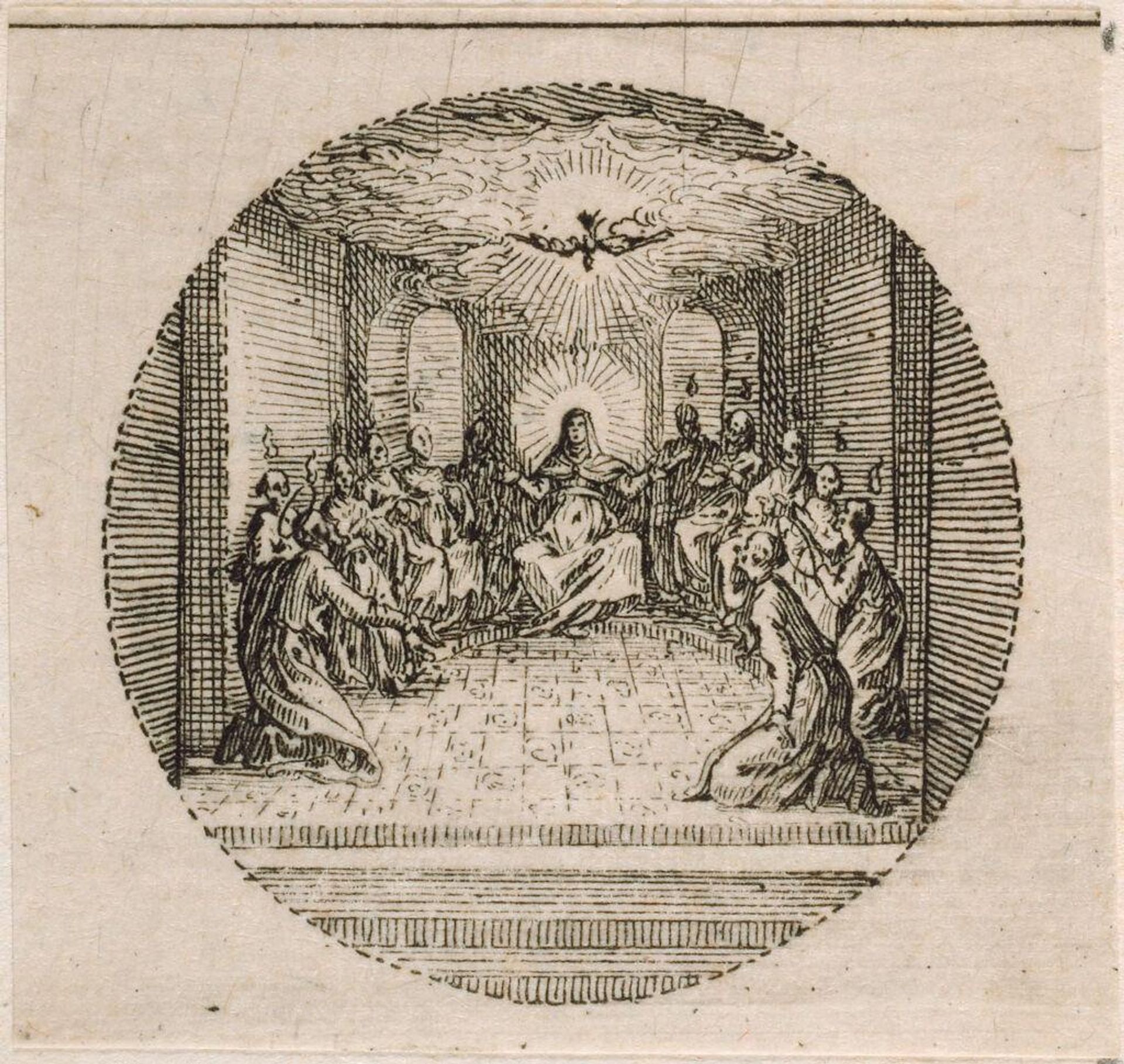
Pentecost


Listen to curator's interpretation
Curatorial notes
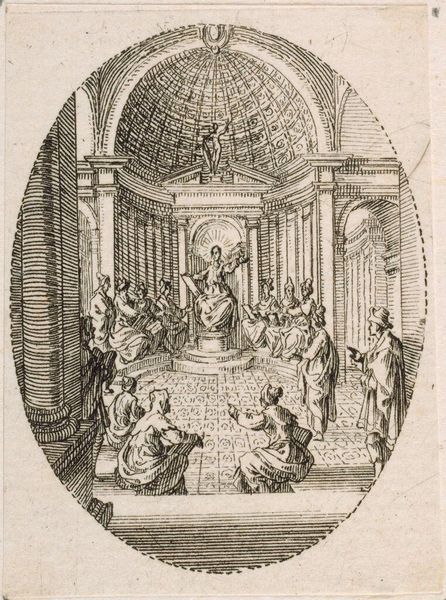
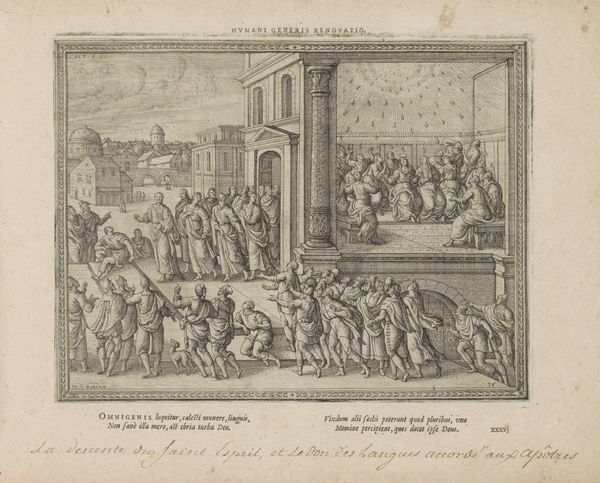
Editor: Here we have Jacques Callot's "Pentecost," a small etching. The figures are tiny, but their posture conveys a sense of awe. What do you see in this piece? Curator: I see a visual representation of the early church grappling with identity. Callot is working within Counter-Reformation art strategies, which often seek to solidify Catholic doctrine. Editor: So, the artist uses this scene to reinforce established religious power? Curator: Exactly. It's about visually encoding a hierarchy and collective identity, particularly relevant during a time of religious and political upheaval. The artwork aims to consolidate the faithful around specific beliefs and traditions. Editor: That's a powerful message packed into such a small image. It makes you think about how art can shape collective understanding. Curator: Indeed, examining the relationship between art and power structures lets us understand the period’s impact on identity.