About this artwork
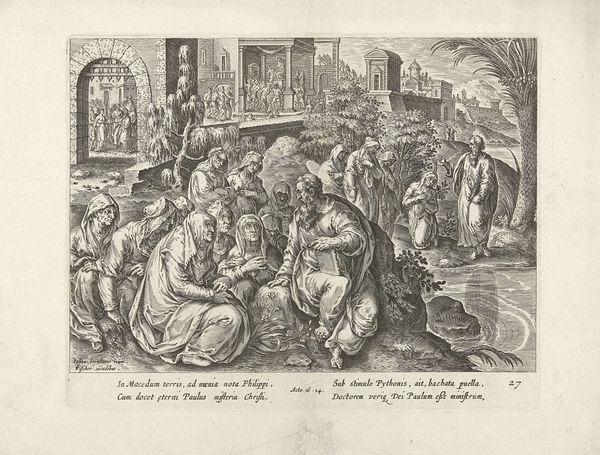
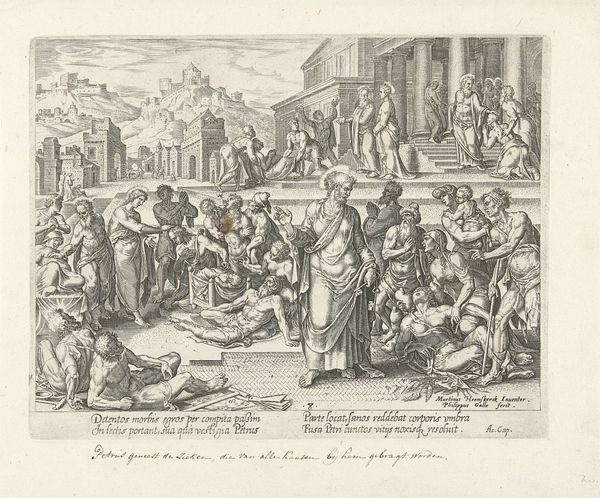
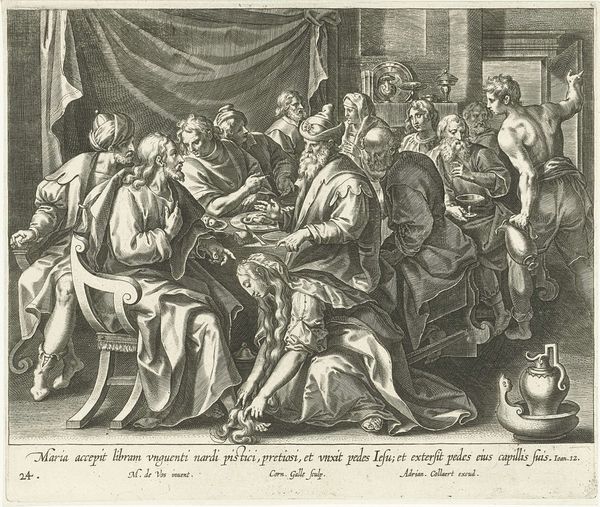
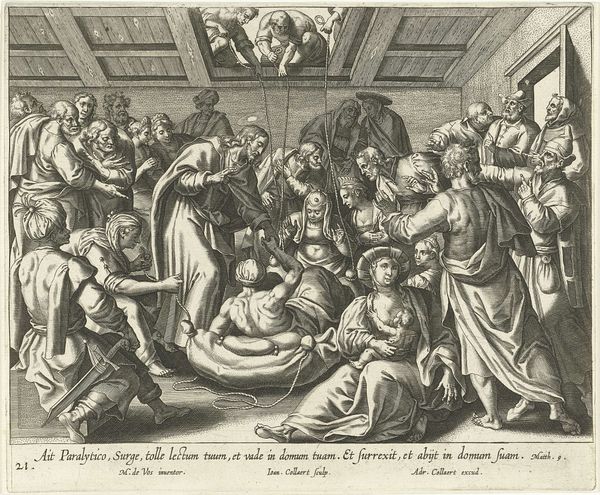
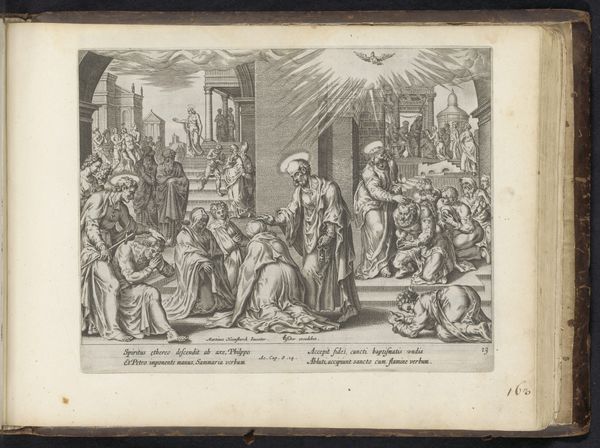
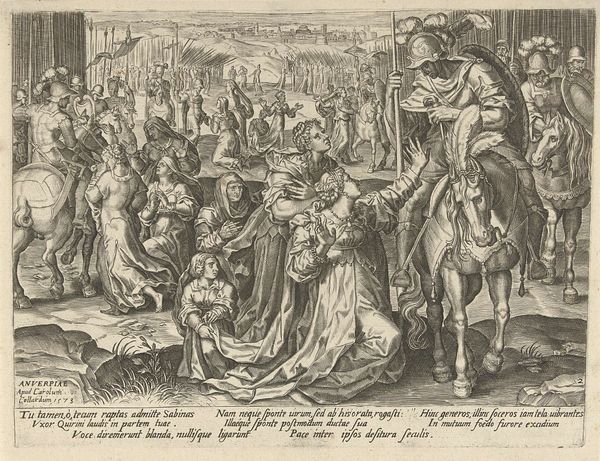
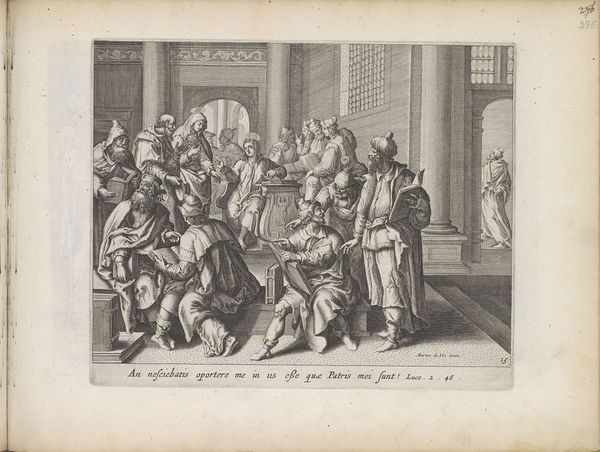
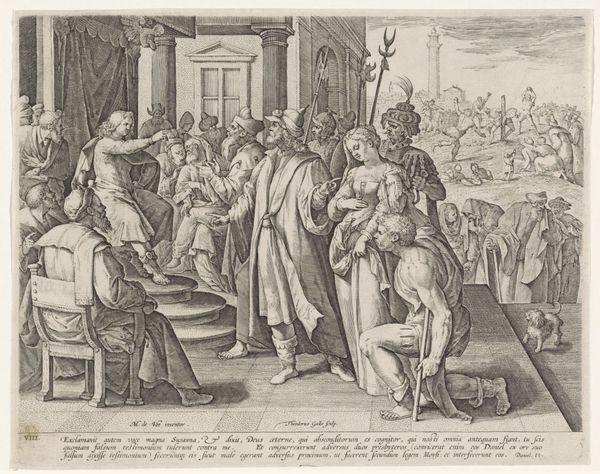
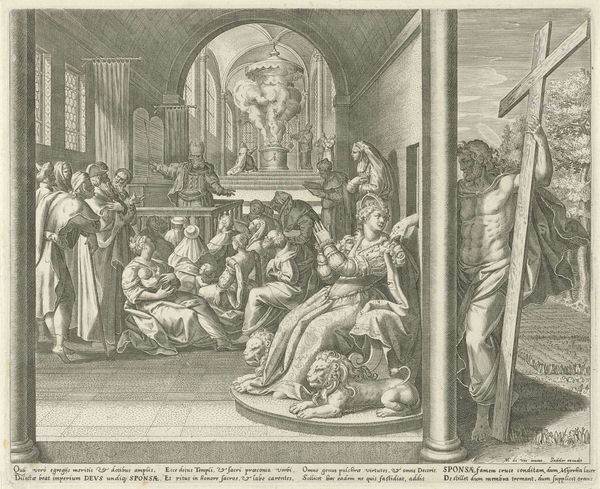
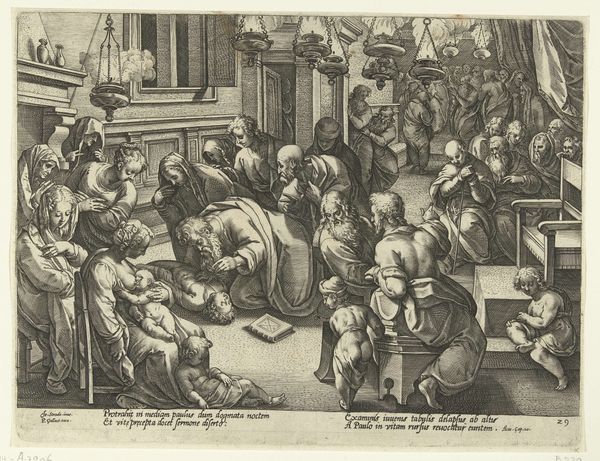
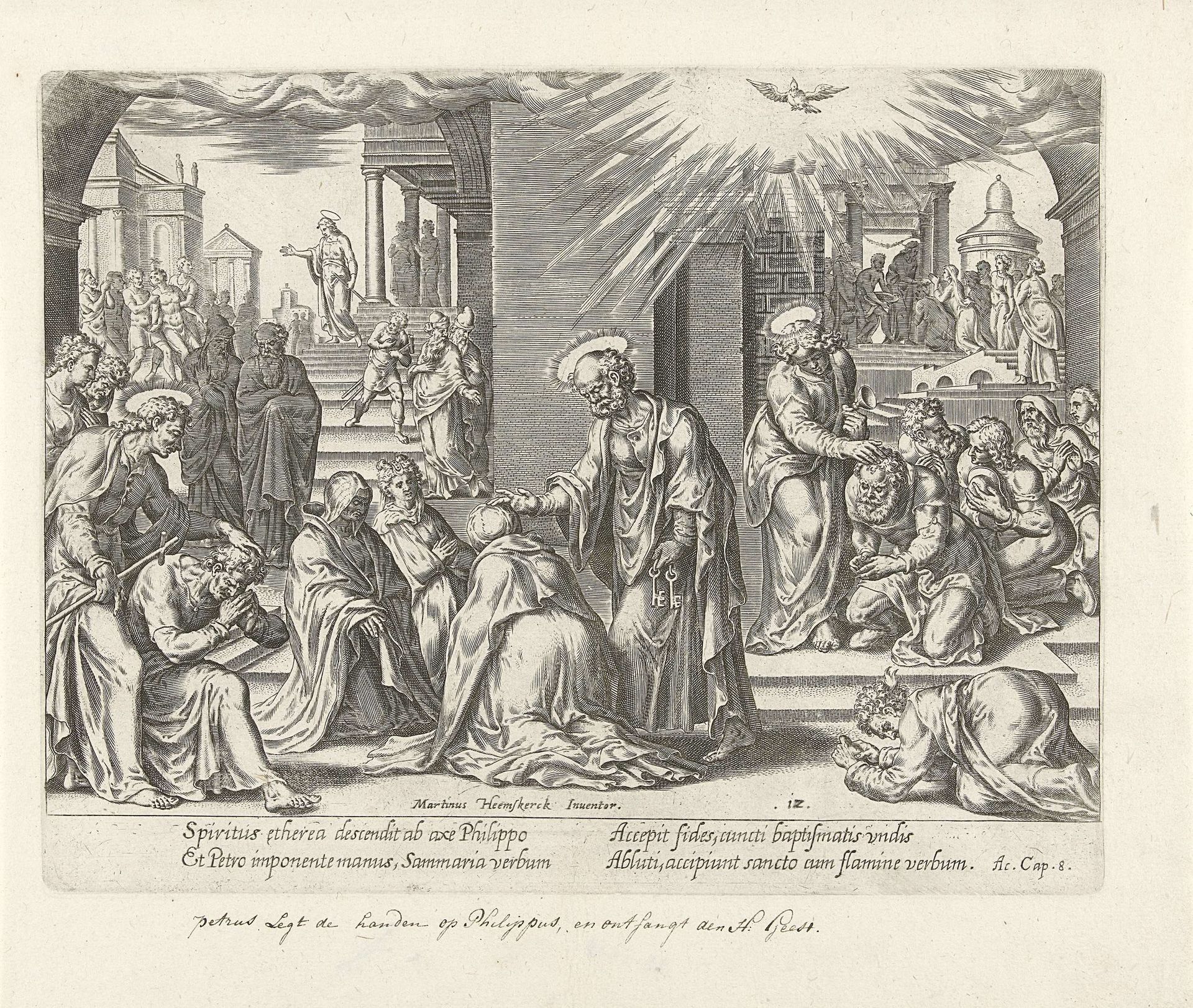
This print, made by Philips Galle in the late 16th century, represents a pivotal moment of religious conversion in Samaria. Galle, as a printmaker, worked with copper plates and burins to create this image. It's a testament to the power of repeatable imagery in the early modern period. The lines you see are not simply drawn, but are deeply incised into the metal. Ink would have been applied to the plate, then wiped away, leaving ink only in the carved lines. This is a laborious process, and the result is a subtle, textured surface. Consider the social context of this print, and how images like this circulated widely, carrying religious and political ideas. The image could be reproduced ad infinitum in a print shop, representing a powerful and accessible method to spread stories. These techniques, though not 'high art', were critical to shaping public perception and disseminating new ideas. By appreciating the skill, labor, and means of production, we can understand how prints played a crucial role in shaping the world.
Petrus, Johannes en Filippus zegenen gelovigen in Samaria
1582

Philips Galle
1537 - 1612Location
RijksmuseumArtwork details
- Medium
- print, engraving
- Dimensions
- height 210 mm, width 272 mm
- Location
- Rijksmuseum
- Copyright
- Rijks Museum: Open Domain
Tags
Comments
Share your thoughts
About this artwork
This print, made by Philips Galle in the late 16th century, represents a pivotal moment of religious conversion in Samaria. Galle, as a printmaker, worked with copper plates and burins to create this image. It's a testament to the power of repeatable imagery in the early modern period. The lines you see are not simply drawn, but are deeply incised into the metal. Ink would have been applied to the plate, then wiped away, leaving ink only in the carved lines. This is a laborious process, and the result is a subtle, textured surface. Consider the social context of this print, and how images like this circulated widely, carrying religious and political ideas. The image could be reproduced ad infinitum in a print shop, representing a powerful and accessible method to spread stories. These techniques, though not 'high art', were critical to shaping public perception and disseminating new ideas. By appreciating the skill, labor, and means of production, we can understand how prints played a crucial role in shaping the world.
Comments
Share your thoughts