About this artwork
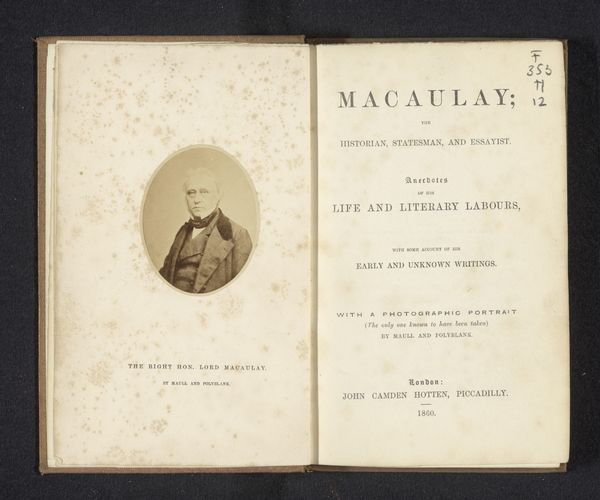
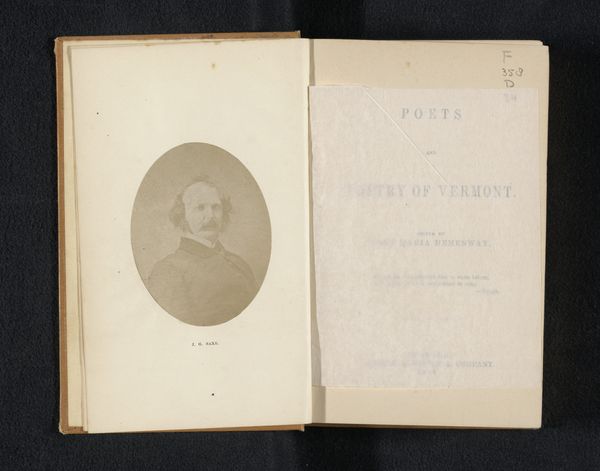
Editor: This is an image of the book "Sermons of the late Most Rev. Daniel Murray Archbishop of Dublin," published in 1859. It appears to be a print, possibly an etching. I’m struck by how it presents the archbishop – not just as a religious figure but almost as a public intellectual. How should we interpret this kind of representation in its historical moment? Curator: The choice of presenting Archbishop Murray through his sermons speaks volumes about the cultural importance of religious oration in 19th-century Ireland. It moves beyond mere portraiture, it’s a calculated portrayal of influence through rhetoric and faith, emphasizing the public role of the church leader during a time of immense social and political upheaval. The sermons being readily available via printed books provided furthered influence. Do you see any parallels with contemporary forms of public figure representation? Editor: Maybe politicians publishing their speeches today? It is a way to shape public opinion, like a more sophisticated pamphlet. Was it common to see religious leaders portrayed this way at the time? Curator: Exactly! Print media offered unprecedented reach, extending the Archbishop’s influence beyond the pulpit. Representations of religious figures at the time oscillated; some emphasizing piety, others emphasizing administrative power. This portrait subtly does both. How do you think this book circulated, and whom was it intended for? Editor: I imagine it would have circulated widely among the Catholic community, possibly even beyond. It might have served to solidify his legacy but also provide guidance and reinforce the church's teachings within a broad audience. Curator: Precisely. It's a strategic piece of public relations, in a way. Understanding this image through the lens of 19th-century Irish socio-political dynamics allows us to grasp its significance beyond mere religious iconography. Editor: I hadn’t considered the public relations aspect so overtly, viewing it more as a record of religious thought. It’s interesting to think of it as deliberately shaping a particular image of the Archbishop and, by extension, the Church. Curator: Reflecting on this image truly highlights the potent mix of religion, print culture, and the making of public figures in 19th-century Ireland.
Sermons of the late Most. Rev. Daniel Murray Archbishop of Dublin 1859

Artwork details
- Medium
- print, etching
- Dimensions
- height 221 mm, width 141 mm, thickness 43 mm
- Copyright
- Rijks Museum: Open Domain
Tags
portrait
16_19th-century
etching
book
academic-art
Comments
No comments
About this artwork
Editor: This is an image of the book "Sermons of the late Most Rev. Daniel Murray Archbishop of Dublin," published in 1859. It appears to be a print, possibly an etching. I’m struck by how it presents the archbishop – not just as a religious figure but almost as a public intellectual. How should we interpret this kind of representation in its historical moment? Curator: The choice of presenting Archbishop Murray through his sermons speaks volumes about the cultural importance of religious oration in 19th-century Ireland. It moves beyond mere portraiture, it’s a calculated portrayal of influence through rhetoric and faith, emphasizing the public role of the church leader during a time of immense social and political upheaval. The sermons being readily available via printed books provided furthered influence. Do you see any parallels with contemporary forms of public figure representation? Editor: Maybe politicians publishing their speeches today? It is a way to shape public opinion, like a more sophisticated pamphlet. Was it common to see religious leaders portrayed this way at the time? Curator: Exactly! Print media offered unprecedented reach, extending the Archbishop’s influence beyond the pulpit. Representations of religious figures at the time oscillated; some emphasizing piety, others emphasizing administrative power. This portrait subtly does both. How do you think this book circulated, and whom was it intended for? Editor: I imagine it would have circulated widely among the Catholic community, possibly even beyond. It might have served to solidify his legacy but also provide guidance and reinforce the church's teachings within a broad audience. Curator: Precisely. It's a strategic piece of public relations, in a way. Understanding this image through the lens of 19th-century Irish socio-political dynamics allows us to grasp its significance beyond mere religious iconography. Editor: I hadn’t considered the public relations aspect so overtly, viewing it more as a record of religious thought. It’s interesting to think of it as deliberately shaping a particular image of the Archbishop and, by extension, the Church. Curator: Reflecting on this image truly highlights the potent mix of religion, print culture, and the making of public figures in 19th-century Ireland.
Comments
No comments