
Curatorial notes
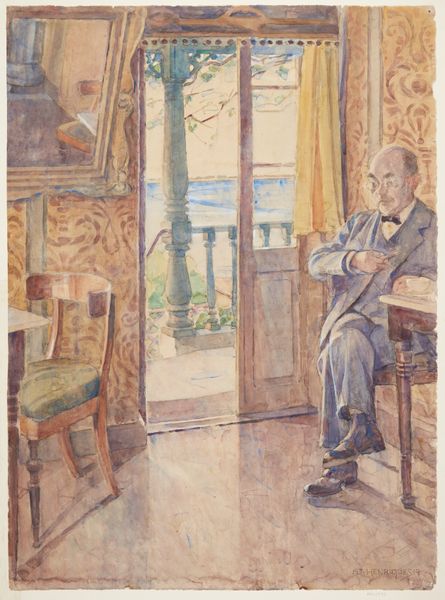
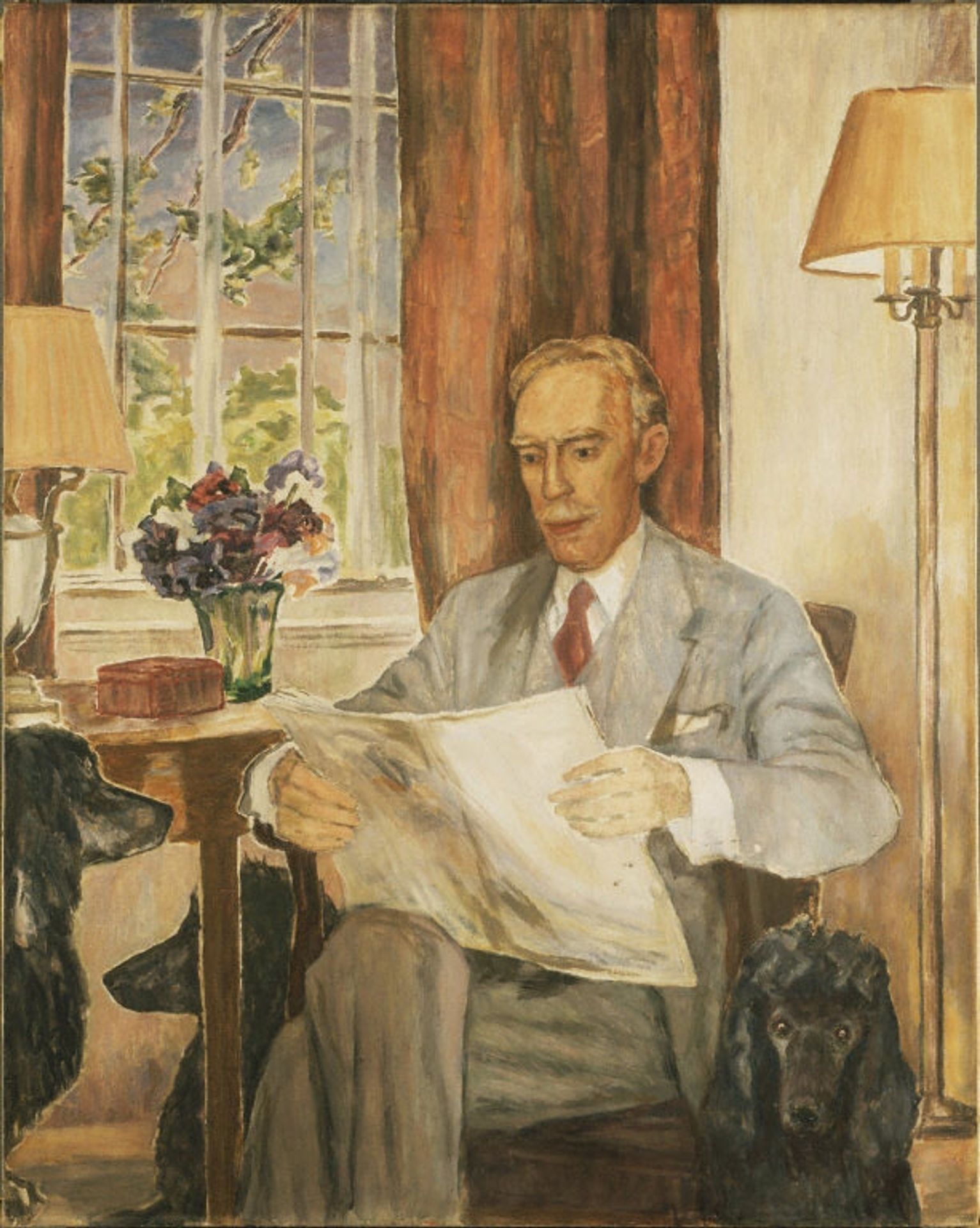
Editor: Here we have Marjorie Acker Phillips’ oil on canvas painting, "Portrait of Duncan". It gives me a rather sedate feeling, like a snapshot of domestic contentment. What do you see in this piece? Curator: I see a potent visual statement about gender and societal roles in the early to mid-20th century. Phillips paints a portrait that seems, at first glance, conventionally domestic, but when we look closely, we need to ask ourselves about the male gaze within a rapidly changing society and the gender dynamics therein. Editor: How so? The subject just seems like a man reading a newspaper. Curator: Exactly. What’s missing? Where is the female figure in this supposedly domestic scene? Consider also the historical moment. Phillips painted during a time of significant social change, especially regarding women’s roles. By showing us the *absence* of the woman, could Phillips be commenting on women’s often overlooked labor and contributions to the home and to society? Where does this leave Mr. Duncan within his societal framework? Editor: That's a fascinating perspective. So, instead of just seeing a man at leisure, we should also consider the power dynamics and unspoken narratives surrounding gender at the time. What do you think the dogs represent? Curator: Perhaps symbols of the domestic sphere and the expectation of companionship. How does this compare to a man in a home today, without children and with companion animals? Editor: I never considered looking at a portrait quite like that before, I always looked to who the work presented, not who it omitted. I'm very grateful for the viewpoint. Curator: It’s crucial to examine what isn’t immediately apparent to truly grasp an artwork’s power and social implications. Now it is my turn to thank you.