late 13th - early 14th century
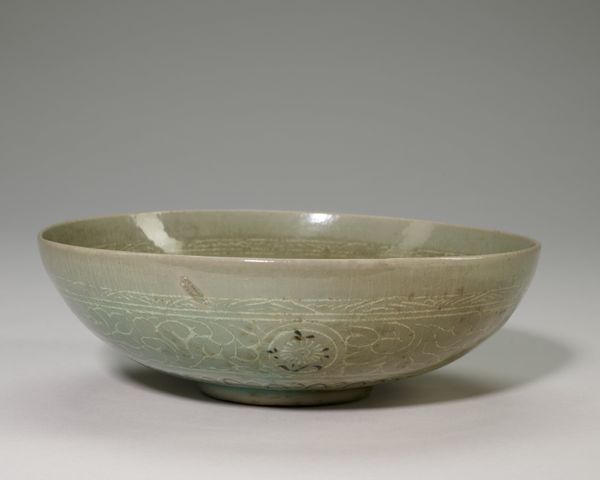
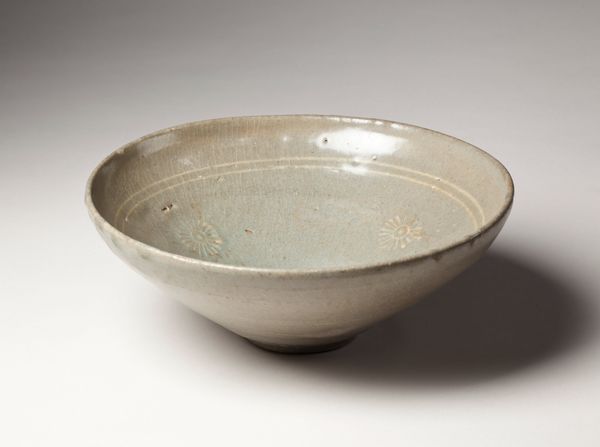
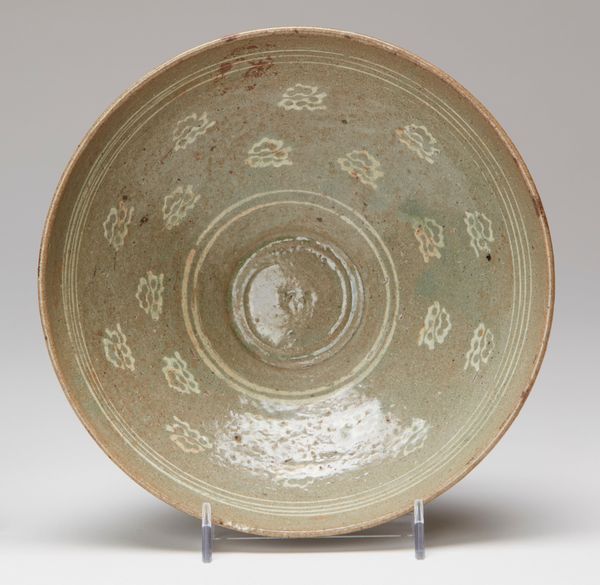
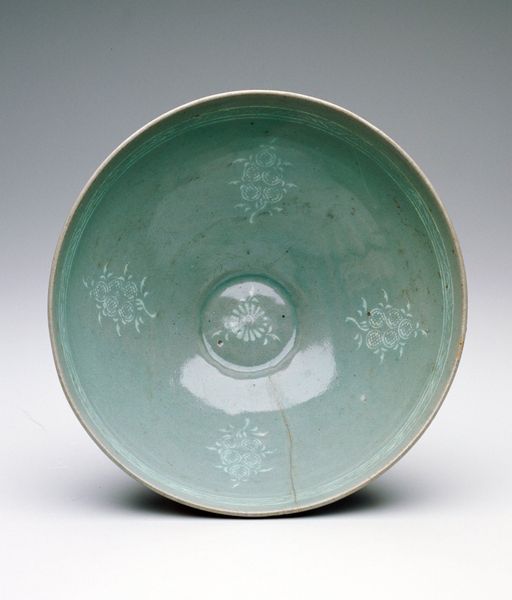
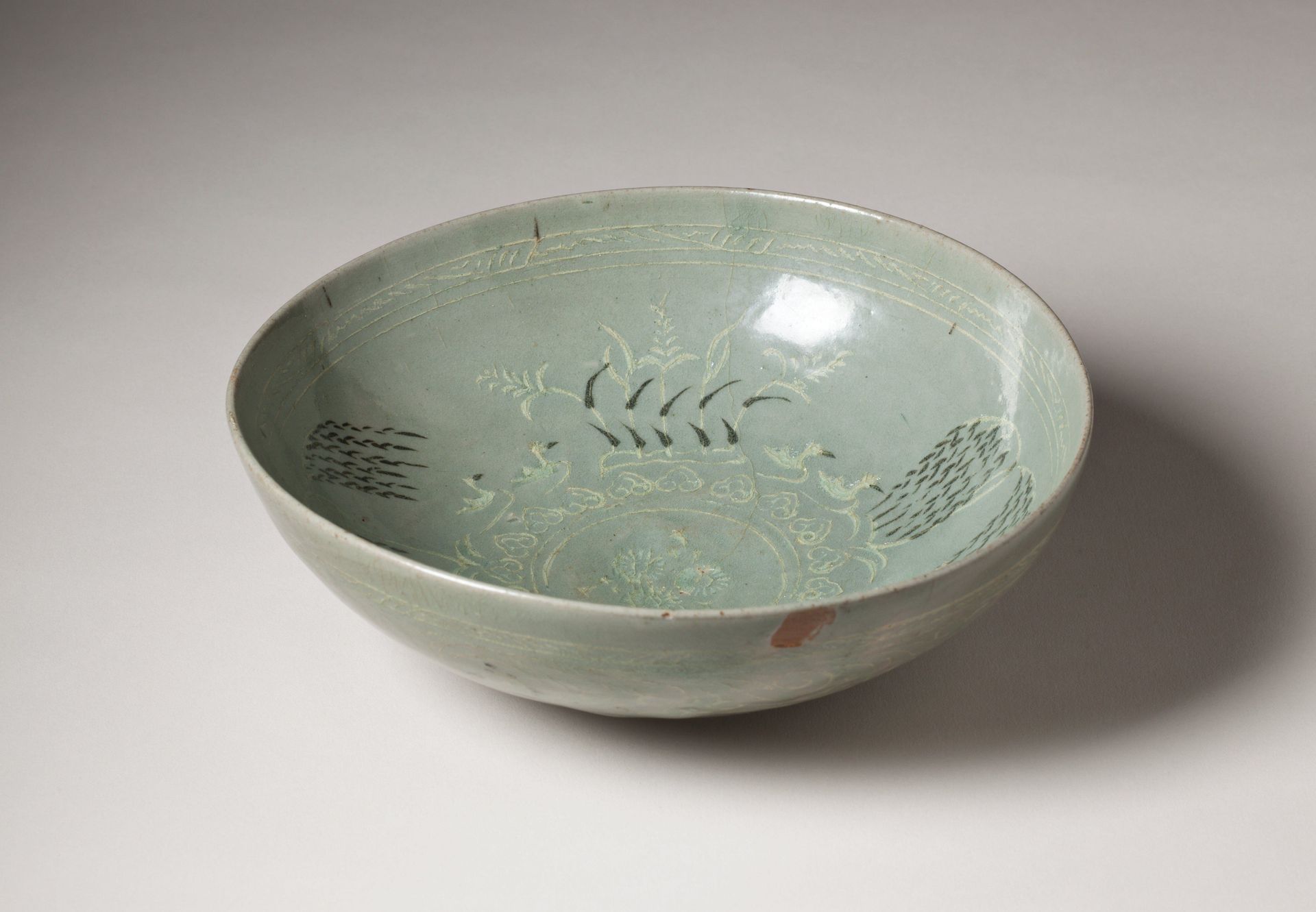
Bowl with waterfowl


Listen to curator's interpretation
Curatorial notes
This bowl, whose maker is unknown, is crafted from stoneware with a celadon glaze and black slip decoration. Celadon glazes like this one were prized for their jade-like appearance, achieved by firing the ceramic in a low-oxygen kiln, a process that requires precise control. Notice the intricate design of waterfowl amidst stylized waves and vegetation. This decoration wasn’t painted on, but rather incised into the surface before firing. The black slip highlights these delicate carvings, creating a striking contrast with the subtle green of the celadon glaze. This combination of techniques would have been extremely labor intensive, demanding highly skilled artisans and a carefully controlled kiln environment. Considering the time and expertise involved in its production, this bowl would have been a luxury item, far removed from the daily lives of most people. By focusing on its making, we can appreciate this seemingly simple bowl as a testament to the artistry and social hierarchies of its time.