About this artwork
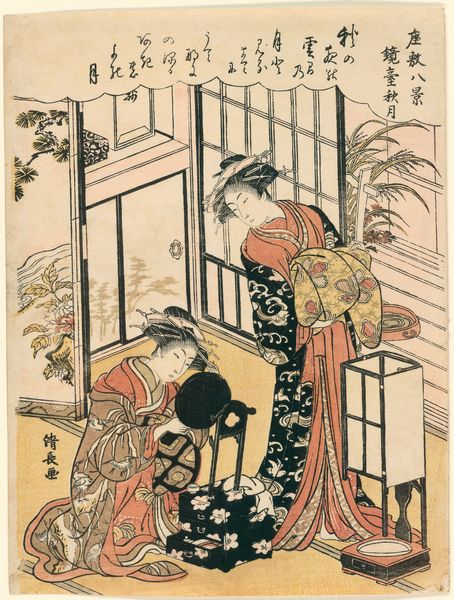
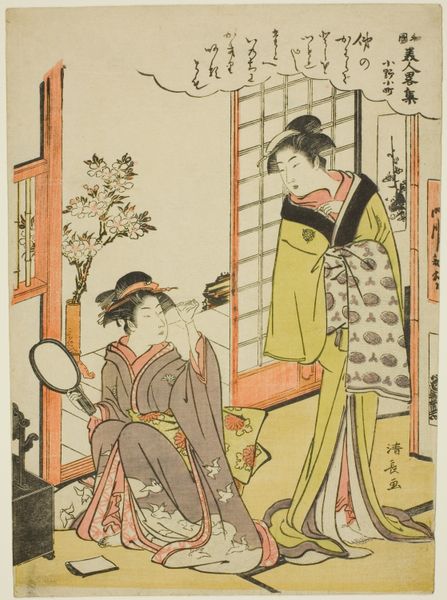
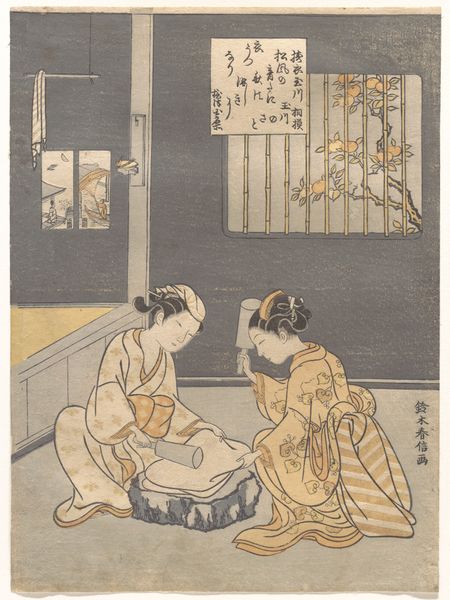
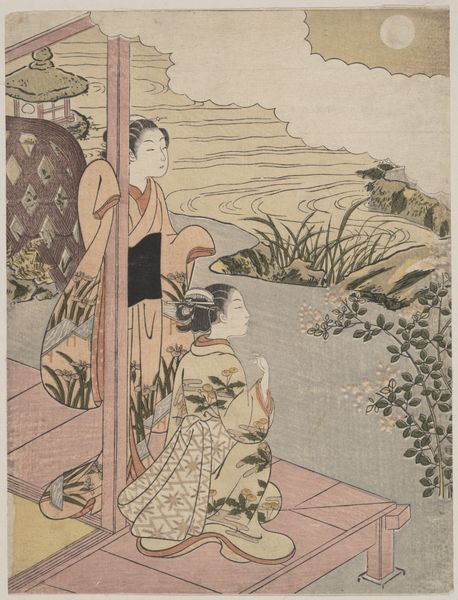
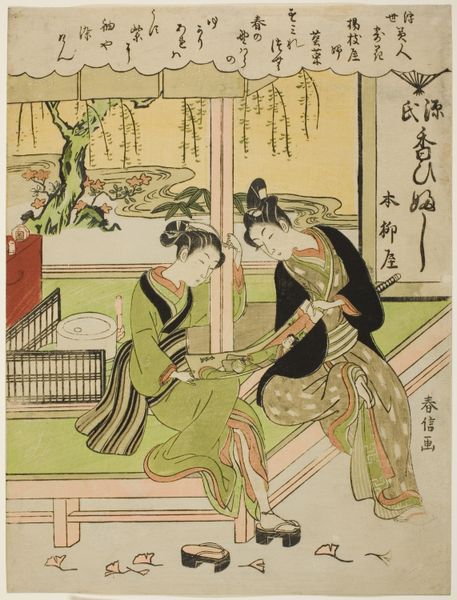
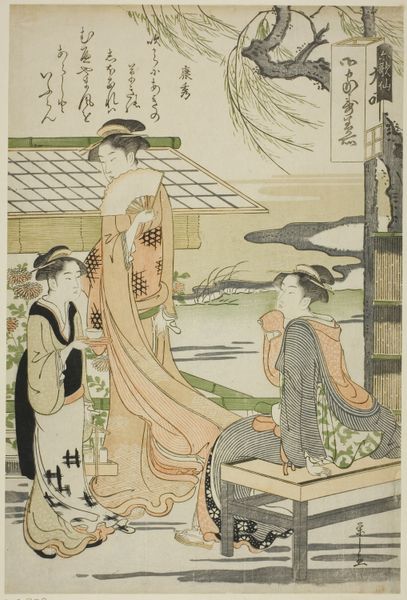
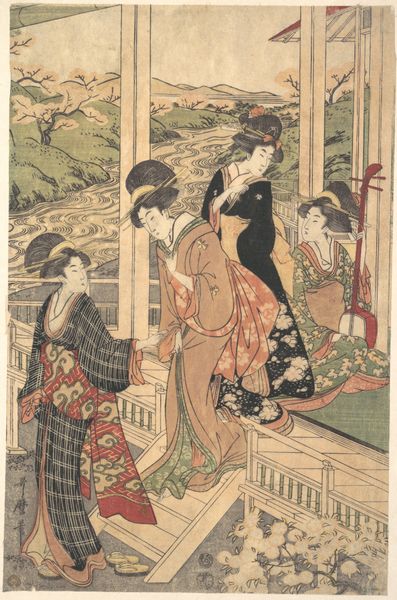
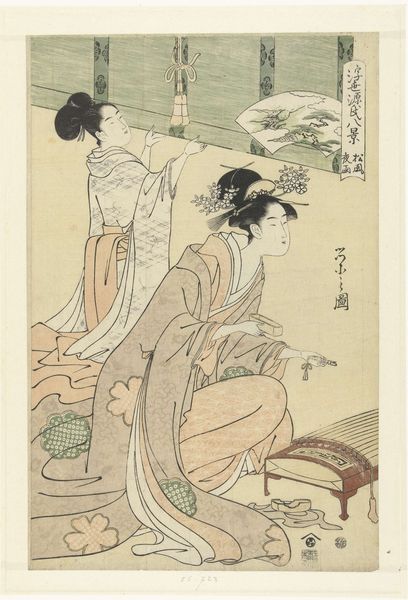
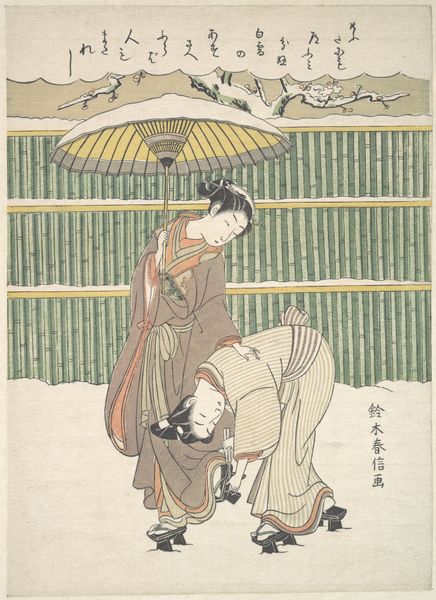
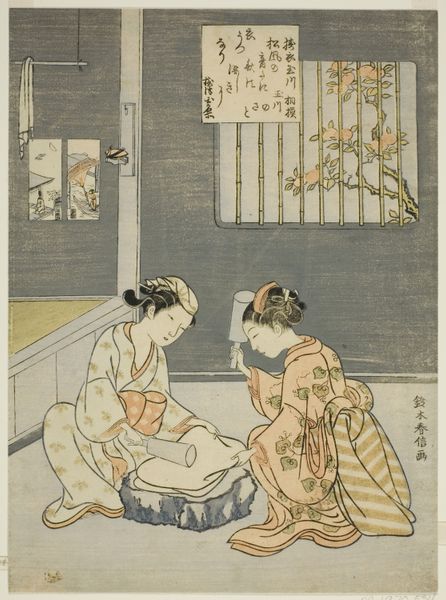
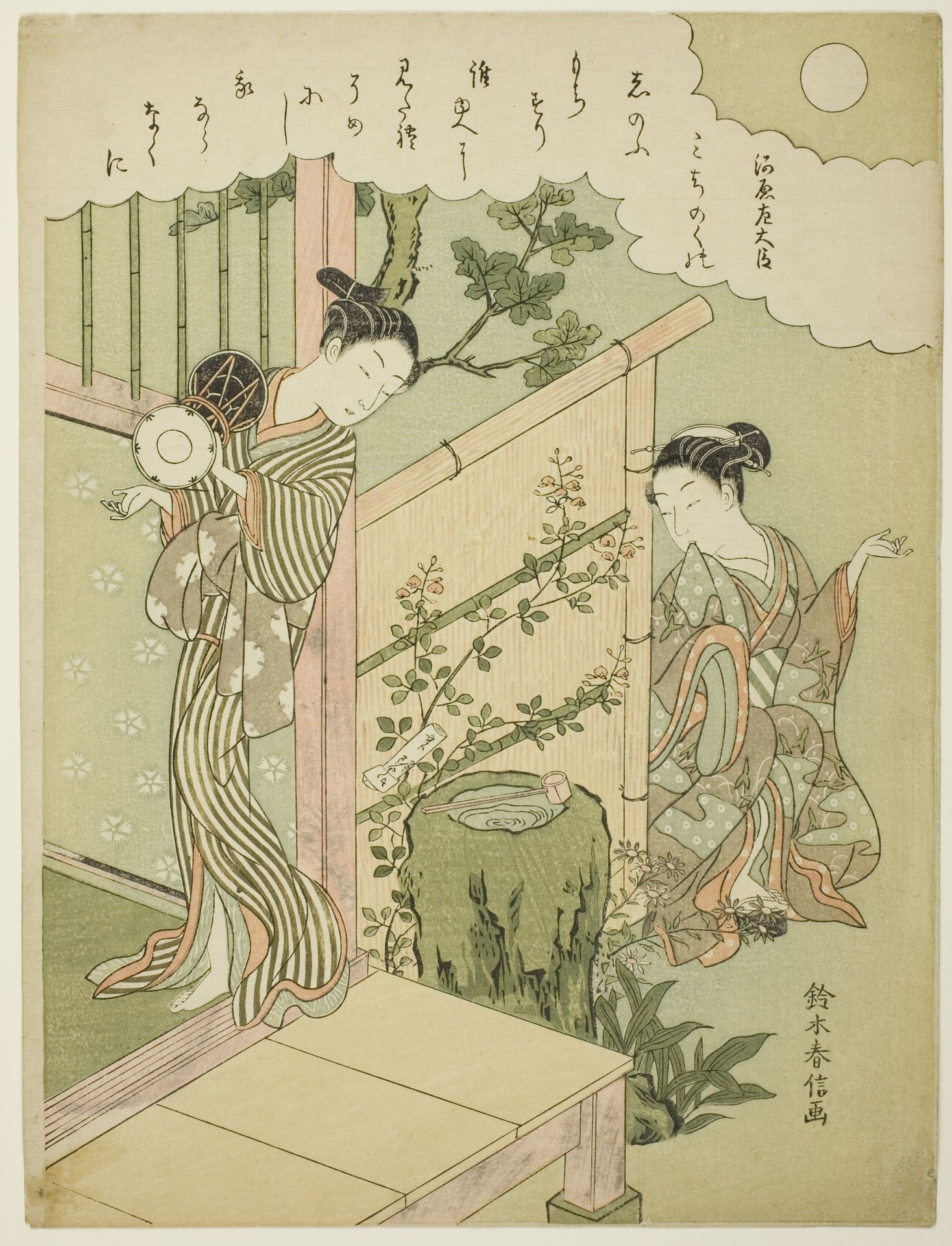
Around 1765, Suzuki Harunobu created this polychrome woodblock print, titled "Poem by Kawara no Sadaijin, from an untitled series of One Hundred Poems by One Hundred Poets." During the Edo period in Japan, art and poetry often intertwined, reflecting a sophisticated culture deeply rooted in tradition yet open to the pleasures of the floating world, or ukiyo. Harunobu's print exemplifies this, referencing classical poetry within a contemporary setting. Note how the women are placed within an intimate domestic scene, their elegant kimonos patterned with subtle designs, embodying the refined aesthetics of the era. The series "One Hundred Poems by One Hundred Poets" was a popular theme, linking visual art with literary heritage. However, Harunobu was working in a society governed by strict social hierarchies, where art was often a means of expressing nuanced cultural values. The print invites us to consider how gender roles and artistic expression were negotiated in the context of 18th-century Japan. It also encourages us to look for meaning within historical traditions.
Poem by Kawara no Sadaijin, from an untitled series of One Hundred Poems by One Hundred Poets
c. 1767 - 1768


Artwork details
- Medium
- print, woodblock-print
- Dimensions
- 11 1/4 × 8 1/2 in.
- Location
- The Art Institute of Chicago
- Copyright
- Public Domain
Tags
Comments
Share your thoughts
About this artwork
Around 1765, Suzuki Harunobu created this polychrome woodblock print, titled "Poem by Kawara no Sadaijin, from an untitled series of One Hundred Poems by One Hundred Poets." During the Edo period in Japan, art and poetry often intertwined, reflecting a sophisticated culture deeply rooted in tradition yet open to the pleasures of the floating world, or ukiyo. Harunobu's print exemplifies this, referencing classical poetry within a contemporary setting. Note how the women are placed within an intimate domestic scene, their elegant kimonos patterned with subtle designs, embodying the refined aesthetics of the era. The series "One Hundred Poems by One Hundred Poets" was a popular theme, linking visual art with literary heritage. However, Harunobu was working in a society governed by strict social hierarchies, where art was often a means of expressing nuanced cultural values. The print invites us to consider how gender roles and artistic expression were negotiated in the context of 18th-century Japan. It also encourages us to look for meaning within historical traditions.
Comments
Share your thoughts