About this artwork
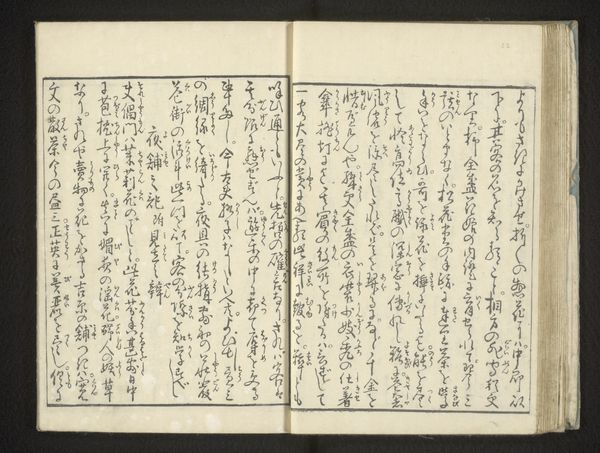
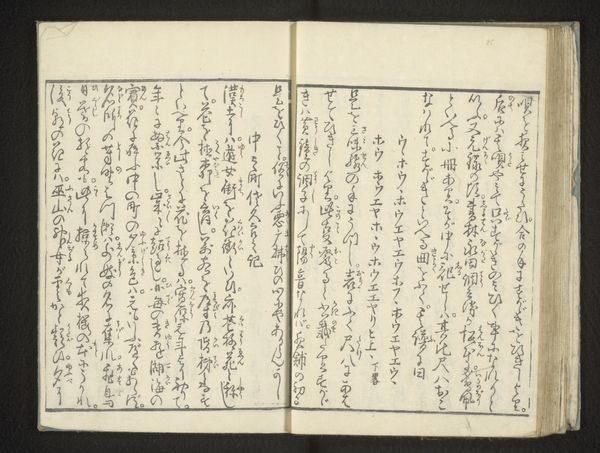
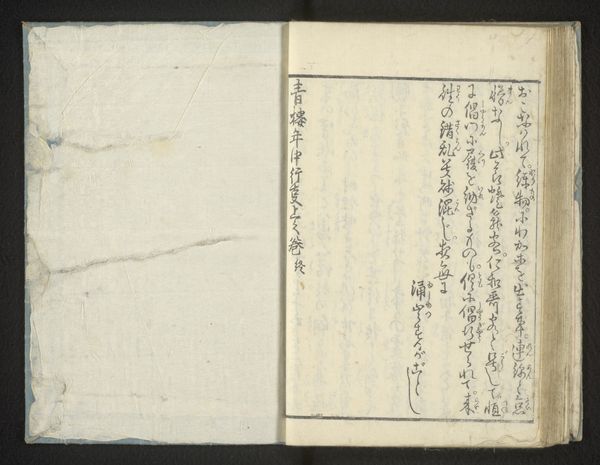
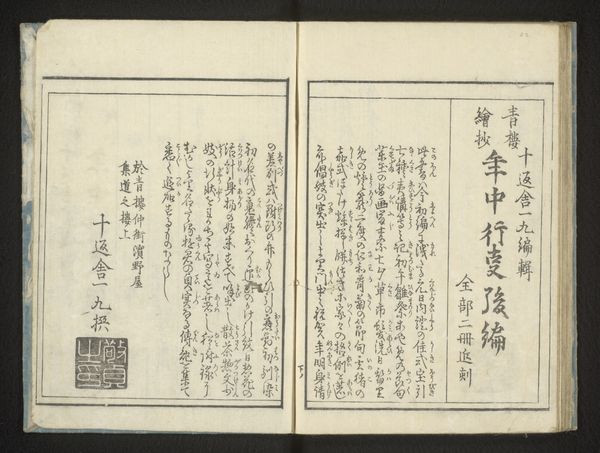
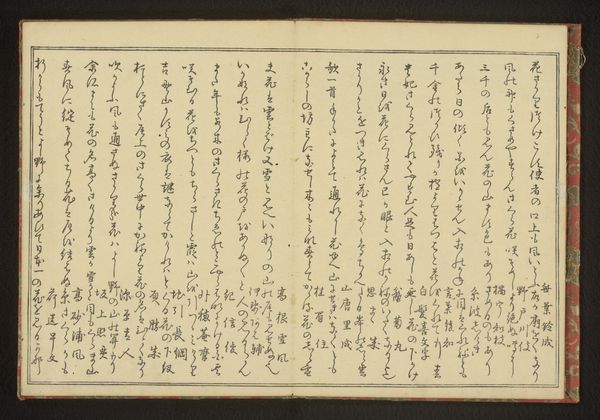
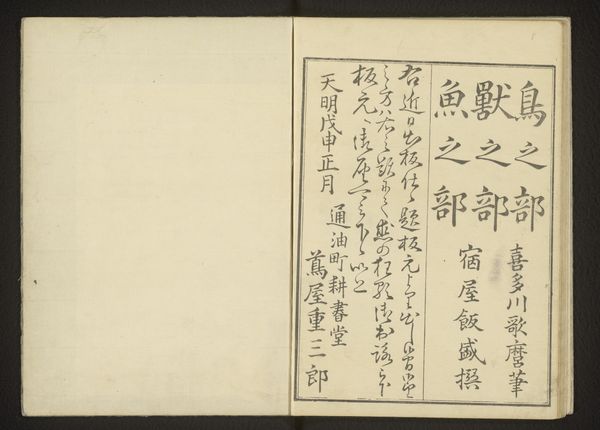
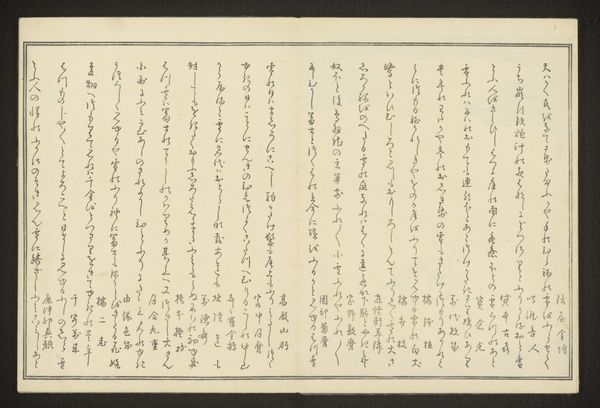
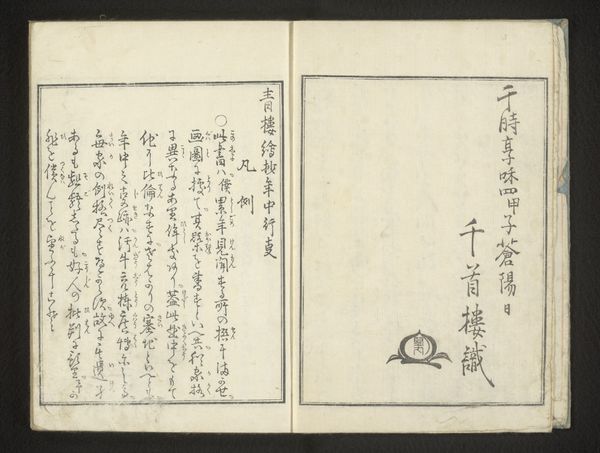
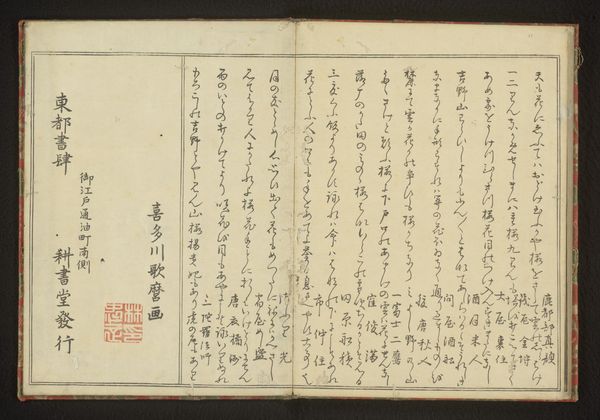
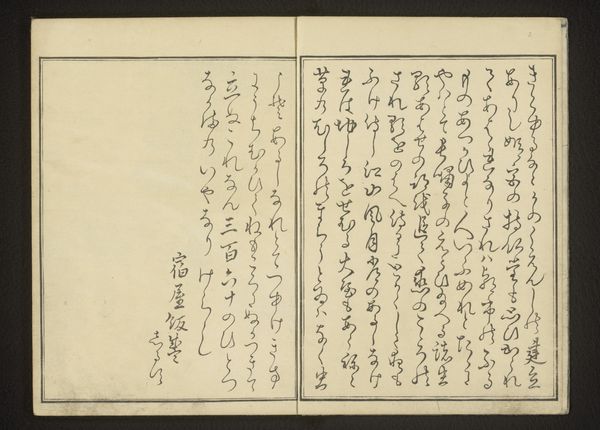
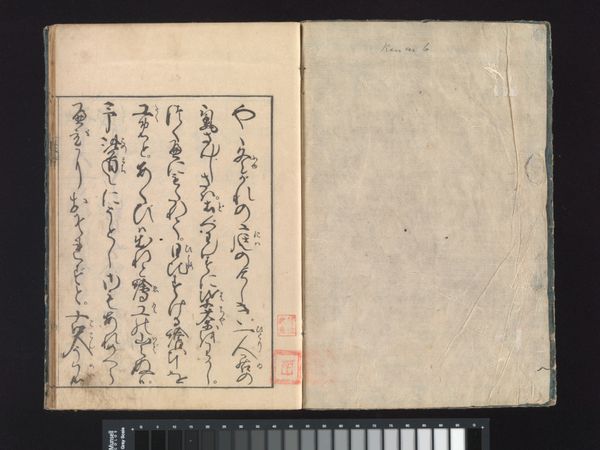
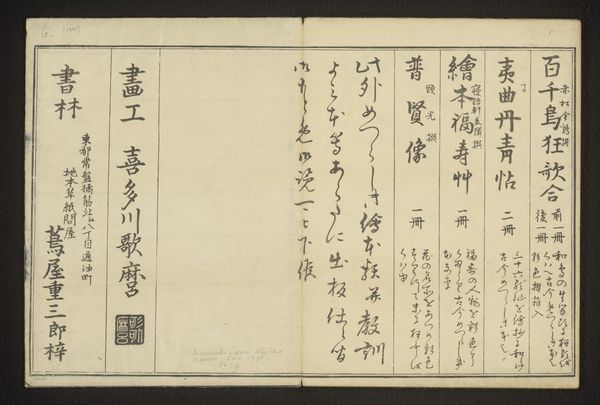
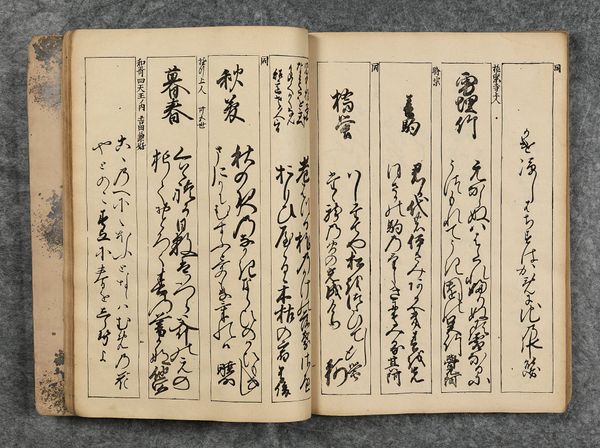
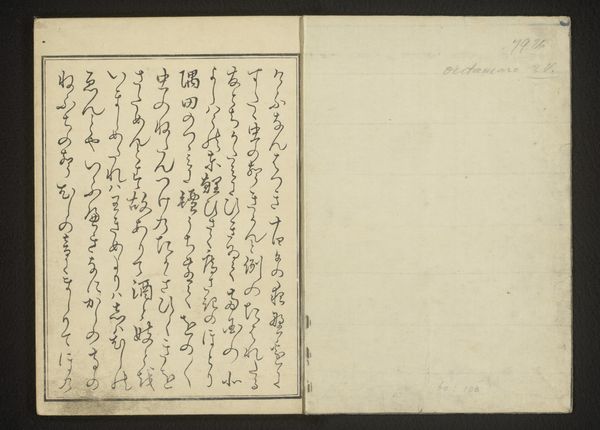
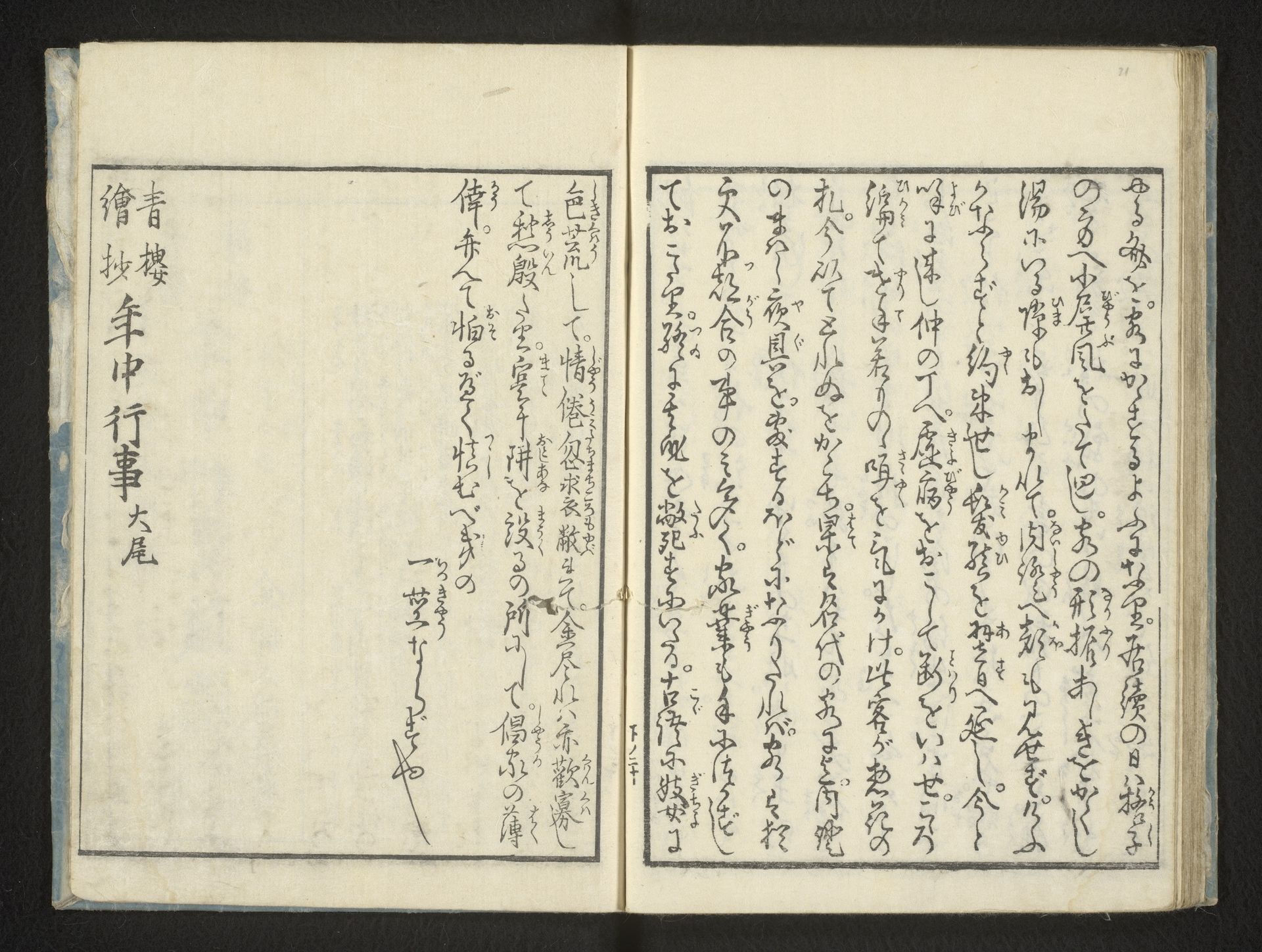
This is a page from "Tekst" by Jippensha Ikku, created with woodblock printing, during the Edo period in Japan. The flowing script, brushed onto the block and then printed, hints at a vibrant literary culture beyond the elite circles of the court. Woodblock printing democratized access to stories and ideas, fostering new audiences. The "Floating World," or ukiyo, of Edo Japan, celebrated pleasure and artistic expression, even as it bumped up against the strict social hierarchies enforced by the Shogunate. We see a tension here: the elegance of calligraphy meets the accessibility of mass production. To truly understand this text, we'd need to delve into Edo-period publishing, exploring censorship practices, the rise of the merchant class, and the social function of popular literature. We might ask, how did the stories in "Tekst" reflect or challenge the values of its time? What role did these kinds of books play in shaping social identities and cultural attitudes? It's a cultural historian's job to piece together these contexts.

Artwork details
- Medium
- drawing, paper, ink
- Dimensions
- height 226 mm, width 158 mm
- Copyright
- Rijks Museum: Open Domain
Tags
Comments
Share your thoughts
About this artwork
This is a page from "Tekst" by Jippensha Ikku, created with woodblock printing, during the Edo period in Japan. The flowing script, brushed onto the block and then printed, hints at a vibrant literary culture beyond the elite circles of the court. Woodblock printing democratized access to stories and ideas, fostering new audiences. The "Floating World," or ukiyo, of Edo Japan, celebrated pleasure and artistic expression, even as it bumped up against the strict social hierarchies enforced by the Shogunate. We see a tension here: the elegance of calligraphy meets the accessibility of mass production. To truly understand this text, we'd need to delve into Edo-period publishing, exploring censorship practices, the rise of the merchant class, and the social function of popular literature. We might ask, how did the stories in "Tekst" reflect or challenge the values of its time? What role did these kinds of books play in shaping social identities and cultural attitudes? It's a cultural historian's job to piece together these contexts.
Comments
Share your thoughts