About this artwork
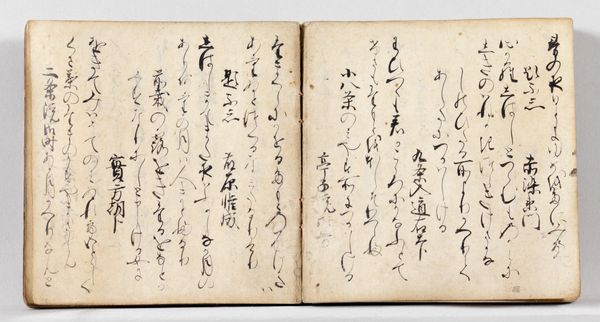
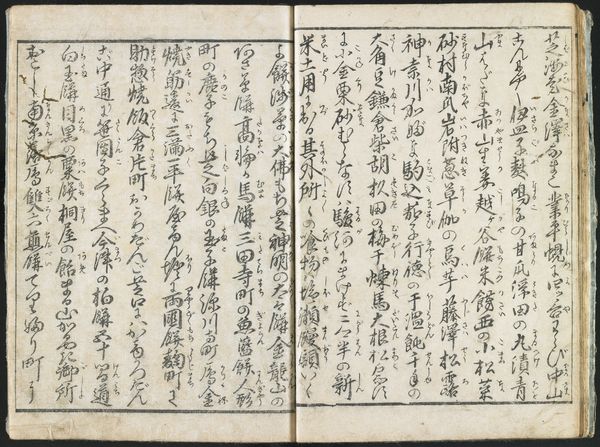
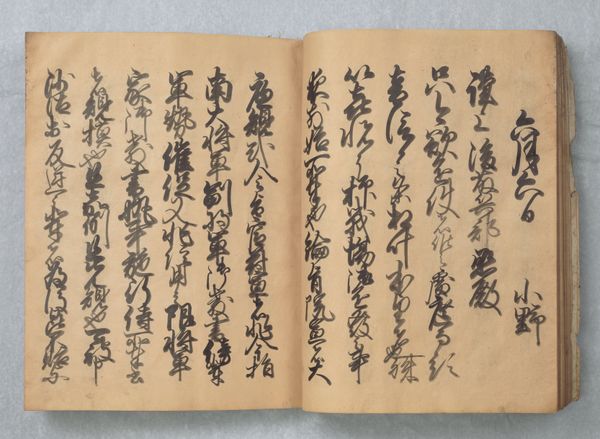
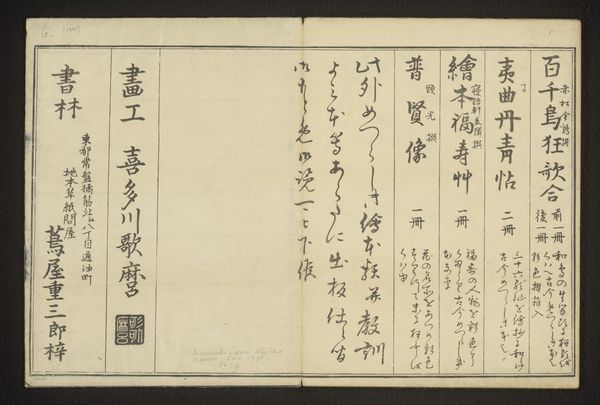
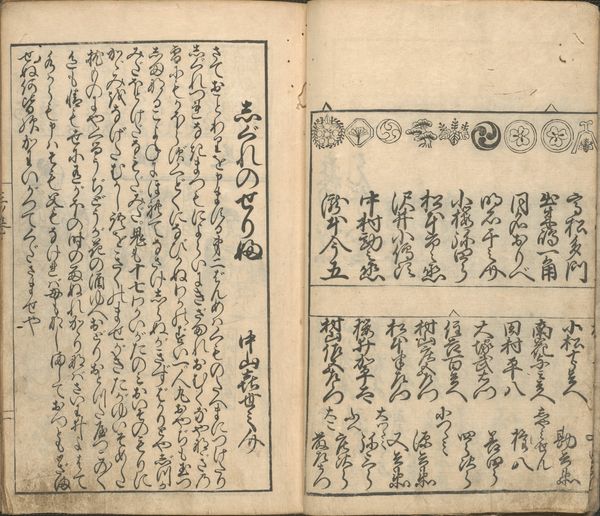
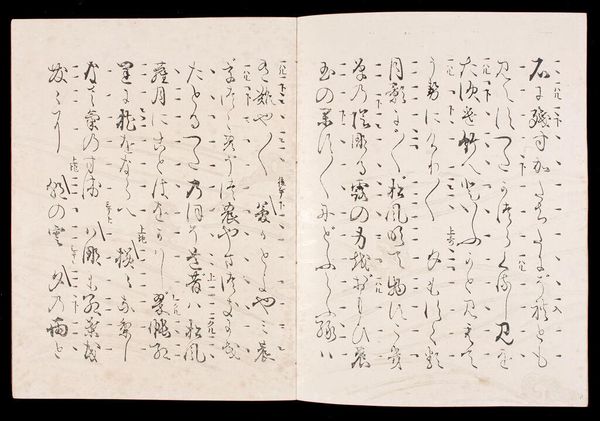
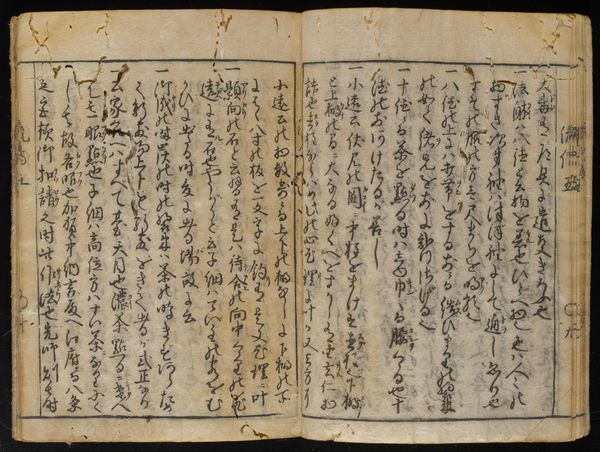
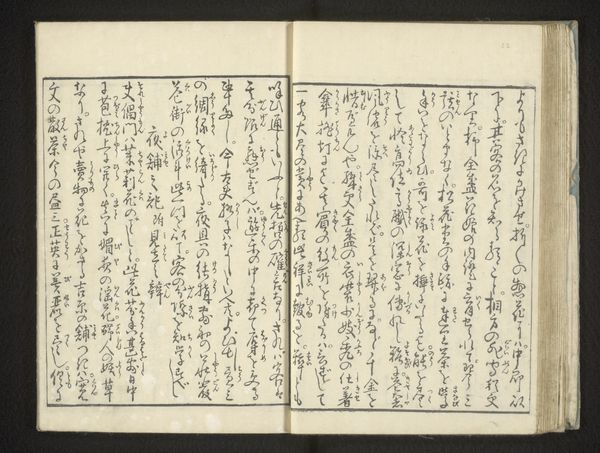
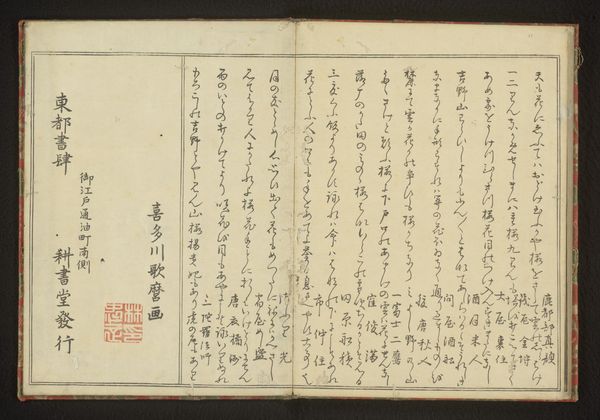
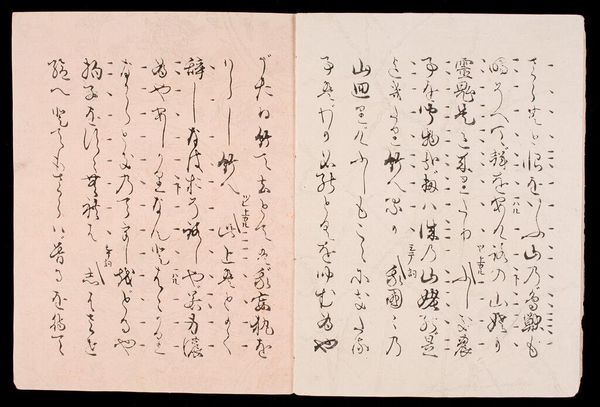
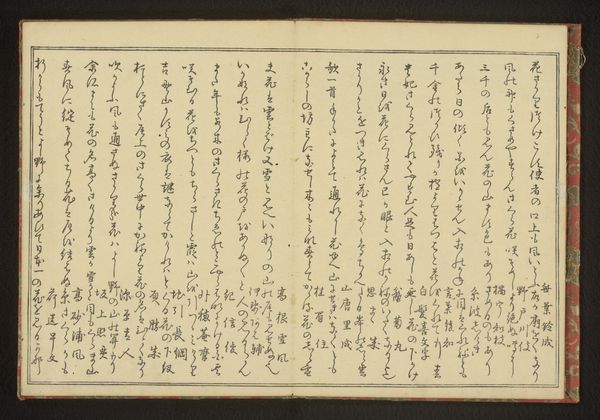
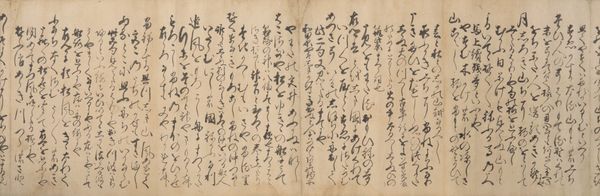
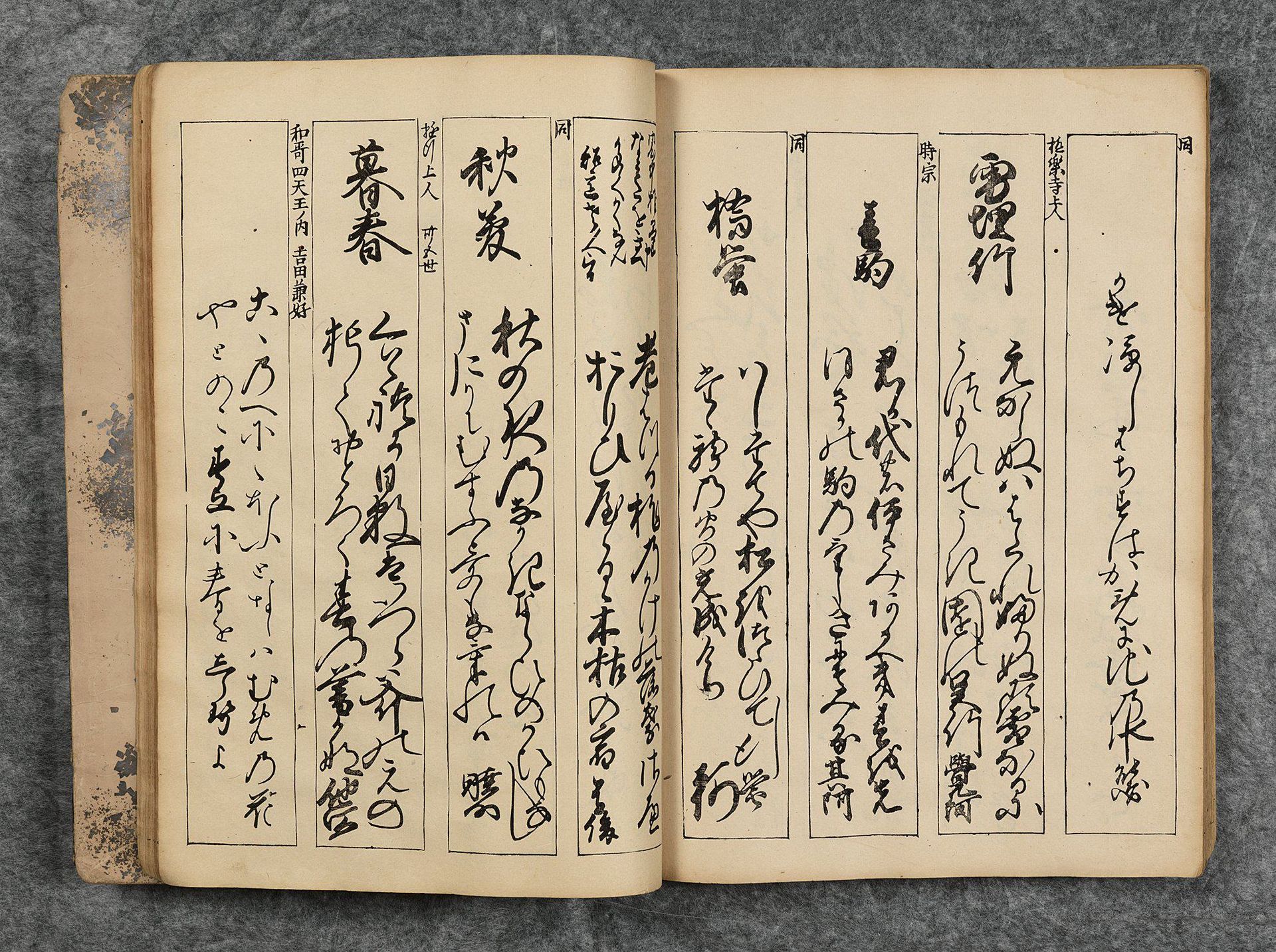
This is “Mirror of Hands of Ancient Calligraphy (Kohitsu tekagami),” made by Tō Rian. Notice how each page of this open book presents a series of framed calligraphic excerpts. The stark contrast between the dark ink and the off-white paper immediately draws the eye, compelling a closer inspection of the formal structure. The calligraphic text is not just writing; it's an exercise in line, shape, and form. Each character dances within its frame, varying in weight and direction, which creates a unique rhythm. The book challenges our understanding of text. It asks us to consider what happens when writing transcends its role as a carrier of language, becoming instead a field for aesthetic experimentation. The texture and materiality of the paper, aged and subtly discolored, contribute to the artwork's semiotic meaning. It transforms the book from a mere object into a cultural artifact. It is this tension between text and texture, between line and form, that makes the work so compelling.
Mirror of Hands of Ancient Calligraphy (Kohitsu tekagami)
1651


Artwork details
- Medium
- drawing, paper, ink, color-on-paper
- Dimensions
- 15 5/16 × 11 1/2 × 1 3/8 in. (38.89 × 29.21 × 3.49 cm)
- Location
- Minneapolis Institute of Art
- Copyright
- Public Domain
Tags
Comments

In Japanese society, poetry was important not just for the beauty of its sound, but also for the beauty of its written form. Mirror of Hands is an example of a tekagami (“mirror of hands”); it is a collection of 136 fragments (kire) and 616 strips (tanzaku) written by different hands, all reproduced in print. The colophon, which provides information about the circumstances of publication, notes that the recorded works have been authenticated by an expert, and modern scholars have noted that some extant pieces look remarkably similar to the copy in the book. A woodblock-printed tekagami allowed people who could not afford to buy coveted pieces by the most famous calligraphers a means to appreciate and study their hands.
About this artwork
This is “Mirror of Hands of Ancient Calligraphy (Kohitsu tekagami),” made by Tō Rian. Notice how each page of this open book presents a series of framed calligraphic excerpts. The stark contrast between the dark ink and the off-white paper immediately draws the eye, compelling a closer inspection of the formal structure. The calligraphic text is not just writing; it's an exercise in line, shape, and form. Each character dances within its frame, varying in weight and direction, which creates a unique rhythm. The book challenges our understanding of text. It asks us to consider what happens when writing transcends its role as a carrier of language, becoming instead a field for aesthetic experimentation. The texture and materiality of the paper, aged and subtly discolored, contribute to the artwork's semiotic meaning. It transforms the book from a mere object into a cultural artifact. It is this tension between text and texture, between line and form, that makes the work so compelling.
Comments
In Japanese society, poetry was important not just for the beauty of its sound, but also for the beauty of its written form. Mirror of Hands is an example of a tekagami (“mirror of hands”); it is a collection of 136 fragments (kire) and 616 strips (tanzaku) written by different hands, all reproduced in print. The colophon, which provides information about the circumstances of publication, notes that the recorded works have been authenticated by an expert, and modern scholars have noted that some extant pieces look remarkably similar to the copy in the book. A woodblock-printed tekagami allowed people who could not afford to buy coveted pieces by the most famous calligraphers a means to appreciate and study their hands.