Dimensions: 46 x 81 cm
Copyright: Public domain
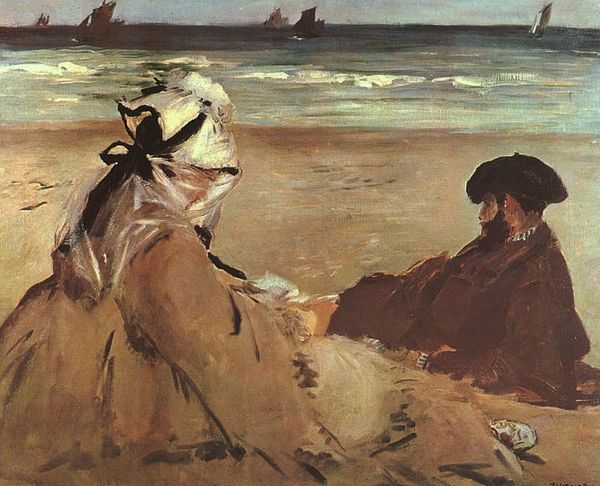
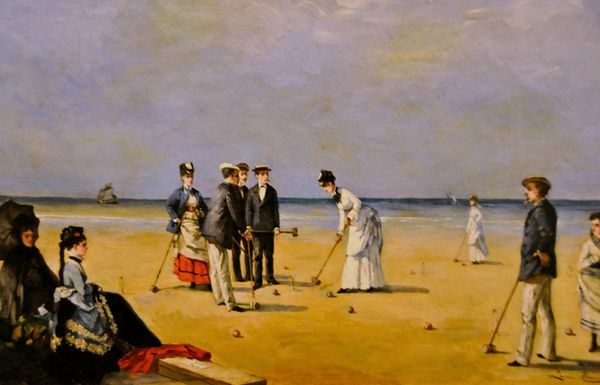
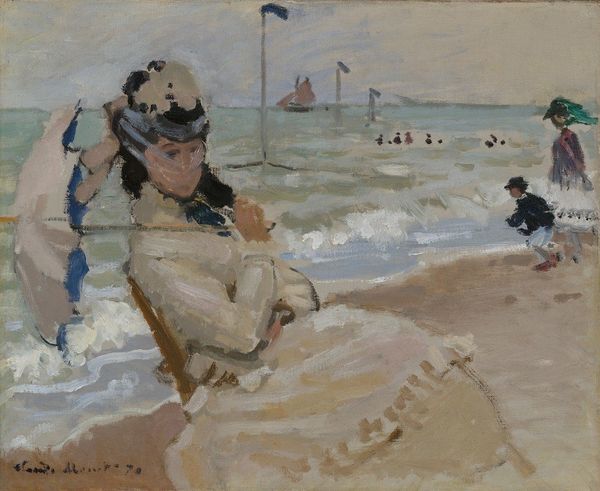
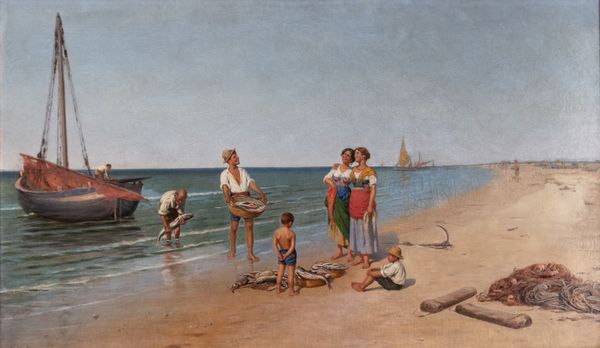
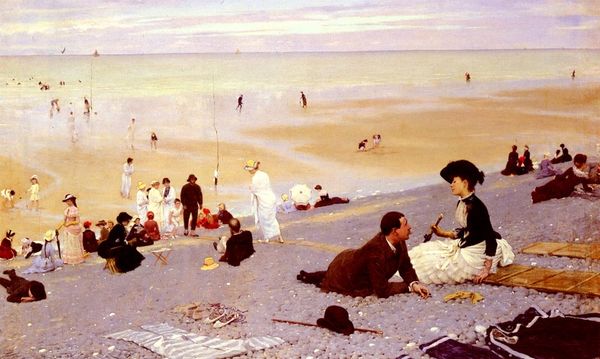
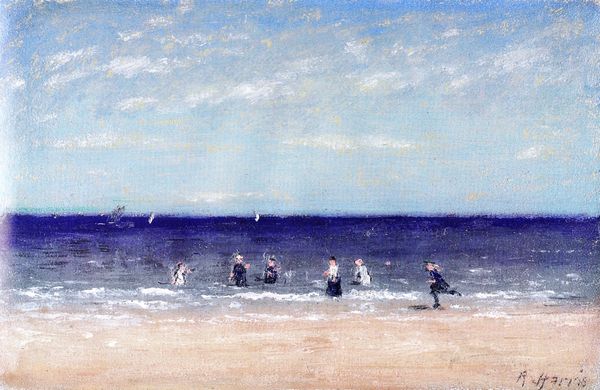
Editor: Here we have Edgar Degas's "Beach Scene," painted in 1877, rendered in oil on canvas. There’s something strikingly modern about it, almost snapshot-like in its composition. What can you tell me about how it fits within the artistic landscape of its time? Curator: This painting is incredibly interesting when considering the rise of leisure and tourism in the late 19th century. Railway lines enabled easy access to coastal areas, changing how people, especially the burgeoning middle class, spent their free time. How do you think Degas is commenting on these social shifts? Editor: Well, you see people from various social backgrounds, maybe. The people strolling in the distance versus the close figures… almost as though class is spatially represented in the artwork? Curator: Precisely. Degas is subtly portraying this new culture of leisure but not without a critical eye. The composition, while appearing spontaneous, is carefully constructed, guiding our gaze. The subdued color palette differs from other Impressionists—it is almost as if the figures blend with the landscape. Is this a statement or a visual accident? Editor: That's thought-provoking. It subverts the typical vibrant depiction of leisure and, almost as though it’s muting the excitement around this newfound pastime. Are you implying that this neutral or somber visual rendering mirrors societal observations? Curator: Perhaps Degas is hinting at the inherent constraints and social expectations, even in moments of leisure, and the act of viewing paintings like these as becoming performative. Do you think art increasingly depicted life *as it was* rather than an idyllic existence? Editor: I now see how it reflects societal conditions rather than purely aesthetics! Curator: And that’s why art history helps us interpret not just the artwork, but how we view art institutions!
Comments
No comments
Be the first to comment and join the conversation on the ultimate creative platform.
 Collect
 React
React Comment
More like this