drawing, pencil, architecture
#
drawing
#
garden
#
neoclacissism
#
landscape
#
geometric
#
pencil
#
architecture
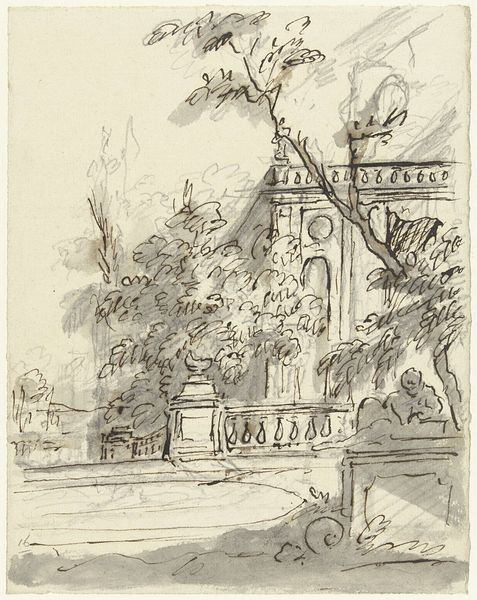
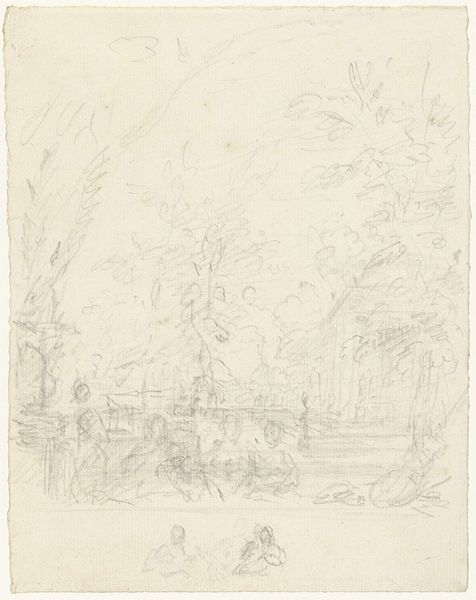
Dimensions: height 212 mm, width 165 mm
Copyright: Rijks Museum: Open Domain
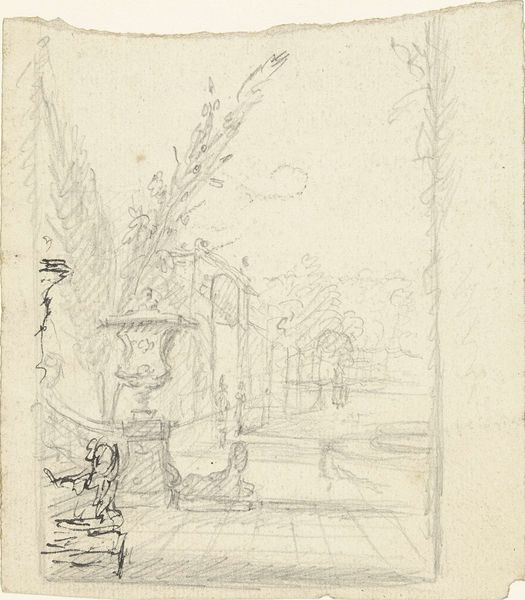
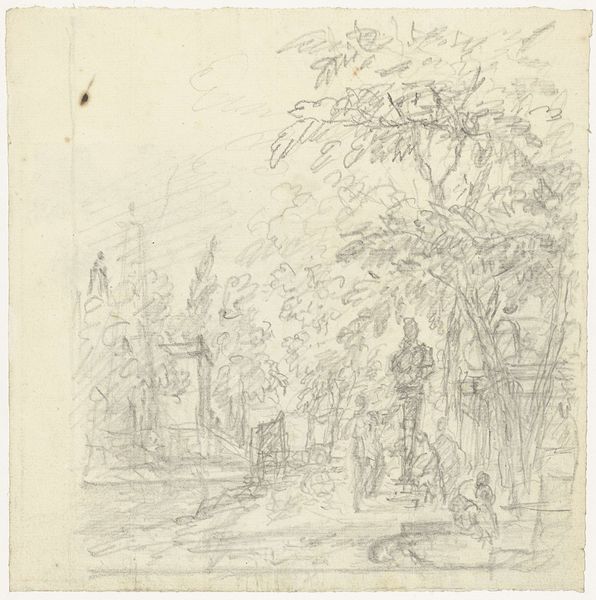
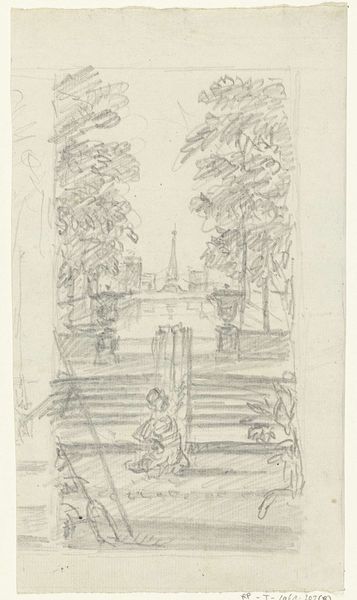
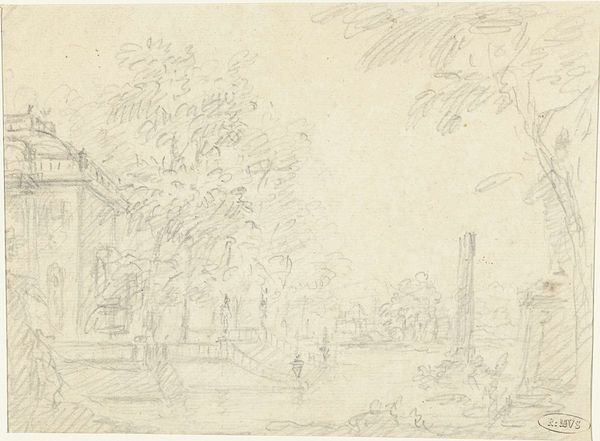
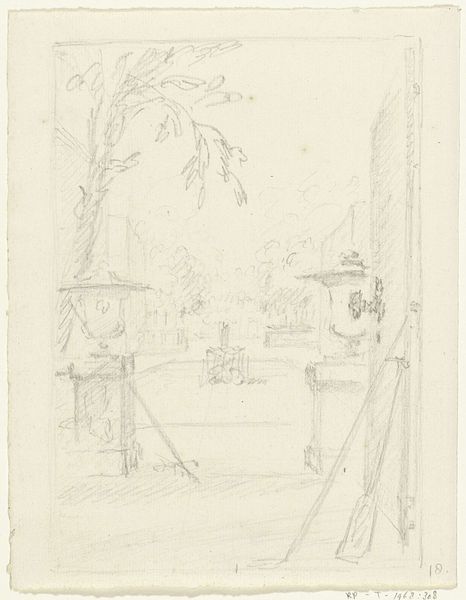
Curator: This drawing is titled "View in a Garden with Architecture on the Right," attributed to Dionys van Nijmegen, likely created sometime between 1715 and 1798. Editor: It's such a delicate sketch. The light seems to filter through everything, even the architecture feels permeable. It's quite ethereal. Curator: Van Nijmegen was working during a period deeply influenced by neoclassicism, a time when landscapes served as idealized reflections of social order and human reason. The formal garden was the perfect expression of this, wasn’t it? Editor: Yes, and you can see how the very act of drawing, the lines themselves, work to contain that perceived ‘natural’ chaos. Pencil as a tool here, is it marking territory or is it participating in some type of intellectual ordering? What quality of pencil was being used? Was the artist sourcing material himself? Curator: Well, the symmetry and geometrical forms present, speak volumes about the desire to impose structure and control on the natural world. Gardens in this period were not just about beauty; they were about demonstrating power, status, and control. The architecture reinforces that—a stage for social performance. Editor: I see that... almost too controlled. The meticulously drawn lines might obscure any sense of labor behind it; ergo, status is preserved through its apparent effortlessness and idealized subject matter, right? I am also wondering whether gardens of this kind required specialist gardeners to maintain and manage such spaces, reinforcing existing social and economic hierarchies... Curator: Precisely. These manicured spaces embodied a specific set of values, a deliberate distancing from the "unruly" nature beyond. It's fascinating to consider how drawings like this participated in disseminating those values, translating landscape into ideology. Editor: The drawing appears uncomplicated in execution, maybe misleadingly so... the availability and acquisition of those very pencils dictated who had the means to express those values... Fascinating. Curator: It is. By analyzing not just what is depicted, but also how and why, we begin to uncover a richer understanding of art’s function within broader social and political contexts. Editor: Absolutely, looking at the materiality reminds us art is deeply interwoven with production and social structure and even reflects back upon cultural norms.
Comments
No comments
Be the first to comment and join the conversation on the ultimate creative platform.
 Collect
 React
React Comment
More like this