drawing, lithograph, print, paper
#
portrait
#
drawing
#
lithograph
# print
#
paper
#
genre-painting
#
realism
Dimensions: 208 × 265 mm (image); 273 × 358 mm (sheet)
Copyright: Public Domain
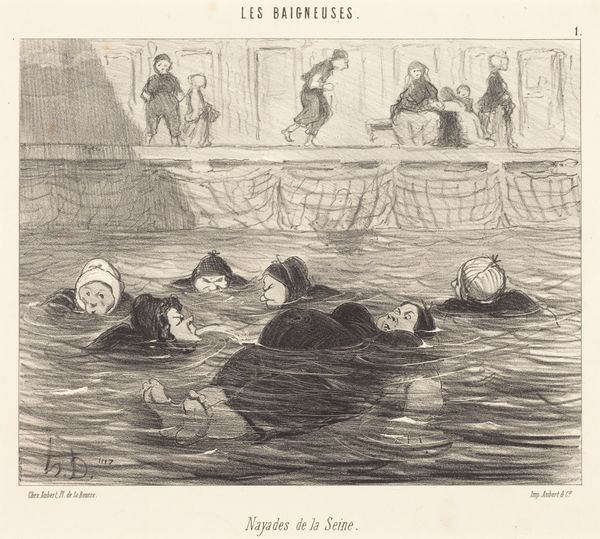
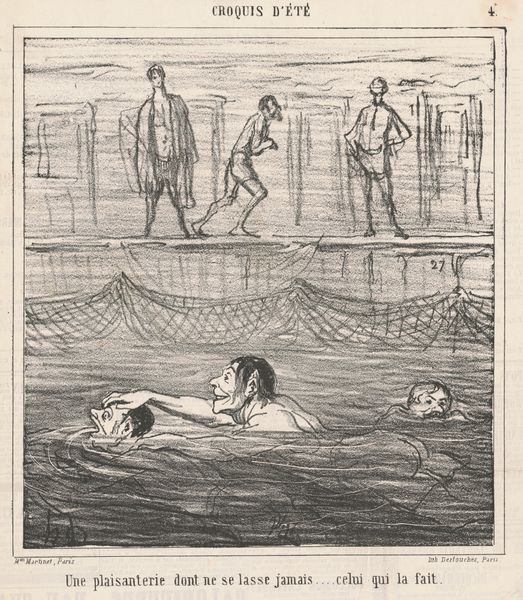
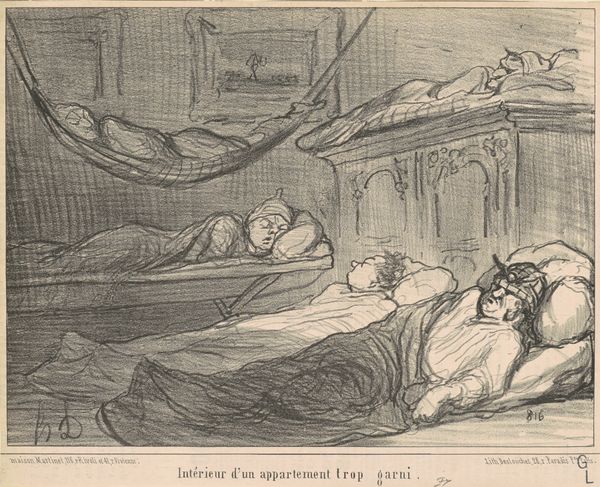
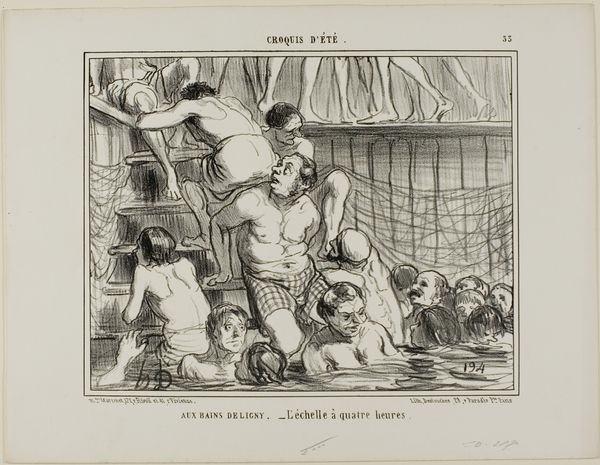
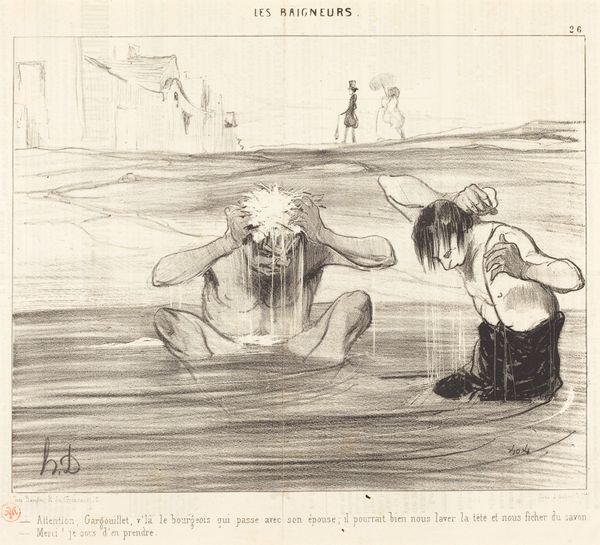
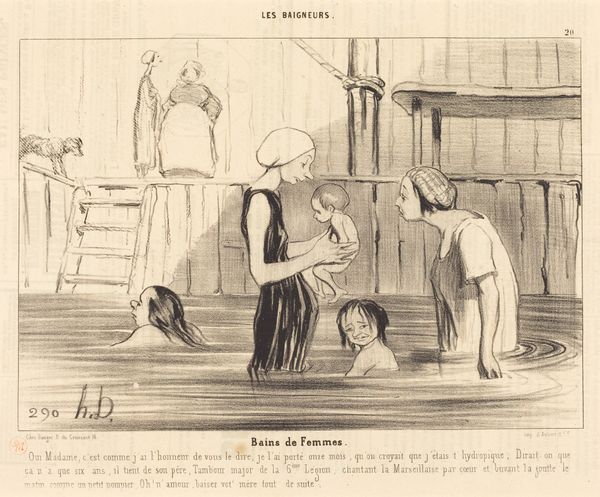
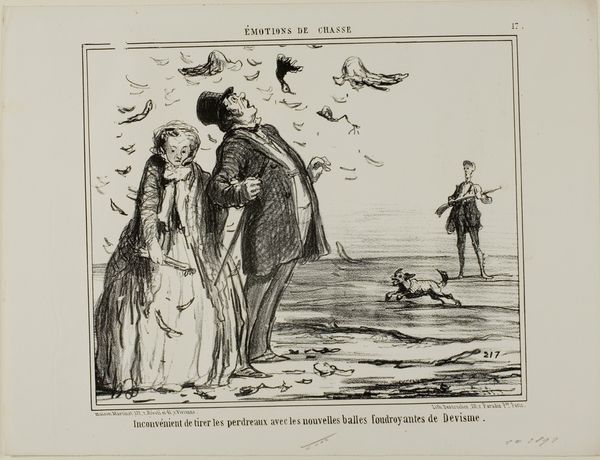
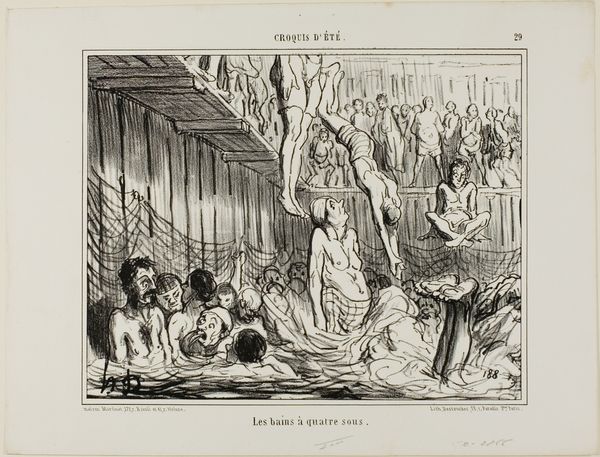
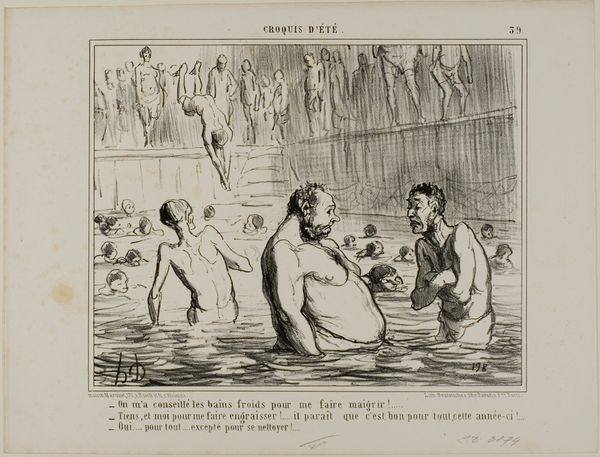
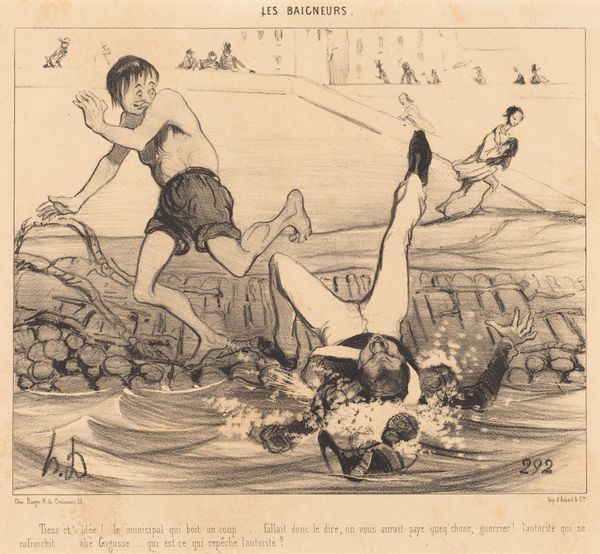
Curator: Honoré Daumier’s lithograph from 1858, titled "A Family Scene, plate 37 from Croquis D'été," captures a seemingly simple moment, yet it speaks volumes about its time. Editor: My first impression? A frantic kind of joy. The scratchy lines, the crowded composition – it almost feels claustrophobic even with the water. Curator: That's astute. The seemingly casual 'sketch' belies Daumier’s careful consideration of social dynamics. Water has a long association with purification, rebirth… yet here it feels almost…muddled by class. Editor: Absolutely. The lithographic process itself allowed for mass production, making art accessible. These "summer sketches” were printed in magazines like "Le Charivari", bringing scenes of Parisian life directly to the public, influencing popular sentiment and becoming cultural currency in their own right. Think of the paper quality, the ink... Curator: Consider how he contrasts the active family with the distant, silhouetted figures above, mere spectators in the background. The barefoot figures may hint to this separation or division. Perhaps they act as guardians overseeing a tradition. It raises questions about who has access to leisure and how that plays out within the family unit. Editor: And look at the marks themselves! That’s a crayon, drawn across stone then transferred, to get that immediacy, yet reproducibility. It’s not about refined artistic technique here, it’s about capturing a social moment rapidly, circulating it, fueling conversation and maybe change through visual media. Curator: Precisely. He transformed a popular pastime, something we might see as simply playful, into a subtle commentary on French society. There is beauty in its layered, complex simplicity, it reveals as much as it obscures, a cultural fingerprint on this tender scene of father-son love and closeness. Editor: In the end, appreciating this piece requires examining its artistic context of production, distribution, and consumption. Daumier used readily available materials and commercial print to bring images of the daily experience to wider audiences, making visible what otherwise might not have been "seen".
Comments
No comments
Be the first to comment and join the conversation on the ultimate creative platform.
 Collect
 React
React Comment
More like this