About this artwork
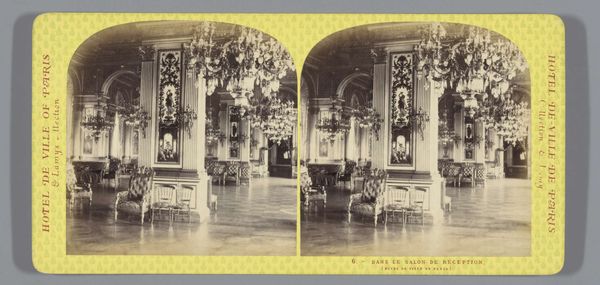
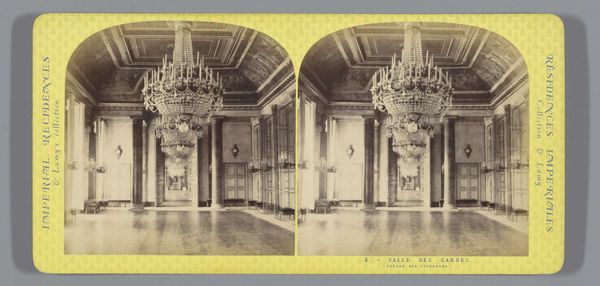
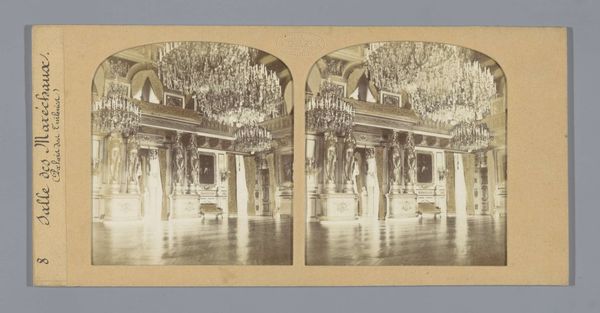
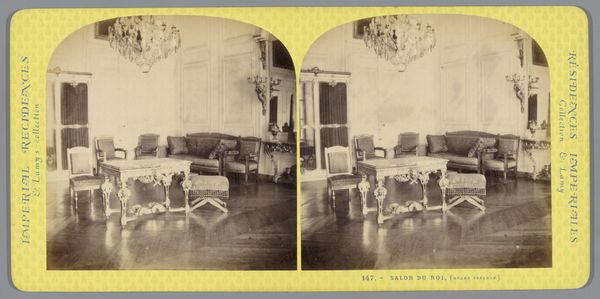
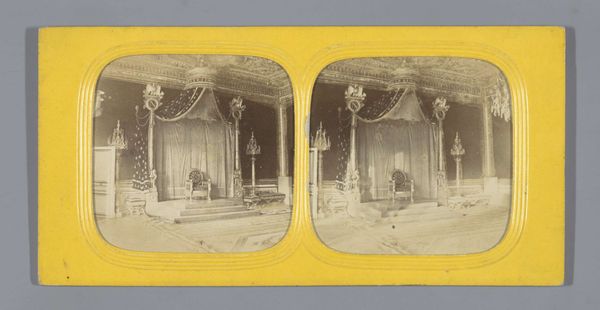
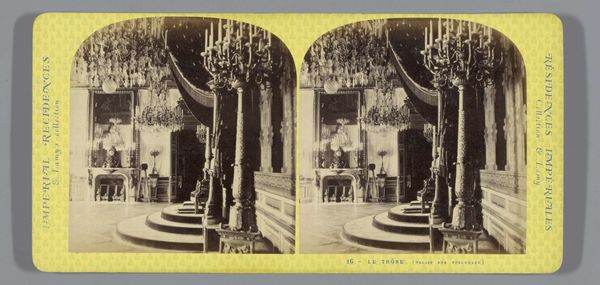
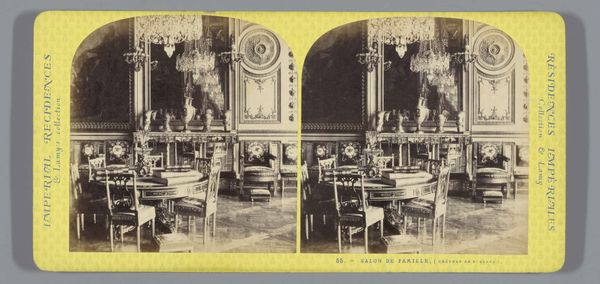
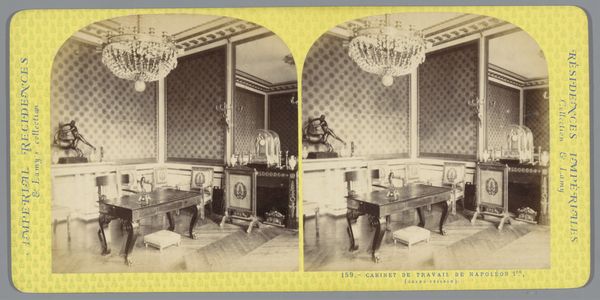
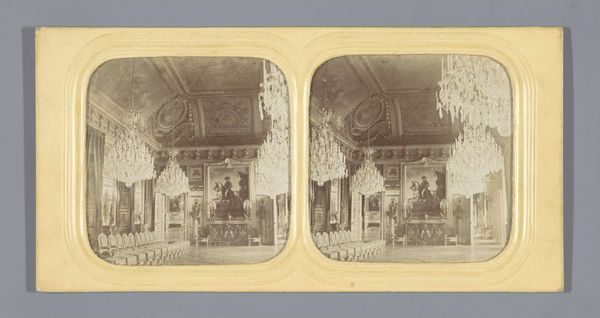
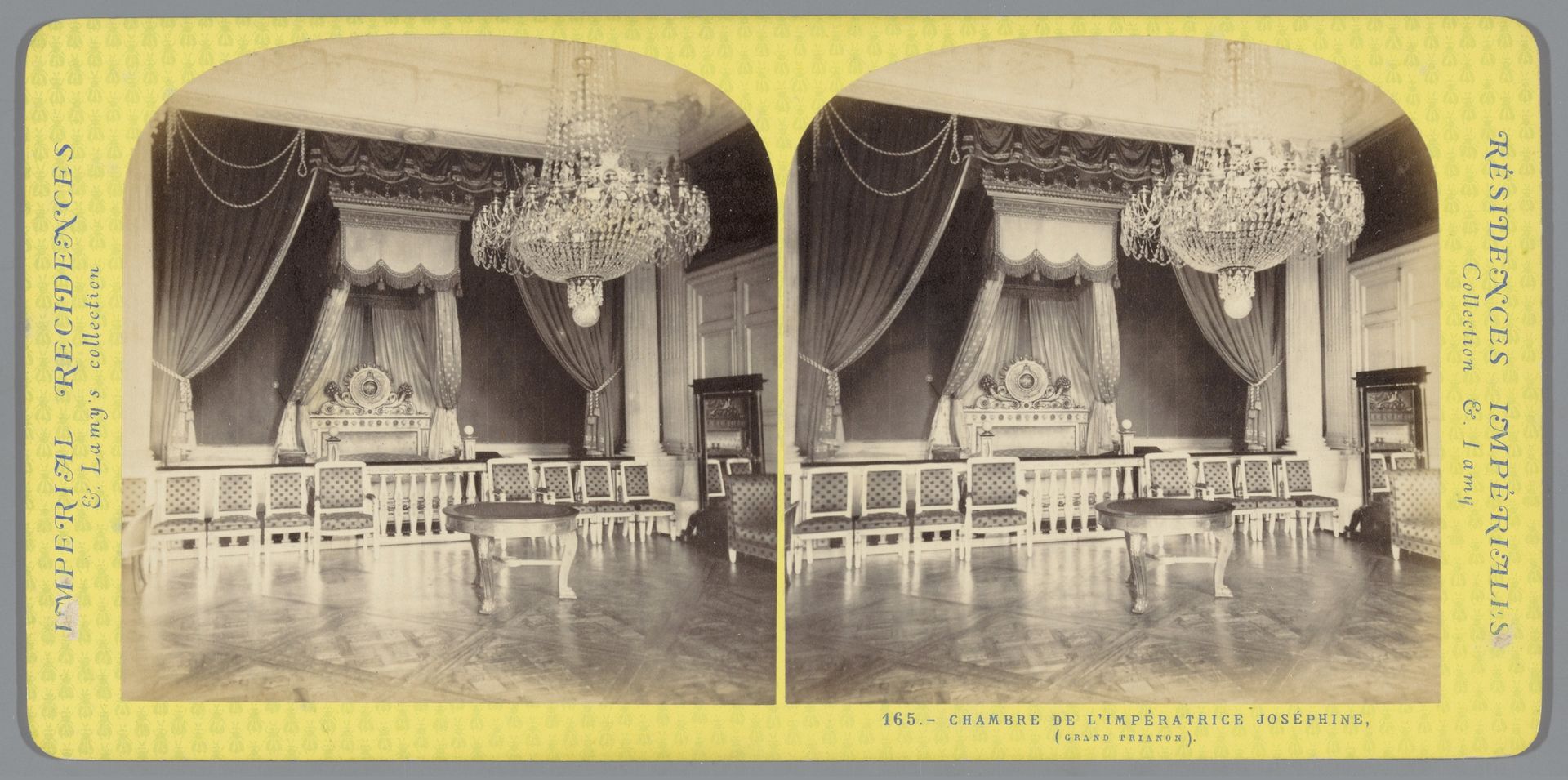
Ernest Eléonor Pierre Lamy captured the Chambre de Joséphine de Beauharnais in the Grand Trianon with a camera, yielding this stereograph. The room’s composition, dominated by a large, centrally placed bed beneath heavy drapery and an elaborate chandelier, immediately conveys opulence. The stark contrast between the dark walls and the bright, reflective surfaces creates a dramatic visual tension. The formal arrangement suggests more than mere representation; it embodies power and status. The symmetry of the chairs and the table in the foreground provides a structured, almost stage-like setting for the unseen inhabitants. This deliberate ordering of space can be interpreted through a semiotic lens, where each object serves as a signifier of wealth and imperial authority. Consider how Lamy’s photograph not only documents but also constructs an image of imperial life. The photograph, as a cultural artifact, invites us to decode its visual components and reflect on the interplay between representation and reality.
Kamer van Joséphine de Beauharnais in het Grand Trianon
1860 - 1880

Artwork details
- Dimensions
- height 87 mm, width 178 mm
- Copyright
- Rijks Museum: Open Domain
Comments
Share your thoughts
About this artwork
Ernest Eléonor Pierre Lamy captured the Chambre de Joséphine de Beauharnais in the Grand Trianon with a camera, yielding this stereograph. The room’s composition, dominated by a large, centrally placed bed beneath heavy drapery and an elaborate chandelier, immediately conveys opulence. The stark contrast between the dark walls and the bright, reflective surfaces creates a dramatic visual tension. The formal arrangement suggests more than mere representation; it embodies power and status. The symmetry of the chairs and the table in the foreground provides a structured, almost stage-like setting for the unseen inhabitants. This deliberate ordering of space can be interpreted through a semiotic lens, where each object serves as a signifier of wealth and imperial authority. Consider how Lamy’s photograph not only documents but also constructs an image of imperial life. The photograph, as a cultural artifact, invites us to decode its visual components and reflect on the interplay between representation and reality.
Comments
Share your thoughts