
Curatorial notes
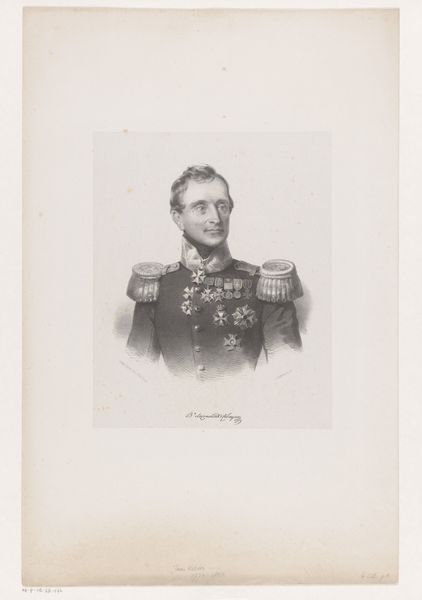
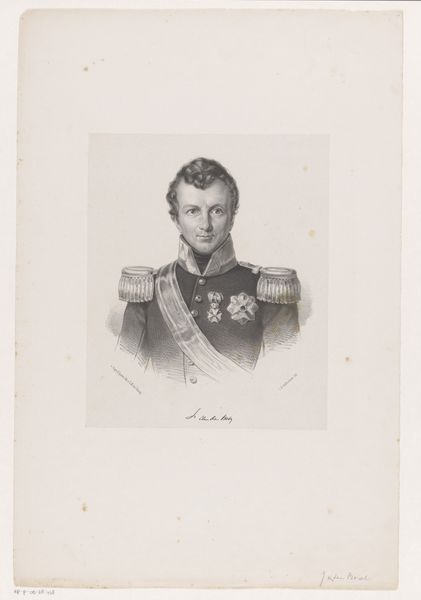
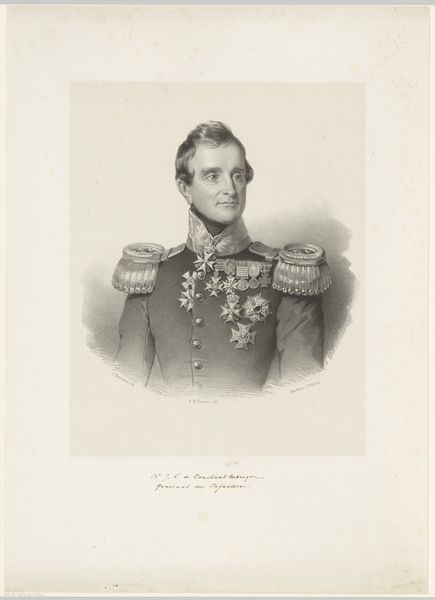
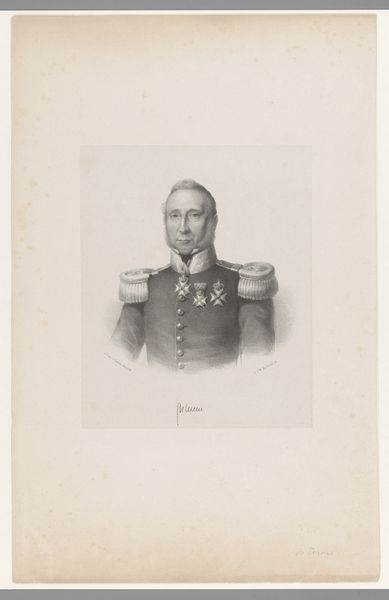
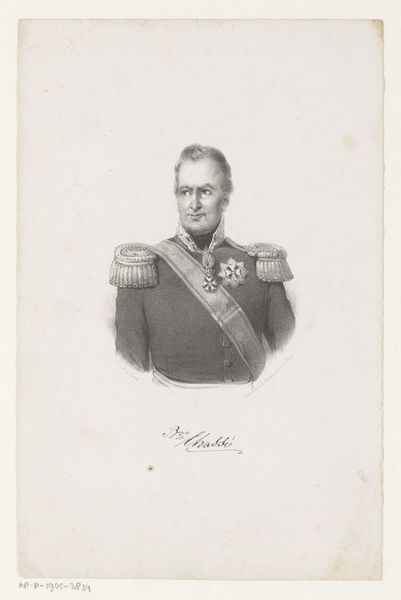
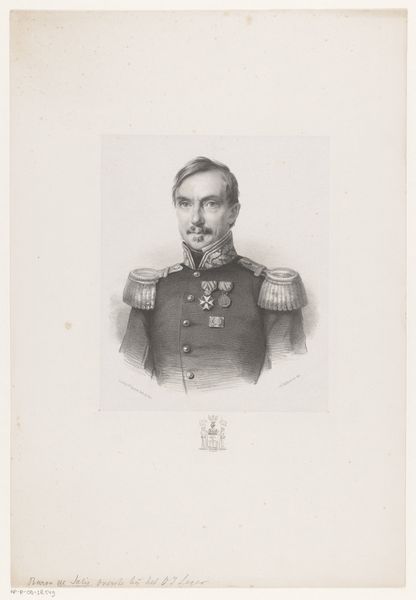
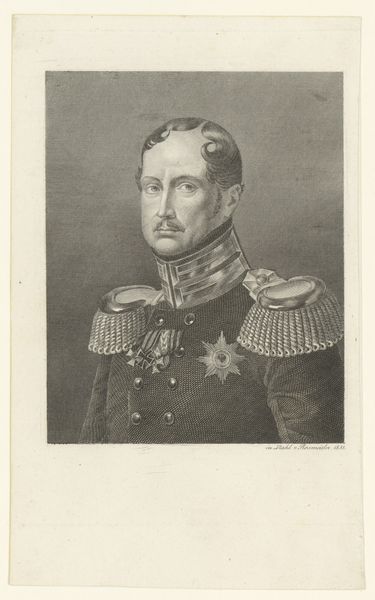
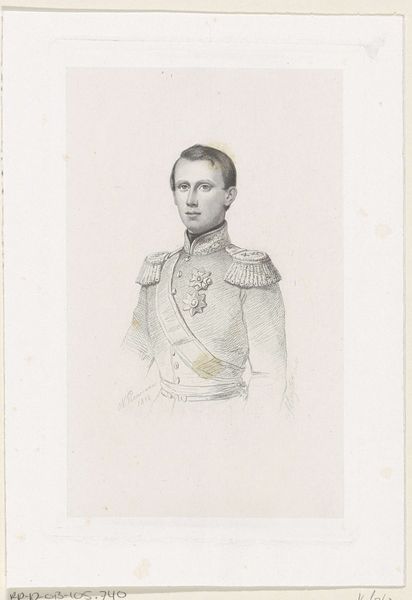
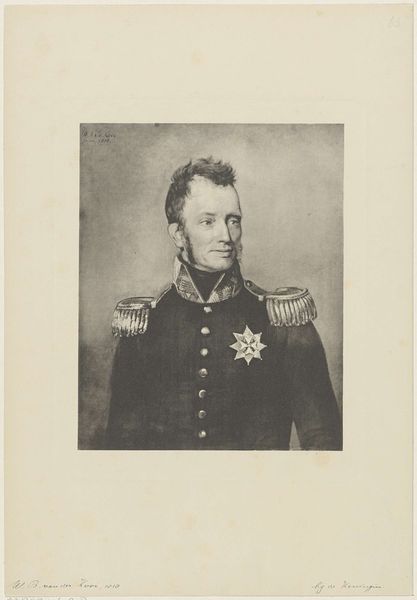
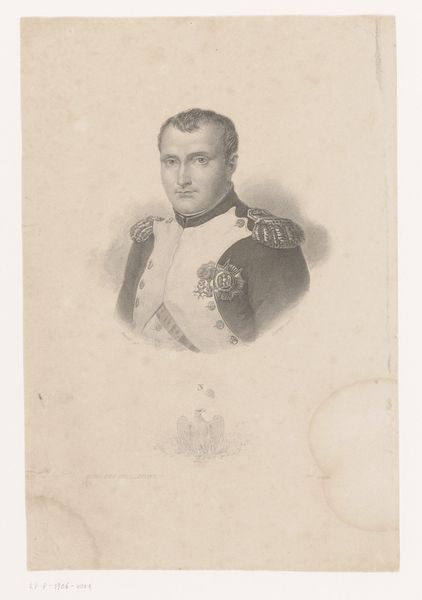
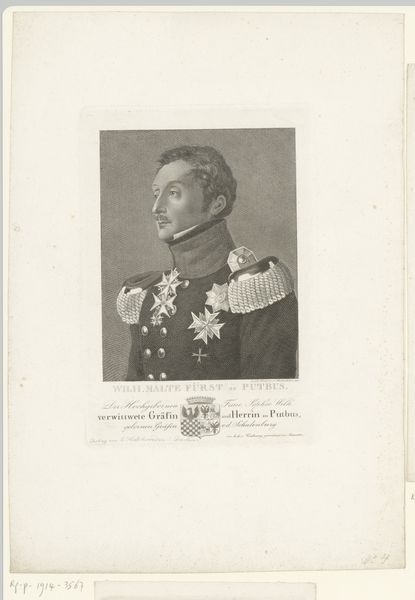
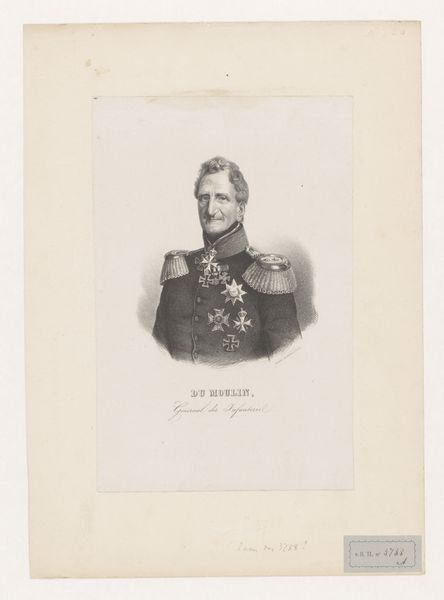
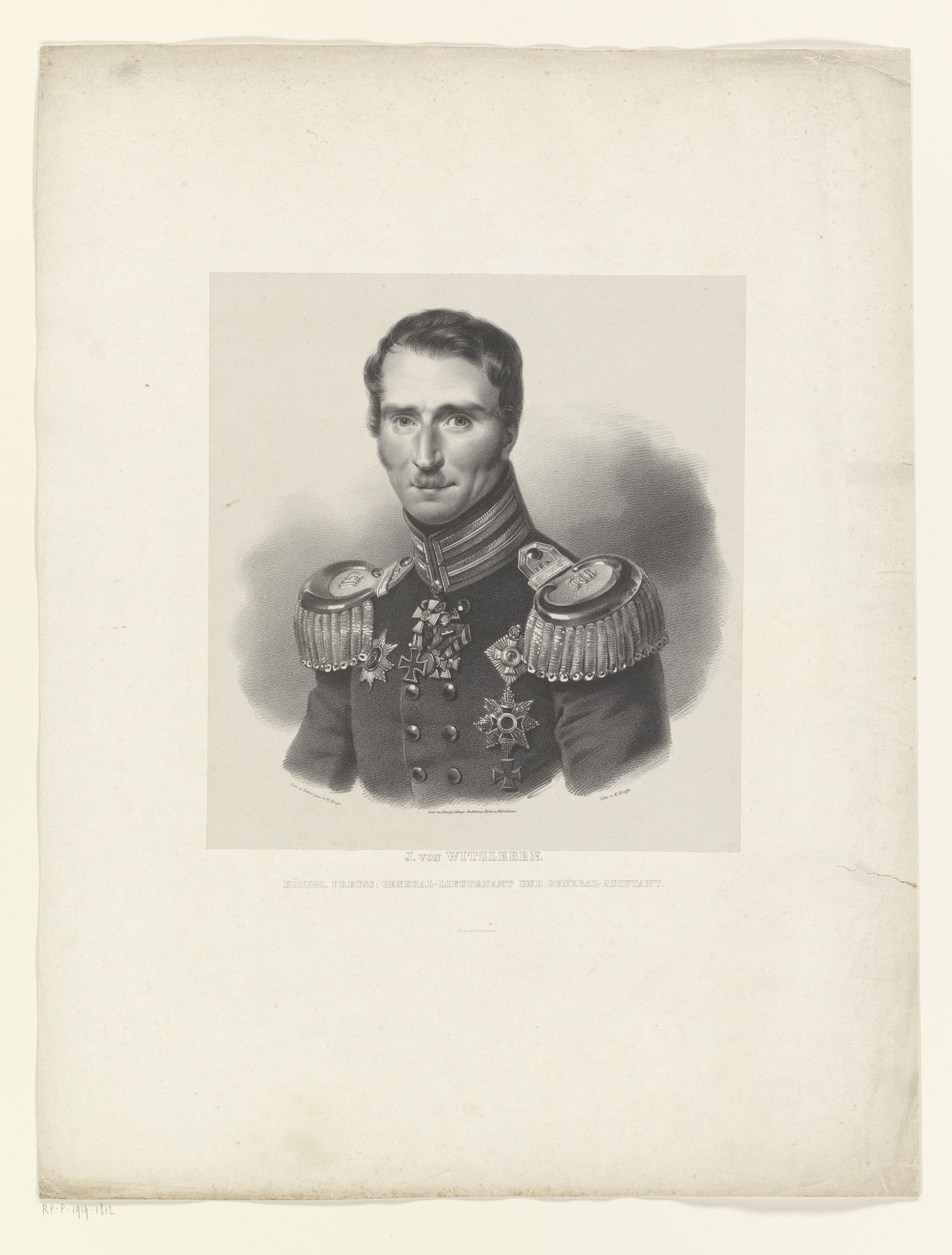
Editor: Here we have Emil Krafft's "Portret van Job von Witzleben," made between 1821 and 1837. It’s an engraving of a stern-looking military figure. All those medals! I find it interesting how seriously people presented themselves back then. What historical weight do you see in this portrait? Curator: More than meets the eye! Beyond the stiff posture typical of the era, consider what a portrait like this *meant* then. It projects power, yes, but also aims to establish legitimacy within a very specific social hierarchy. How do the symbols of status function here, especially when considered alongside the growing societal unrest of the time? What message was being sent? Editor: So, the medals and uniform aren’t just decorative. They're part of a visual language? A sort of…propaganda, maybe? Curator: Exactly! This portrait is a carefully constructed statement. Think about the burgeoning Romantic movement alongside increasing political radicalism in the early 19th century. What role does portraying someone in such a classical, almost stoic way serve in the face of that upheaval? Is it upholding tradition or masking anxieties? Editor: It sounds like even a seemingly straightforward portrait can be seen as a site of cultural negotiation. I’ll never look at old portraits the same way! Curator: That’s the power of contextualizing art! By interrogating its social and historical purpose, we uncover the complexities within even the most formal representations of power. Editor: Absolutely, and this deep dive helps us question, even challenge, the visual languages that surround us every day.