1833
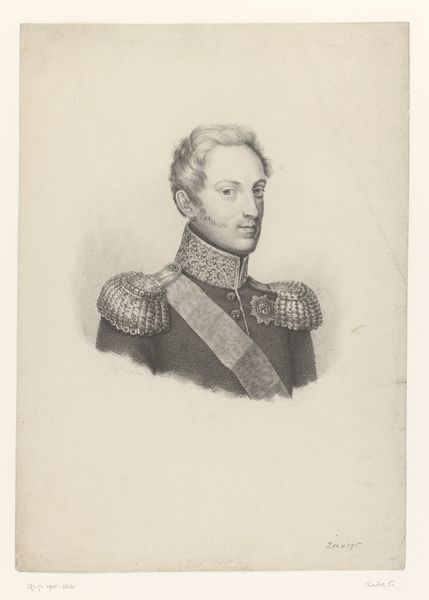
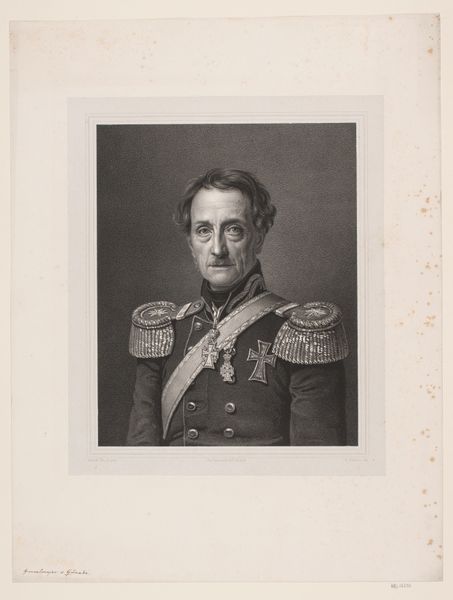
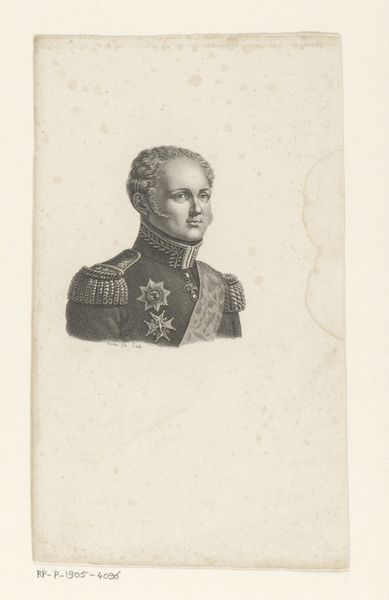
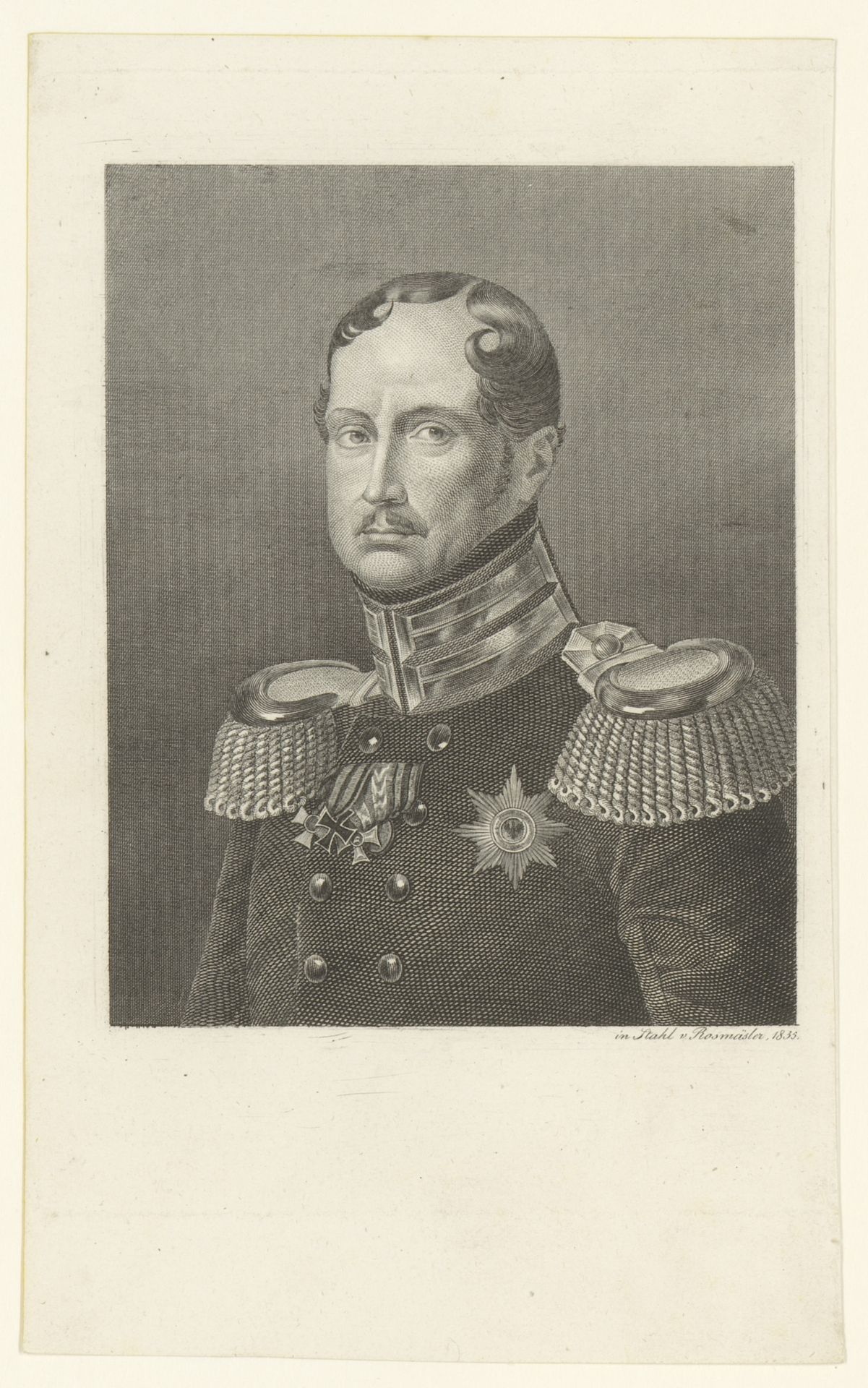
Portret van Frederik Willem III, koning van Pruisen

Friedrich Rossmässler
1775 - 1858Location
RijksmuseumListen to curator's interpretation
Curatorial notes
Editor: Here we have a portrait of Frederick William III, King of Prussia, made in 1833 by Friedrich Rossmässler. It's an engraving, giving it a somewhat formal and rigid feel. How do you interpret this work? Curator: This portrait offers a window into the power dynamics of 19th-century Europe, particularly through the lens of Prussian identity. Consider the king's gaze. Does it strike you as assertive, perhaps even a little severe? And what about the elaborate military regalia? How do they contribute to the construction of royal authority? Editor: I see what you mean. The medals and uniform definitely project power, but also seem a bit…oppressive, maybe? It makes me wonder about the king’s actual relationship with his people at the time. Curator: Exactly! We should question the intentions behind the representation and what kind of dialogue it encouraged—or suppressed. How might this image have been used to solidify a particular narrative around the monarchy, and who benefited from it? Was it about national pride, imperial expansion, or something else entirely? Editor: So it's not just about aesthetics, but about understanding how art can be used to promote certain ideologies? Curator: Precisely. By unpacking the symbolism and understanding the historical context, we can begin to analyze art's role in shaping perceptions and reinforcing or challenging dominant power structures. Editor: That's a perspective I hadn't fully considered. It encourages me to examine artwork with a more critical eye. Curator: I'm glad to hear that. By investigating who benefits from these portrayals, we gain valuable insights into the world beyond the art itself.