1836 - 1912
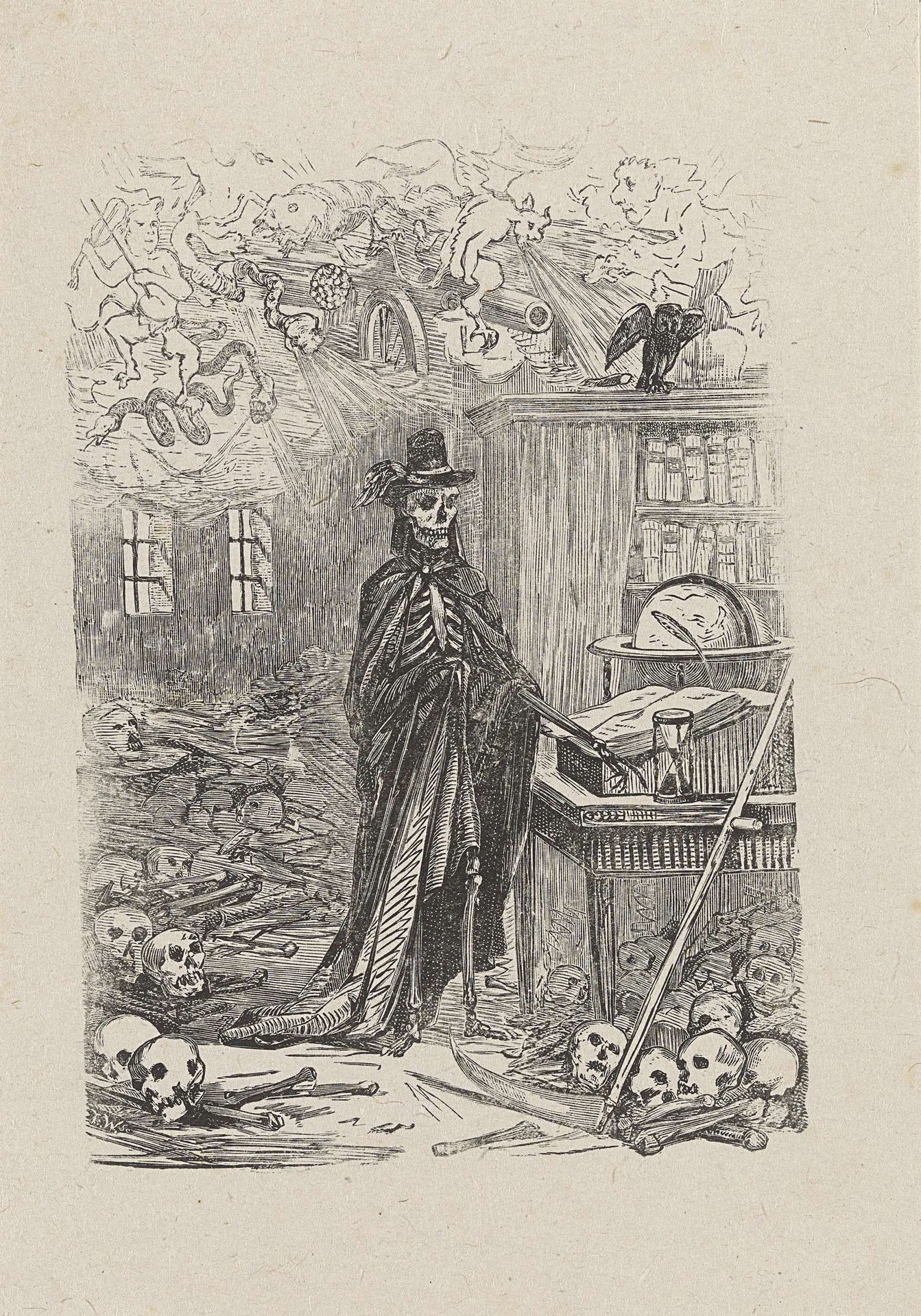
Dood met een cape, een zeis en een zandloper te midden van menselijke botten

Isaac Weissenbruch
1826 - 1912Location
RijksmuseumListen to curator's interpretation
Curatorial notes
Isaac Weissenbruch created this drawing, depicting death, without a known date, using pen and ink. The skeletal figure is adorned with a cape, zeis, and hourglass surrounded by human bones. In the nineteenth century, death was not a taboo subject as it can be today, but a normal part of life depicted often in art. The image contains visual codes rooted in Christian and secular traditions and would have created meaning for viewers at that time in the Netherlands through the cultural understanding of the brevity of life. Weissenbruch critiques the inevitability of death which permeates all levels of society. While memento mori imagery was popular at the time, the artist does something new by using humour to approach the subject. To understand this artwork better, researching Dutch cultural history of the nineteenth century would shed light on the meaning and associations it held for its original audience.