

c. 19th century
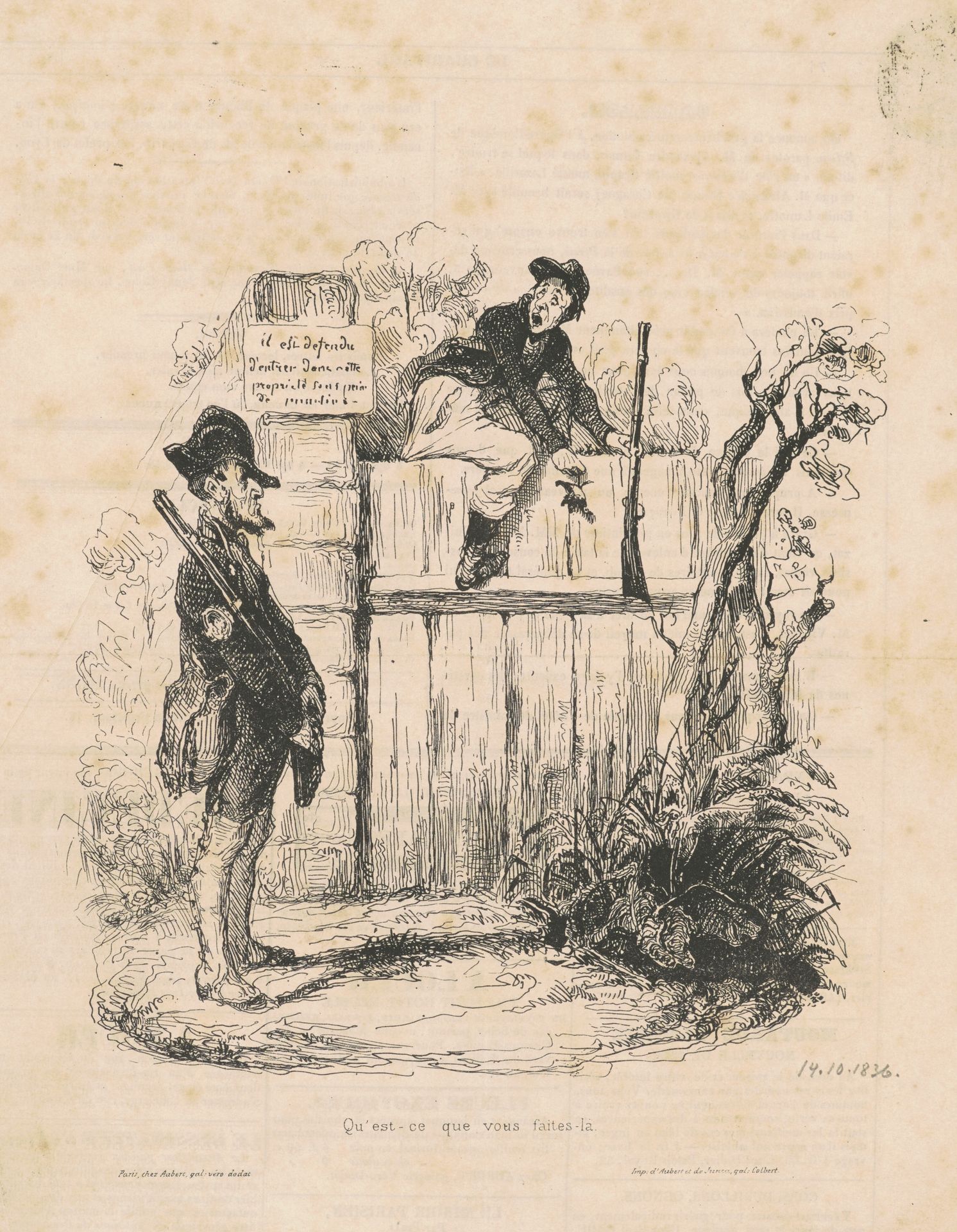
Qu'est-ce que vous faites la...


Listen to curator's interpretation
Curatorial notes
Curator: Instantly, I'm struck by the vulnerability captured in this drawing. It feels raw and immediate, despite the distance of time. Editor: Indeed. What we have here is a lithograph by Honoré Daumier, dating back to the 19th century, titled "Qu'est-ce que vous faites la...". It translates to "What are you doing there..." It’s a quintessential example of Daumier’s social commentary through art. Curator: The phrase "What are you doing there?" suggests an act caught in progress. Notice the figure scrambling down the wall, and the other figure, presumably in authority, standing below. It creates an immediate tension. I wonder about the societal power dynamics at play here, symbolized perhaps by the wall itself. Editor: Absolutely. Daumier often used his art to critique the bourgeoisie and the legal system of his time. This piece likely comments on issues of property, transgression, and the everyday encounters between citizens and authority. Consider also how printmaking allowed such critiques to circulate widely, impacting public opinion. Curator: The sketched, almost frantic quality of the lines emphasizes the urgency and perhaps the desperation of the climbing figure. There’s a sense of visual chaos contrasting sharply with the rigid posture of the figure below. Daumier seems to be drawing attention to their internal states through contrasting postures, their anxiety versus grim determination. Editor: Daumier was working during a period of significant social upheaval in France. His lithographs frequently appeared in satirical journals. The specific date might align it to known political events, allowing one to see it not merely as a depiction of trespassing, but as a veiled critique of, say, laws concerning public access and land use following the Revolution. It’s quite subtle in its visual language. Curator: I'm drawn to the small details, like the sign above the wall. Though I can't quite read the words from here, I know its purpose is to make the space private and to deter someone who attempts to be where they shouldn't. Editor: And how even a sign intended to create social order only underscores how often people will still test such a claim. It calls into question what boundaries, physical and social, truly mean, and who has the right to enforce them. It reminds me that what appears apolitical is so often laden with complex questions. Curator: For me, it evokes how persistent societal narratives are visually embedded through satire like this and remain etched in our visual culture. Editor: Yes, Daumier truly gives us so much to think about, even after all this time.