About this artwork
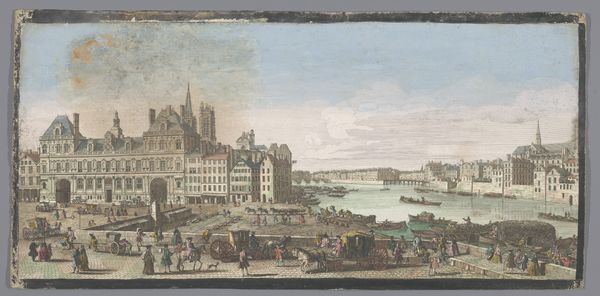
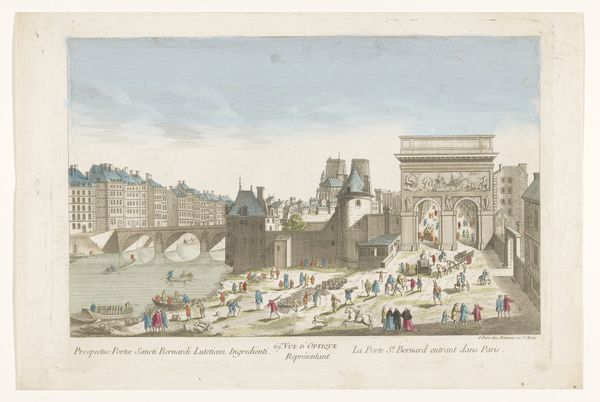
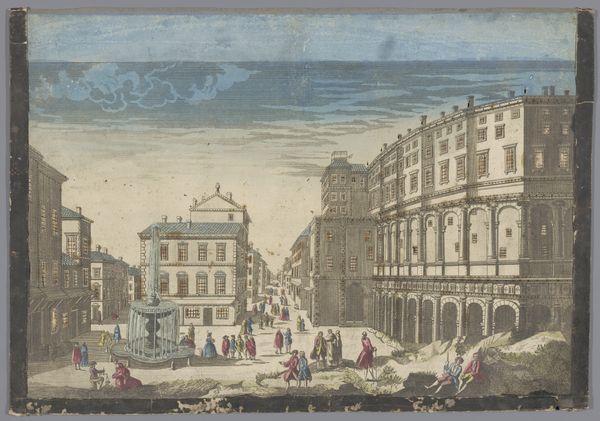
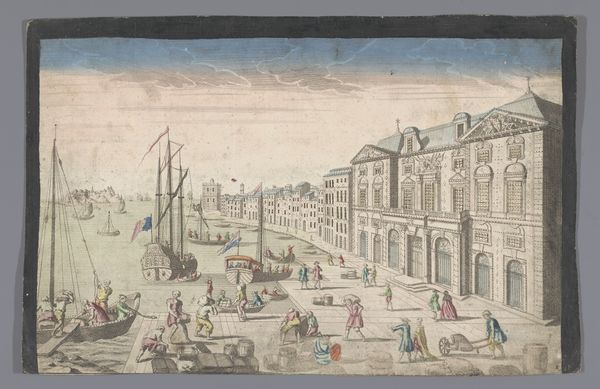
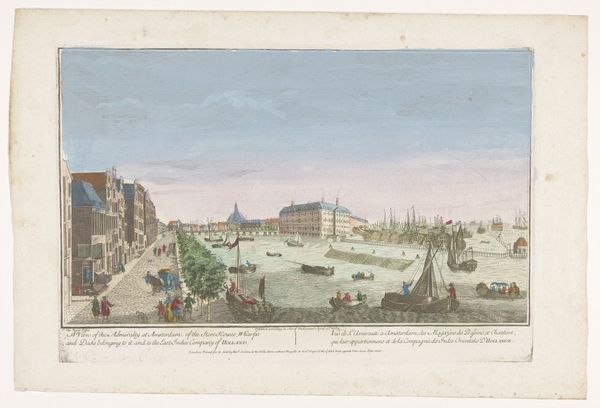
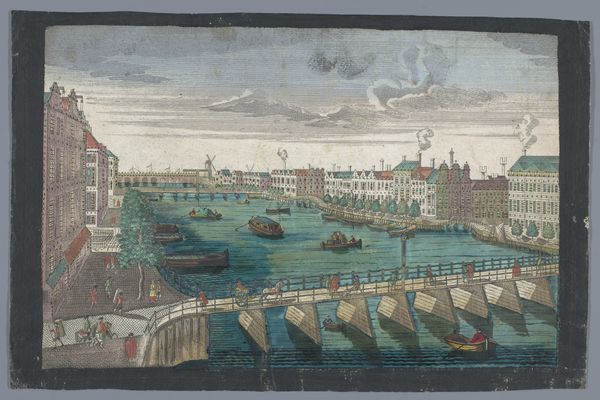
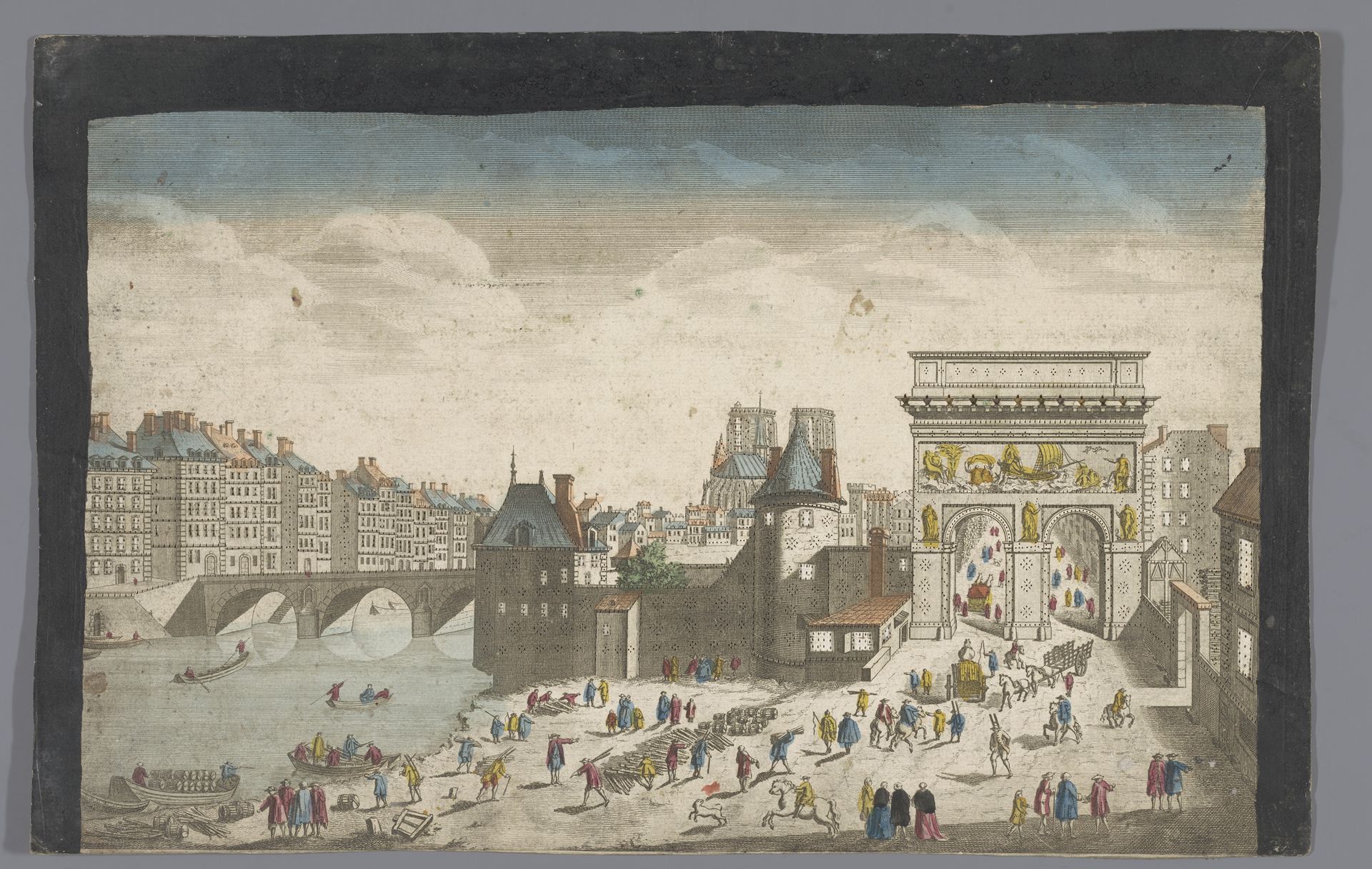
Jean-François Daumont created this print of the Porte Saint-Bernard and the Pont de la Tournelle in Paris. Note the linear precision characteristic of engravings, enhanced with delicate washes of color. The composition emphasizes geometric forms, from the arches of the bridge and the gate to the rectangular buildings lining the Seine. Consider how Daumont uses line and perspective to organize the urban landscape. The detailed rendering of the architecture contrasts with the more loosely defined human figures, creating a dynamic interplay between structure and activity. This contrast draws attention to the structured environment and the fleeting nature of human presence. The semiotic structure relies on recognizable forms—bridge, gate, buildings—to convey a sense of place. The relatively muted colors and precise lines, serve not just aesthetic ends but also suggest a particular cultural and philosophical viewpoint of order and clarity.
Gezicht op de Porte Saint-Bernard en de Pont de la Tournelle over de rivier de Seine te Parijs
1745 - 1775

Jean-François Daumont
1775Location
RijksmuseumArtwork details
- Medium
- painting, print, paper, watercolor
- Dimensions
- height 280 mm, width 438 mm
- Location
- Rijksmuseum
- Copyright
- Rijks Museum: Open Domain
Tags
Comments
Share your thoughts
About this artwork
Jean-François Daumont created this print of the Porte Saint-Bernard and the Pont de la Tournelle in Paris. Note the linear precision characteristic of engravings, enhanced with delicate washes of color. The composition emphasizes geometric forms, from the arches of the bridge and the gate to the rectangular buildings lining the Seine. Consider how Daumont uses line and perspective to organize the urban landscape. The detailed rendering of the architecture contrasts with the more loosely defined human figures, creating a dynamic interplay between structure and activity. This contrast draws attention to the structured environment and the fleeting nature of human presence. The semiotic structure relies on recognizable forms—bridge, gate, buildings—to convey a sense of place. The relatively muted colors and precise lines, serve not just aesthetic ends but also suggest a particular cultural and philosophical viewpoint of order and clarity.
Comments
Share your thoughts