About this artwork
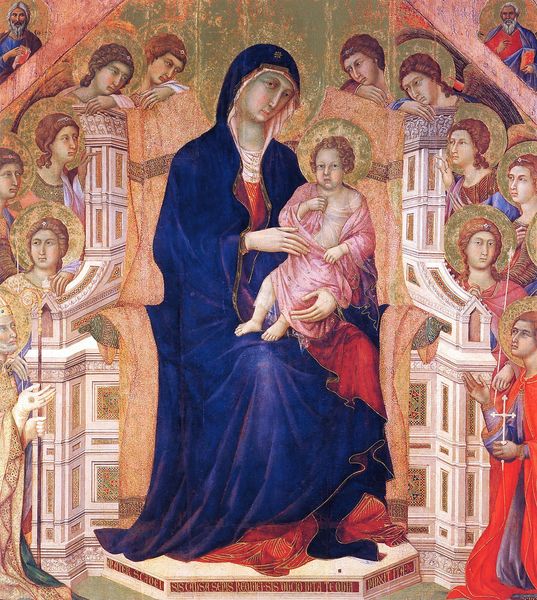
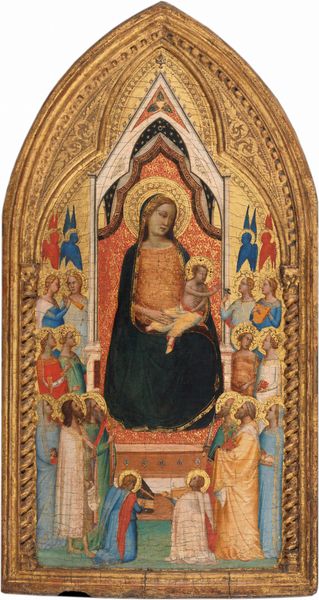
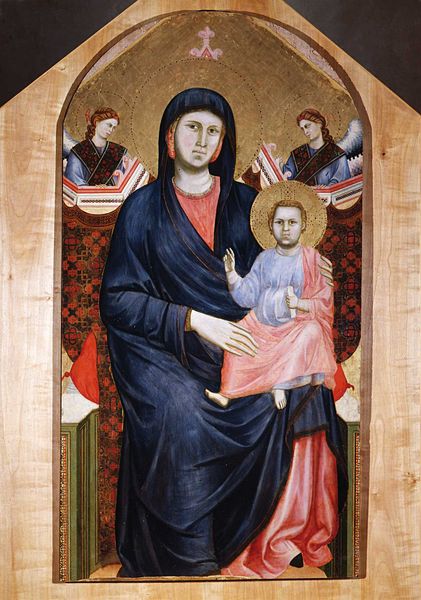
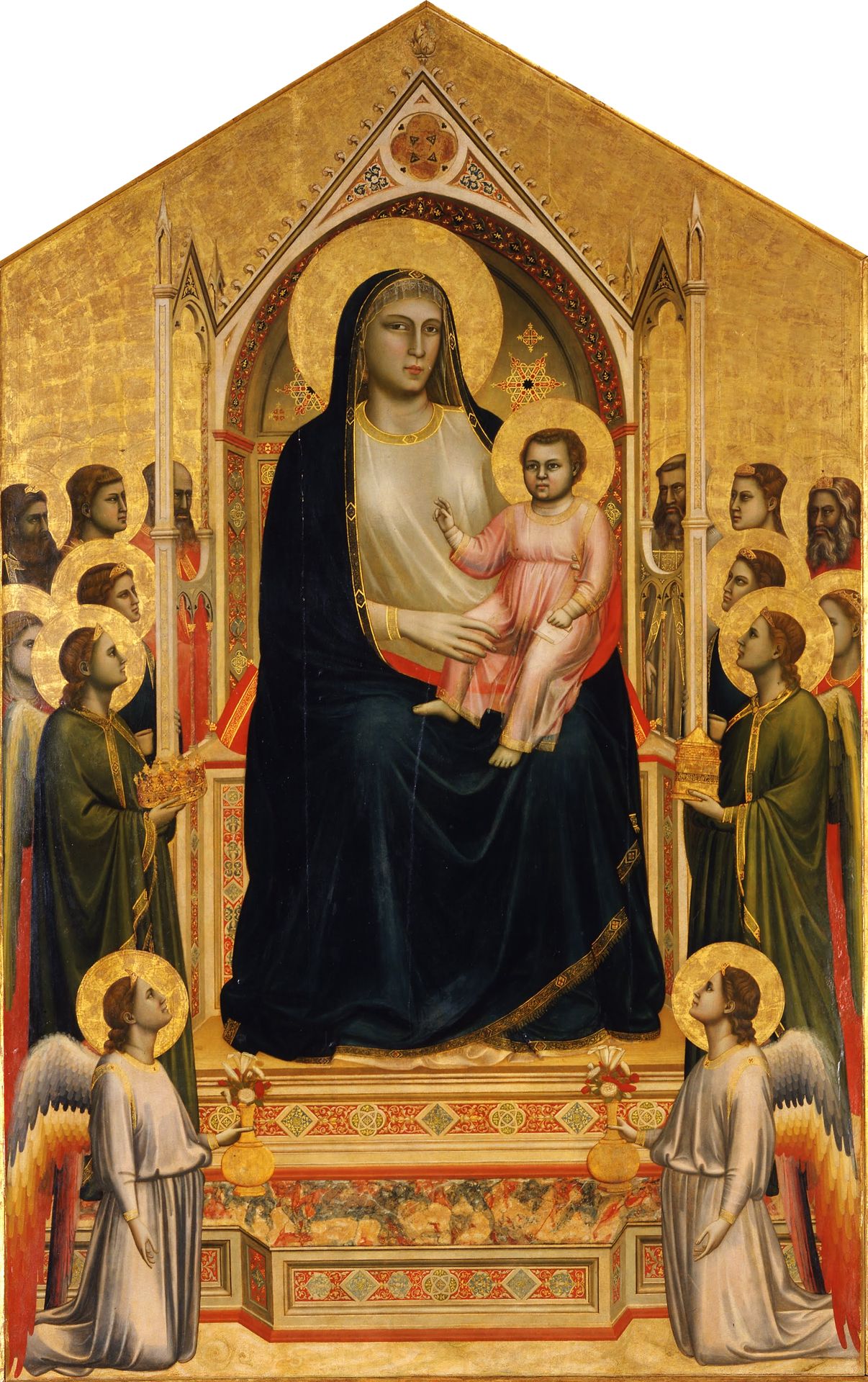
Giotto painted this altarpiece around 1310 in Florence using tempera and gold on wood. The Ognissanti Madonna offers us a window into the changing social functions of religious art in the early 14th century. This painting represents the Madonna enthroned as Queen of Heaven, attended by saints and angels. Consider the ways Giotto departed from the established Byzantine style. His figures have a new monumentality, achieved through his attention to realistic shading and three-dimensional form. No longer ethereal symbols, these are weighty, bodily figures populating a believable space. This shift was more than just aesthetic. It reflected a change in the function of art as a didactic tool that was meant to teach religious principles to an illiterate population. Giotto's naturalistic style made religious figures more relatable and immediate. By studying archival documents, contracts, and the writings of contemporary theologians, we can better understand the important role this altarpiece played in shaping religious experience during a period of social and cultural transformation.
Madonna in Maest (Ognissanti Madonna)
1310


Artwork details
- Medium
- tempera, painting
- Dimensions
- 325 x 204 cm
- Location
- Uffizi Gallery, Florence, Italy
- Copyright
- Public domain
Tags
Comments
Share your thoughts
About this artwork
Giotto painted this altarpiece around 1310 in Florence using tempera and gold on wood. The Ognissanti Madonna offers us a window into the changing social functions of religious art in the early 14th century. This painting represents the Madonna enthroned as Queen of Heaven, attended by saints and angels. Consider the ways Giotto departed from the established Byzantine style. His figures have a new monumentality, achieved through his attention to realistic shading and three-dimensional form. No longer ethereal symbols, these are weighty, bodily figures populating a believable space. This shift was more than just aesthetic. It reflected a change in the function of art as a didactic tool that was meant to teach religious principles to an illiterate population. Giotto's naturalistic style made religious figures more relatable and immediate. By studying archival documents, contracts, and the writings of contemporary theologians, we can better understand the important role this altarpiece played in shaping religious experience during a period of social and cultural transformation.
Comments
Share your thoughts