About this artwork
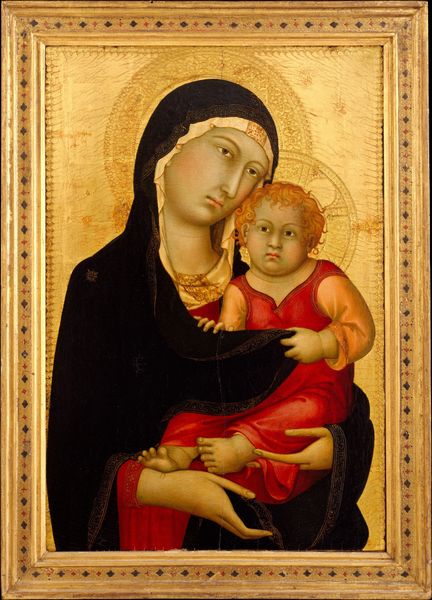
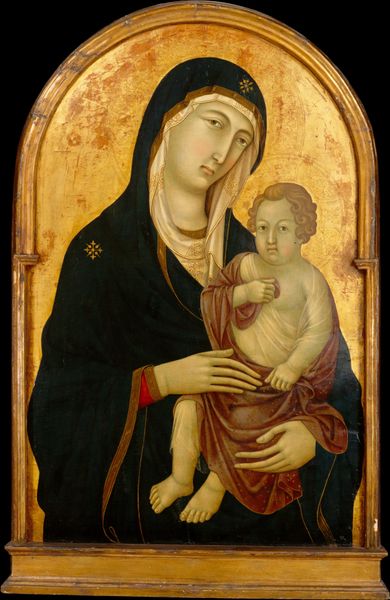
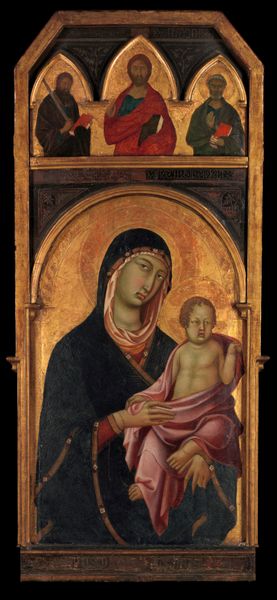
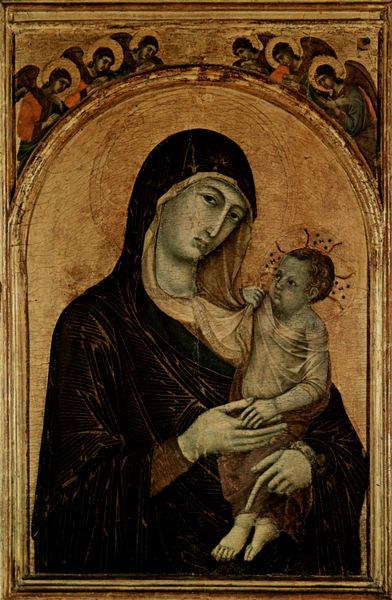
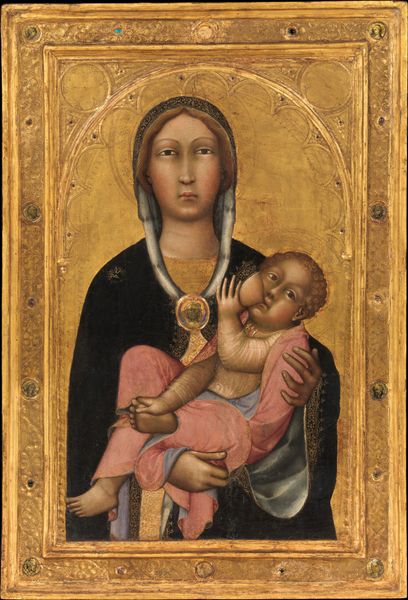
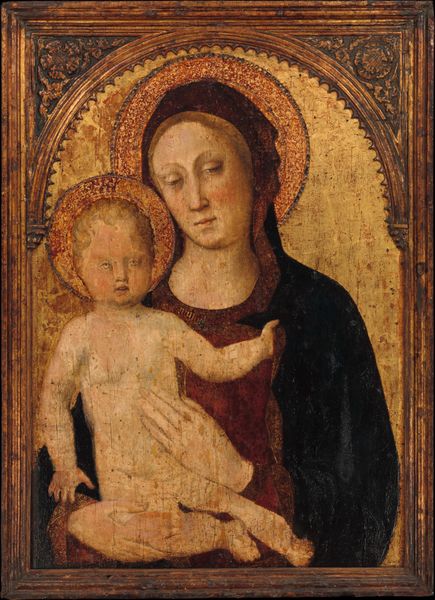
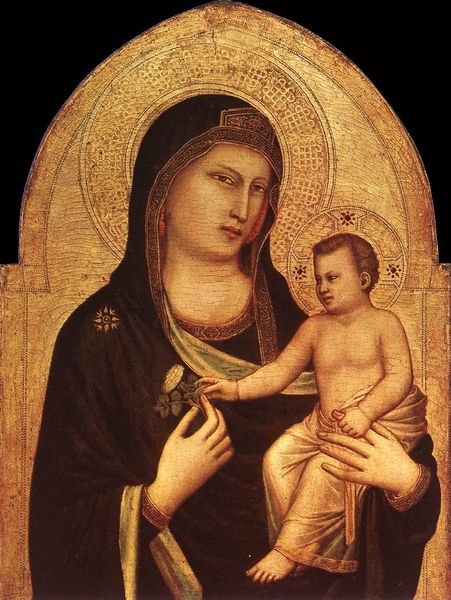
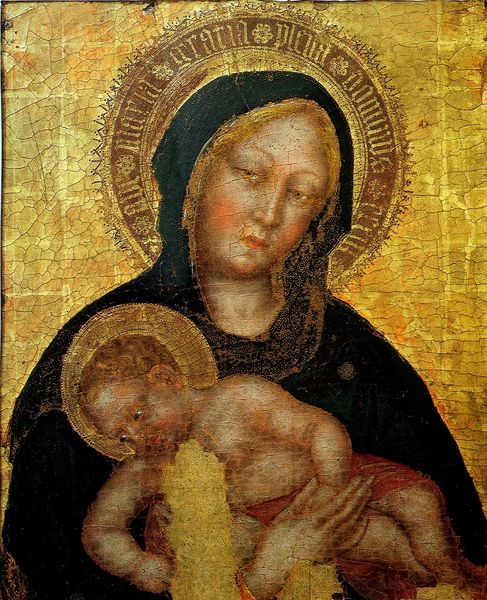
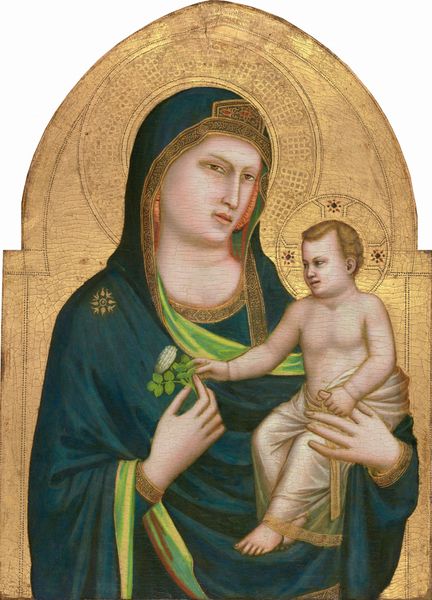
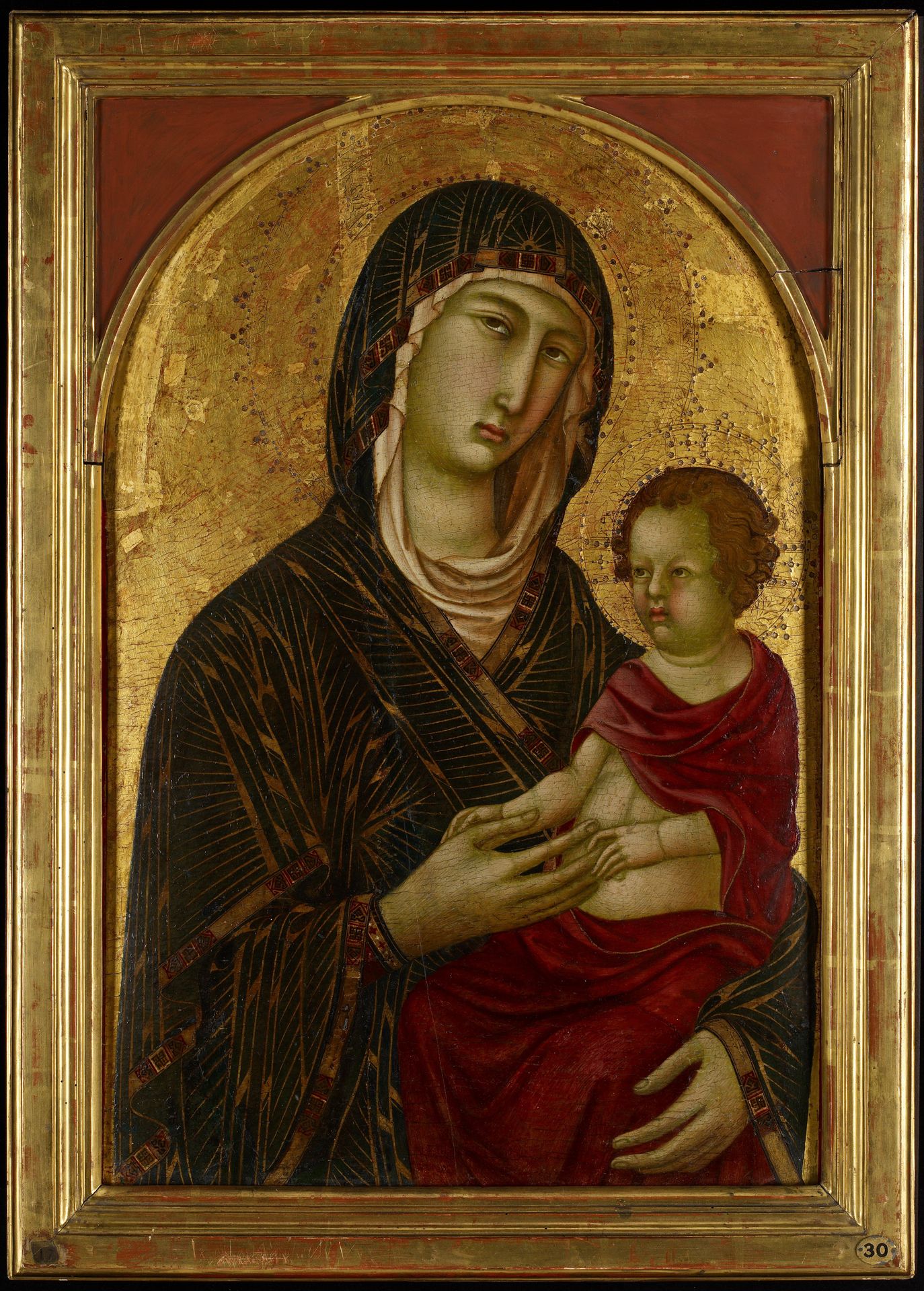
Segna di Buonaventura created this "Madonna and Child" panel painting sometime in the early 14th century. The Madonna’s somber expression and the child’s gesture are laden with meaning. The Madonna, draped in a dark mantle, embodies a timeless motif of maternal sorrow, while the child's tender hand, raised in a blessing, hints at his future sacrifice. The motif of the veiled mother can be traced back to ancient Roman funerary art, where veiled figures symbolized mourning and piety. This echoes the ancient depictions of veiled goddesses embodying both protection and grief. Even in Christian art, recall the many crucifixions you may have seen! Consider how the Madonna's face carries both love and foreboding. It stirs something deep within us. This is not just a painting. It is a mirror reflecting our collective hopes, fears, and the enduring power of archetypal imagery. These symbols reappear, transformed yet familiar, reminding us of the cyclical nature of history and the persistent echoes of the past in our present.
Madonna and Child c. 1310


Artwork details
- Dimensions
- 27 1/2 x 19 1/4 in. (69.9 x 48.9 cm)
- Location
- Minneapolis Institute of Art
- Copyright
- Public Domain
Tags
oil painting
portrait reference
portrait head and shoulder
coffee painting
underpainting
animal drawing portrait
portrait drawing
facial portrait
italy
portrait art
fine art portrait
Comments

Mary, the mother of Jesus, insists you look her in the eye. She has long inspired intense devotion. Christians believed that a relationship with her would bring them closer to her son, and worshippers identified with her role as a mother. Segna portrays them both as very human and approachable—Jesus plays with his doting mother’s fingers like any other baby. Yet his erect posture and serious countenance convey the wisdom and spiritual authority of the man he would become. The painting was once the central part of a five-panel altarpiece and was likely cut down in the 1800s to fit this frame.
About this artwork
Segna di Buonaventura created this "Madonna and Child" panel painting sometime in the early 14th century. The Madonna’s somber expression and the child’s gesture are laden with meaning. The Madonna, draped in a dark mantle, embodies a timeless motif of maternal sorrow, while the child's tender hand, raised in a blessing, hints at his future sacrifice. The motif of the veiled mother can be traced back to ancient Roman funerary art, where veiled figures symbolized mourning and piety. This echoes the ancient depictions of veiled goddesses embodying both protection and grief. Even in Christian art, recall the many crucifixions you may have seen! Consider how the Madonna's face carries both love and foreboding. It stirs something deep within us. This is not just a painting. It is a mirror reflecting our collective hopes, fears, and the enduring power of archetypal imagery. These symbols reappear, transformed yet familiar, reminding us of the cyclical nature of history and the persistent echoes of the past in our present.
Comments
Mary, the mother of Jesus, insists you look her in the eye. She has long inspired intense devotion. Christians believed that a relationship with her would bring them closer to her son, and worshippers identified with her role as a mother. Segna portrays them both as very human and approachable—Jesus plays with his doting mother’s fingers like any other baby. Yet his erect posture and serious countenance convey the wisdom and spiritual authority of the man he would become. The painting was once the central part of a five-panel altarpiece and was likely cut down in the 1800s to fit this frame.