painting, oil-paint
#
portrait
#
medieval
#
painting
#
oil-paint
#
figuration
#
madonna
#
oil painting
#
child
#
history-painting
#
italian-renaissance
#
portrait art
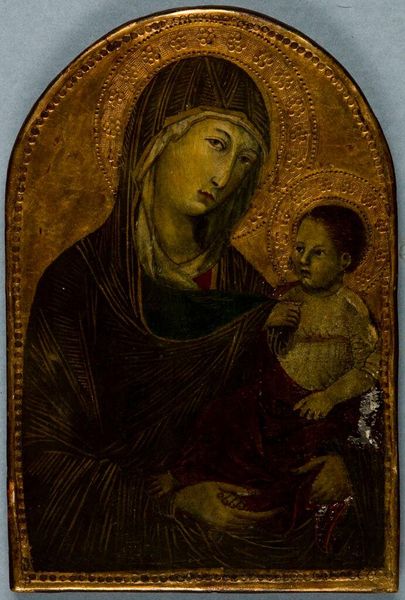
Dimensions: Arched top, 35 3/8 x 23 in. (89.9 x 58.4 cm)
Copyright: Public Domain
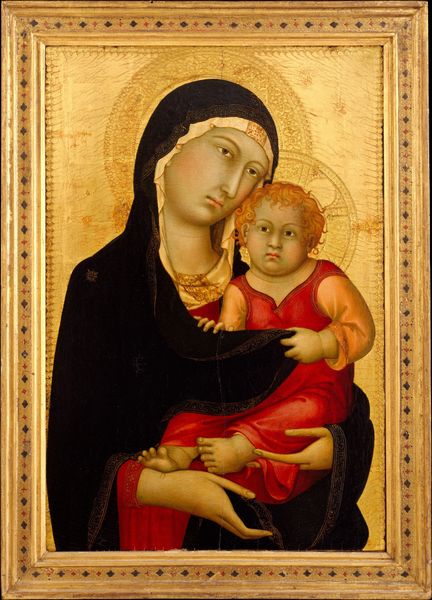
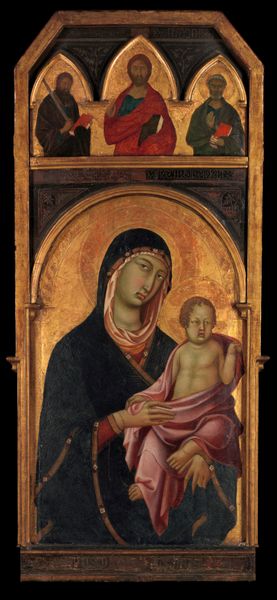
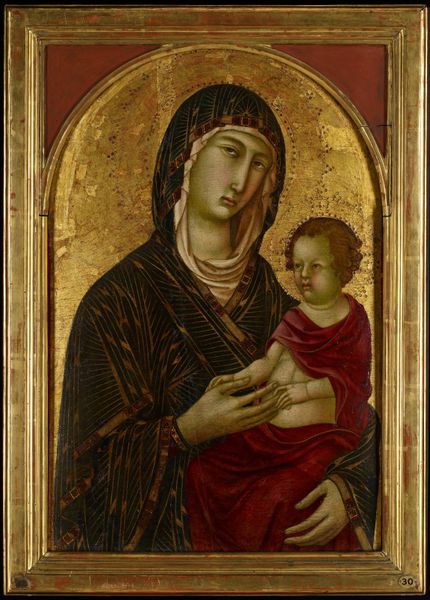
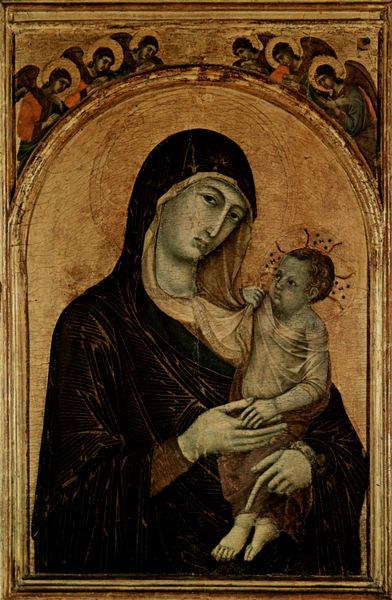
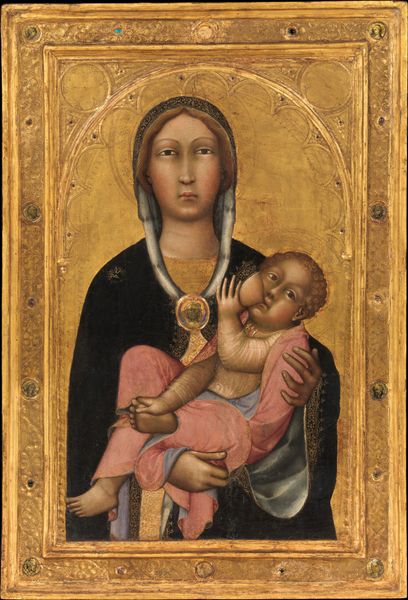
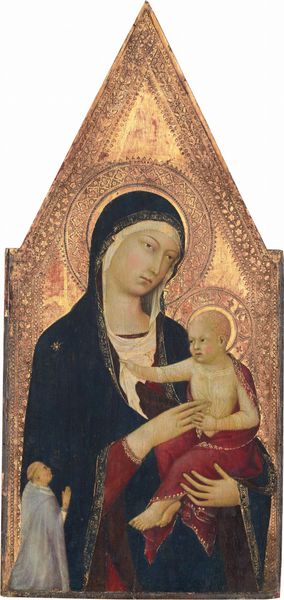
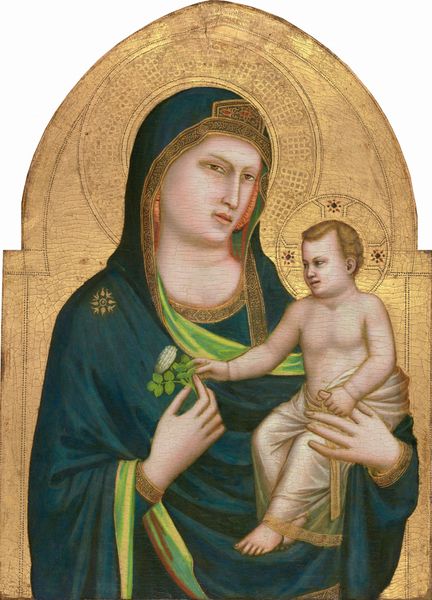
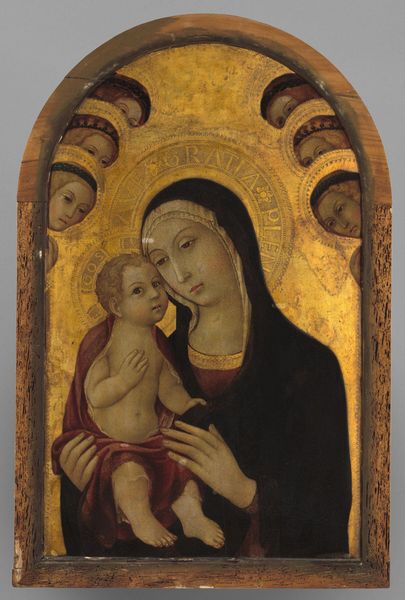
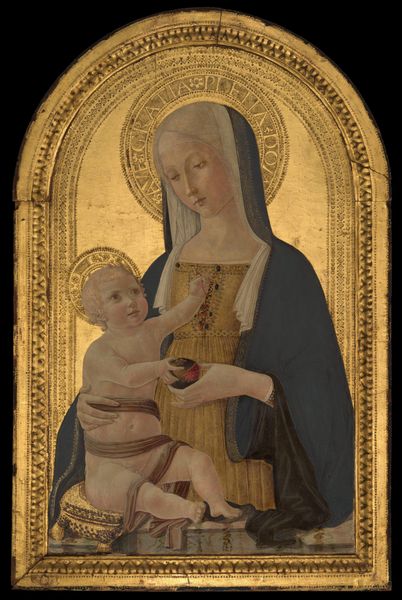
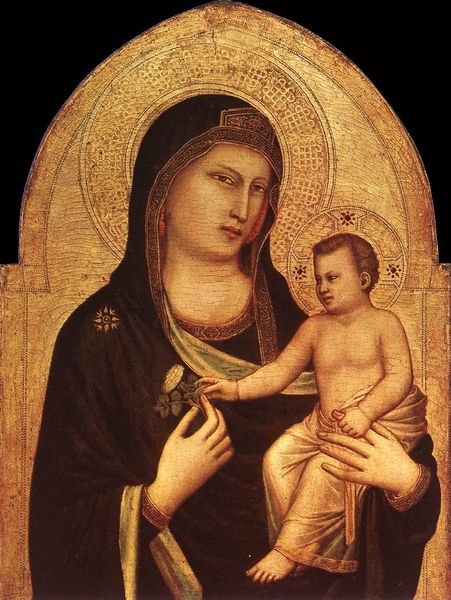
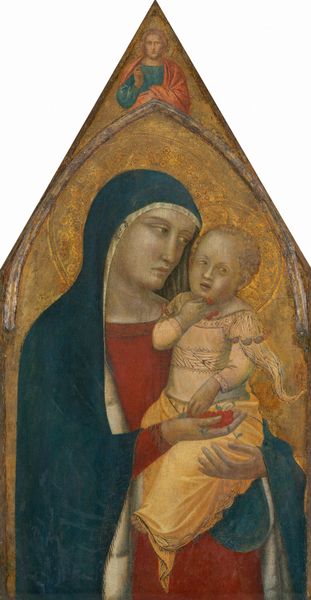
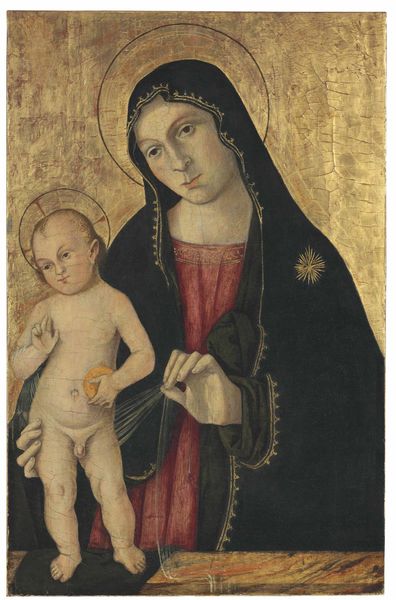
This is Ugolino da Siena’s ‘Madonna and Child,’ painted in the early 14th century. It's made with tempera and gold leaf on wood, traditional materials of the period. Look closely, and you'll see the intricate details of the gold leaf. It's not just a flat surface; it's been carefully tooled to catch the light, adding a sense of depth and preciousness. This gilding process, requiring skilled craftsmanship, speaks to the value placed on religious imagery at the time. It was labor-intensive work, reflecting a significant investment of time and resources. The smooth, almost porcelain-like finish of the Madonna's face is achieved through tempera, where pigments are mixed with egg yolk. The application of thin, translucent layers is very time-consuming but produces subtle gradations of tone. By understanding the materials and the labor-intensive processes involved, we gain a deeper appreciation for the artwork and the cultural values it embodies. The distinction between fine art and craft blurs as we recognize the skilled artistry required to create this devotional image.
Comments
No comments
Be the first to comment and join the conversation on the ultimate creative platform.
 Collect
 React
React Comment
More like this