1834
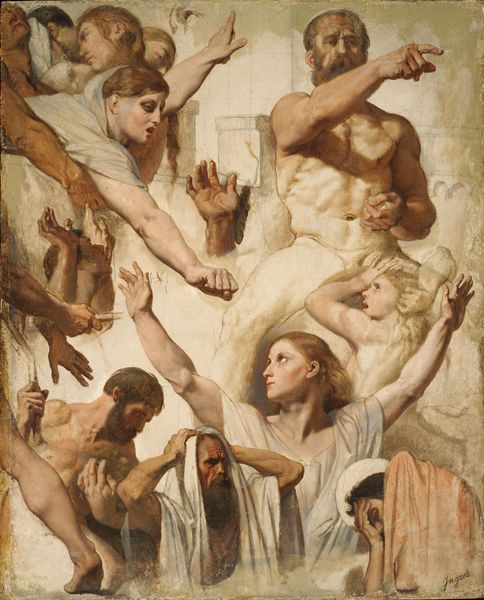
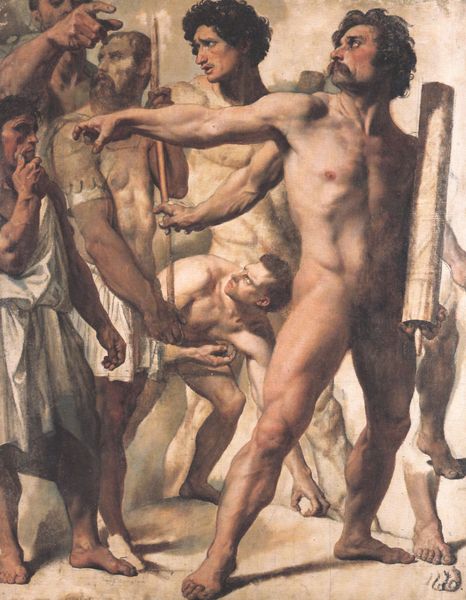
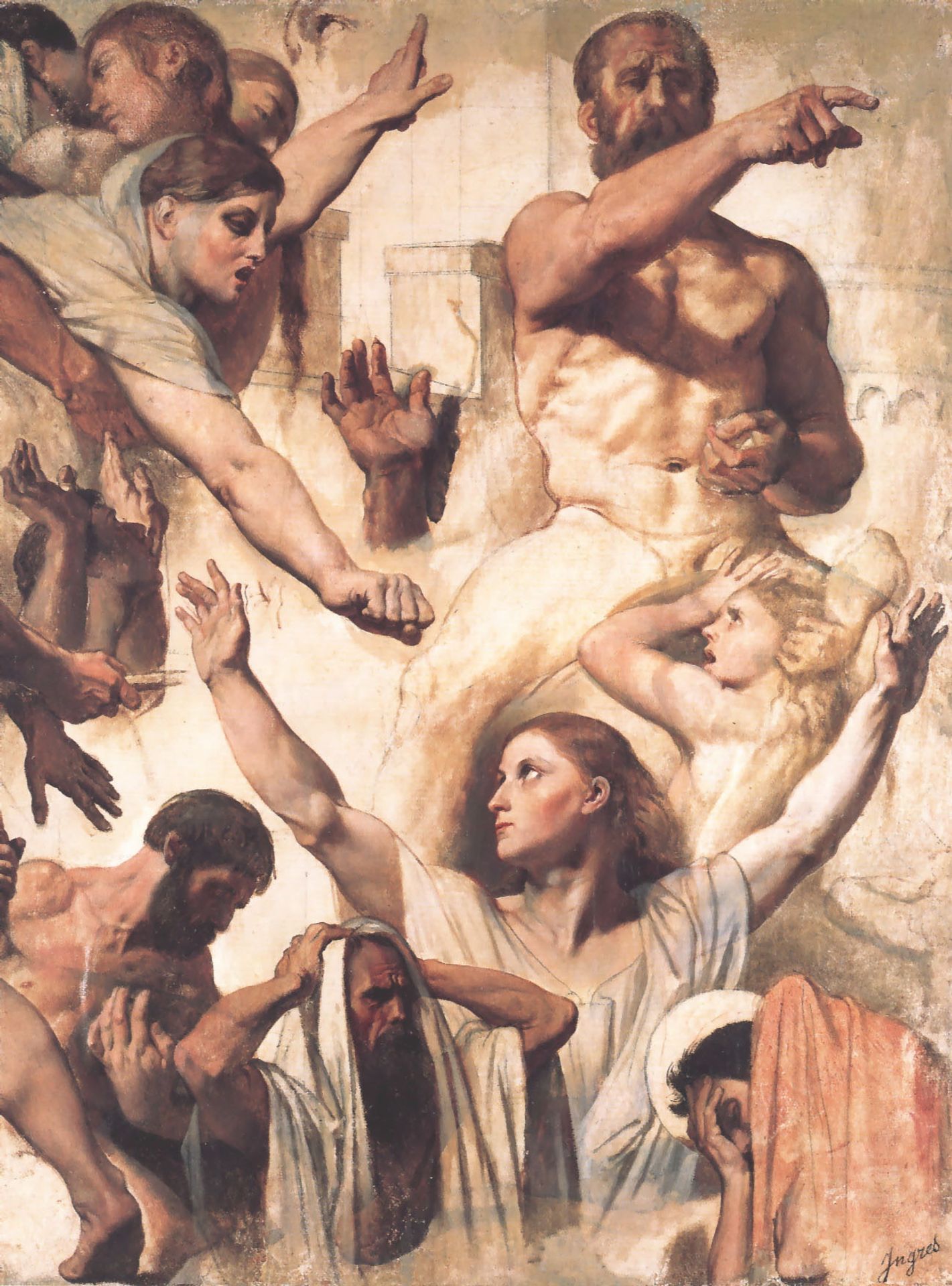
Study for The Martyrdom of St. Symphorien

Jean Auguste Dominique Ingres
1780 - 1867Location
Musée Ingres, Montauban, FranceListen to curator's interpretation
Curatorial notes
Jean Auguste Dominique Ingres made this preparatory study for "The Martyrdom of St. Symphorien" in France, likely in the first half of the 19th century. The final painting shows a young Christian being led to his execution for refusing to worship pagan gods. Ingres uses a neoclassical style, evoking ancient Roman art. But, he also references contemporary French culture. Symphorien's defiance embodies the kind of revolutionary spirit seen in Romanticism. Yet, the painting also reinforces traditional religious values, reflecting the complex social and political landscape of post-revolutionary France. Ingres was teaching at the École des Beaux-Arts, where he was a staunch advocate for academic painting. His art served to preserve its authority and to counteract what he regarded as the undisciplined style of the Romantics. To understand this work more deeply, one might consider the changing role of the Catholic Church in French society or the institutional history of the École des Beaux-Arts. The interpretation of art is always contingent on its social and institutional context.