About this artwork
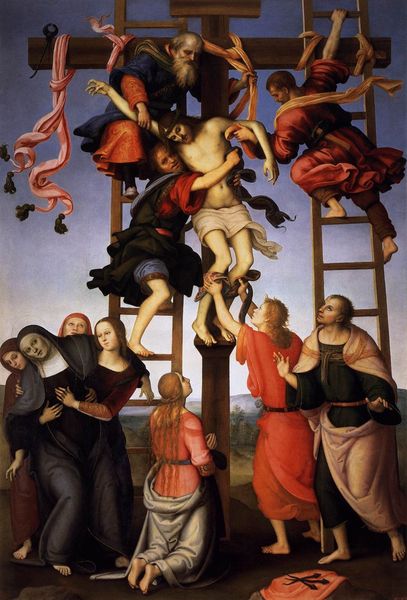
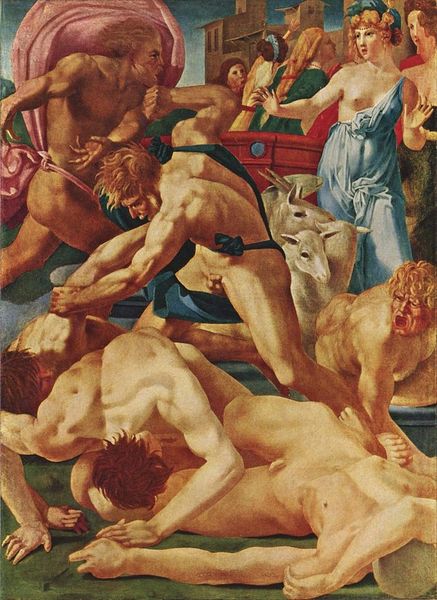
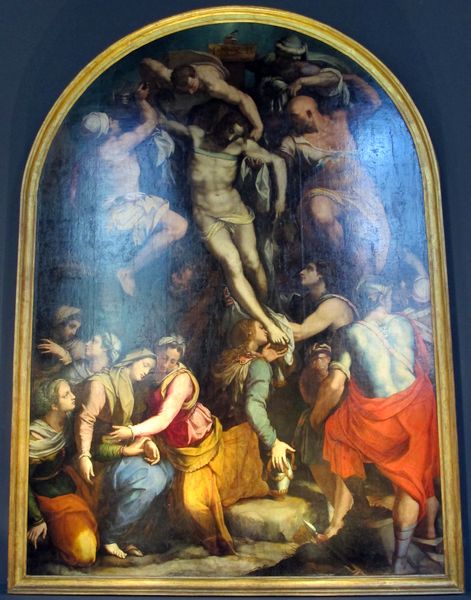
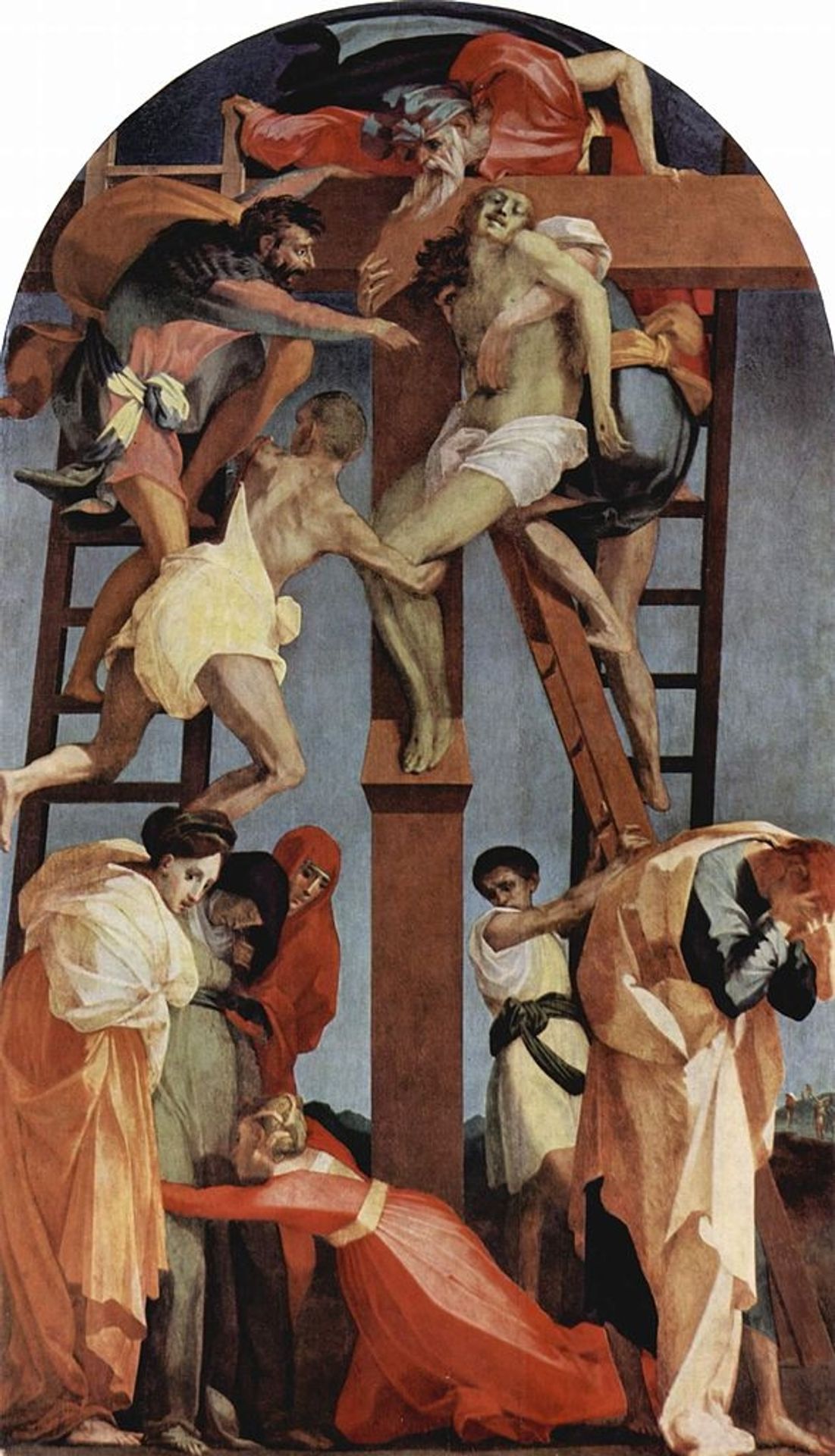
Rosso Fiorentino created this large-scale oil on panel painting of The Deposition in Volterra, Italy, sometime in the 1520s. Painting, of course, is not generally considered a craft medium. Yet, if you look closely, you can see how Fiorentino embraced a hands-on, almost sculptural approach. Note the raw physicality of the figures, their strained muscles and awkward postures. The artist wasn't interested in elegant, idealized forms, but rather in capturing the visceral reality of the scene. The artist employed techniques that were associated with the workshops, in which, during the Renaissance, artists were trained alongside artisans. Consider, too, the material qualities of the paint itself. Fiorentino built up layers of pigment to create a textured surface that almost seems to vibrate with energy. He has created a sense of immediacy and rawness, blurring the lines between artistic vision and manual skill. Ultimately, this painting invites us to reconsider our assumptions about what constitutes ‘high art.’ It reminds us that even in the most refined artistic traditions, there is always a connection to the tangible world of materials and making.
Deposition
1521

Rosso Fiorentino
1494 - 1540Location
Pinacoteca e Museo Civico di Volterra, Volterra, ItalyArtwork details
- Medium
- painting, oil-paint
- Dimensions
- 196 x 375 cm
- Location
- Pinacoteca e Museo Civico di Volterra, Volterra, Italy
- Copyright
- Public domain
Tags
Comments
Share your thoughts
About this artwork
Rosso Fiorentino created this large-scale oil on panel painting of The Deposition in Volterra, Italy, sometime in the 1520s. Painting, of course, is not generally considered a craft medium. Yet, if you look closely, you can see how Fiorentino embraced a hands-on, almost sculptural approach. Note the raw physicality of the figures, their strained muscles and awkward postures. The artist wasn't interested in elegant, idealized forms, but rather in capturing the visceral reality of the scene. The artist employed techniques that were associated with the workshops, in which, during the Renaissance, artists were trained alongside artisans. Consider, too, the material qualities of the paint itself. Fiorentino built up layers of pigment to create a textured surface that almost seems to vibrate with energy. He has created a sense of immediacy and rawness, blurring the lines between artistic vision and manual skill. Ultimately, this painting invites us to reconsider our assumptions about what constitutes ‘high art.’ It reminds us that even in the most refined artistic traditions, there is always a connection to the tangible world of materials and making.
Comments
Share your thoughts