drawing, paper, ink, pencil
#
portrait
#
drawing
#
dutch-golden-age
#
figuration
#
paper
#
ink
#
pencil
Dimensions: height 123 mm, width 88 mm
Copyright: Rijks Museum: Open Domain
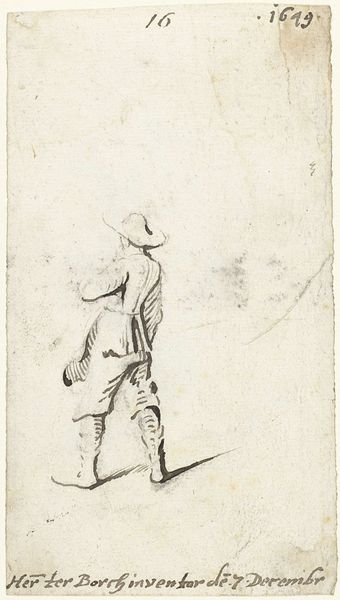
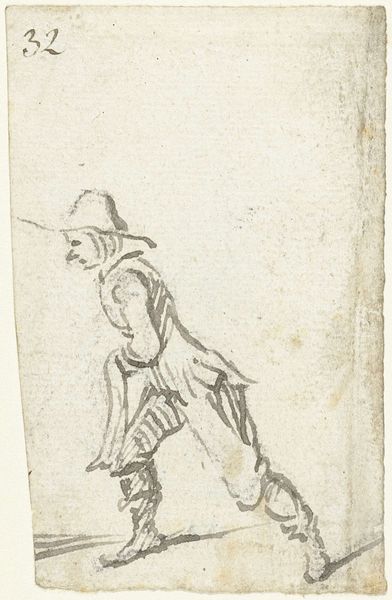
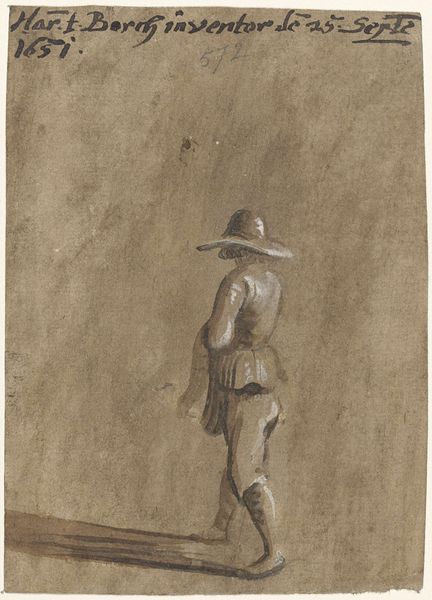
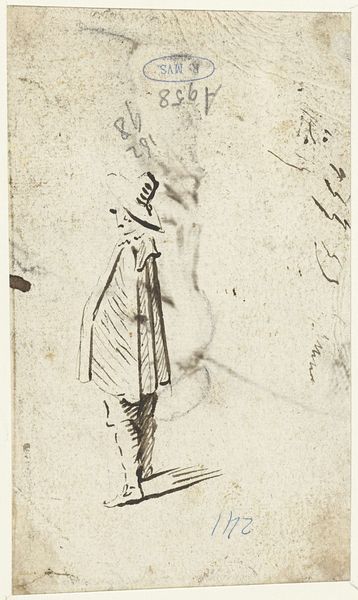
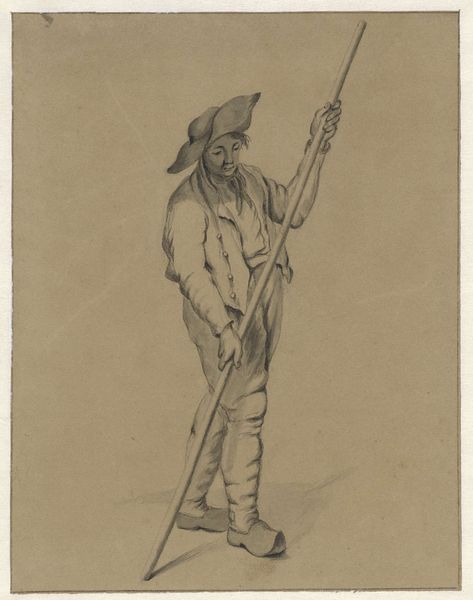
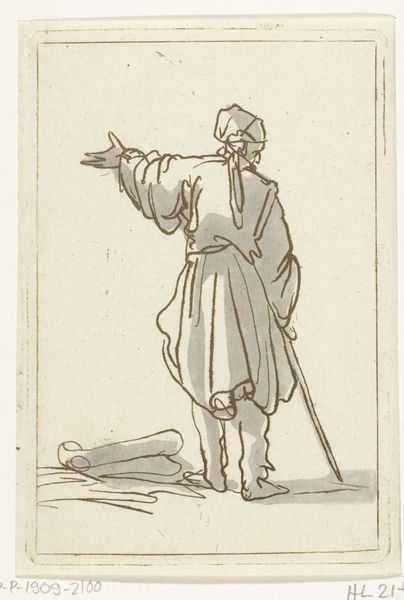
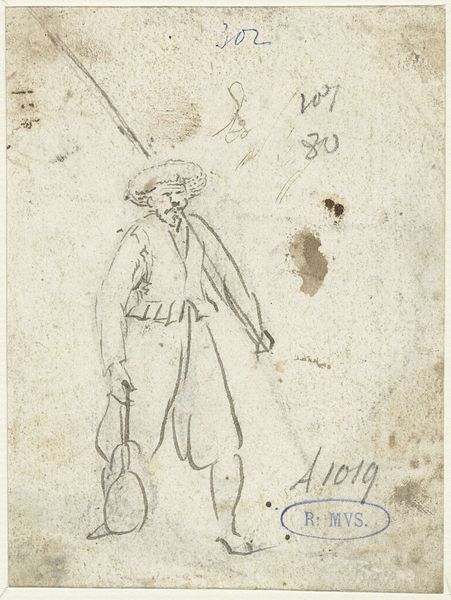
Editor: This is a quick ink and pencil sketch on paper from the Dutch Golden Age, "Sketch of a Boy Walking to the Right" by Harmen ter Borch, probably done between 1651 and 1659. It has such an unassuming presence; what do you see in this piece, someone rapidly captured or observed? Curator: Yes, observed moments hold so much, don’t they? Notice the hat. A broad-brimmed hat, slightly tilted. What does that suggest? Think about sun protection, but also concealment, a wish not to be directly seen. Does the figure seem burdened by shadow, the weight of unseen expectations perhaps? Editor: I hadn't thought of it like that, focusing instead on the simple depiction of movement. Curator: But what *kind* of movement? Is he striding confidently, or shuffling with reluctance? The lines themselves carry weight, don’t they? Look at how Ter Borch renders the boy's leg – that single firm stroke, contrasting with the sketchier lines around the torso. Is it symbolic of groundedness, contrasting a more ephemeral spirit? Editor: The contrast in line work does change things... it brings forth that dichotomy. The boy, caught between a solid presence and something fleeting. Curator: Indeed! What else speaks to you of that conflict? His back is to us, withholding, yet his head is turned, suggesting invitation. The image is speaking to both turning away, and being seen, a universal visual conflict. The cultural memory, the idea of youthful ambivalence is communicated, what will he do? Where will he go? What burden does he carry? Editor: I never considered that much was embedded within such quick strokes. Thanks for this fresh insight. Curator: My pleasure, a simple sketch revealing hidden depths, isn't that the marvel of visual expression?
Comments
No comments
Be the first to comment and join the conversation on the ultimate creative platform.
 Collect
 React
React Comment
More like this