About this artwork
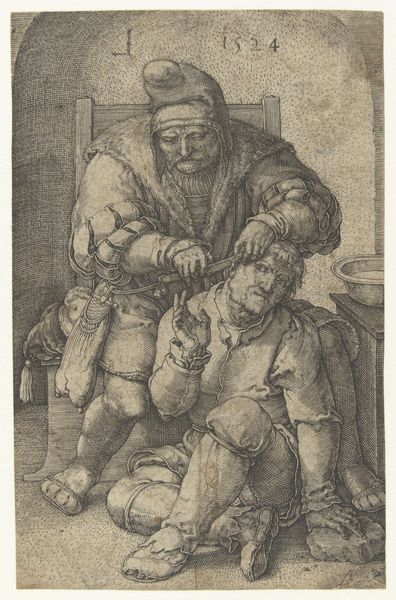
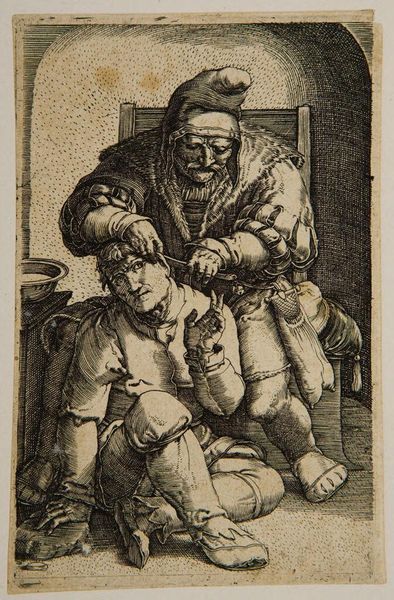
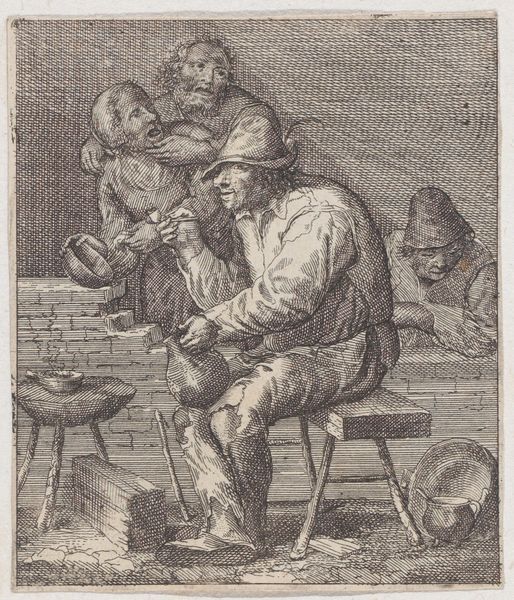
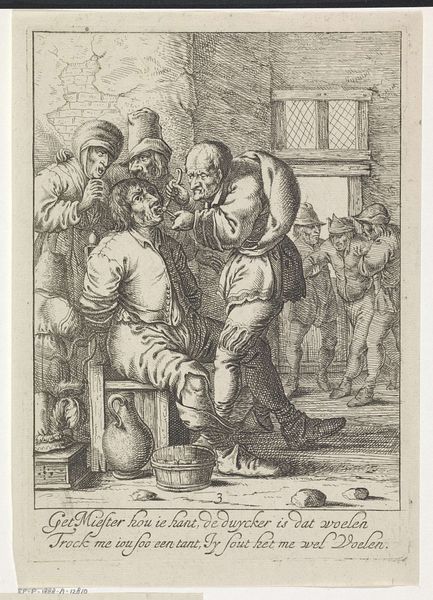
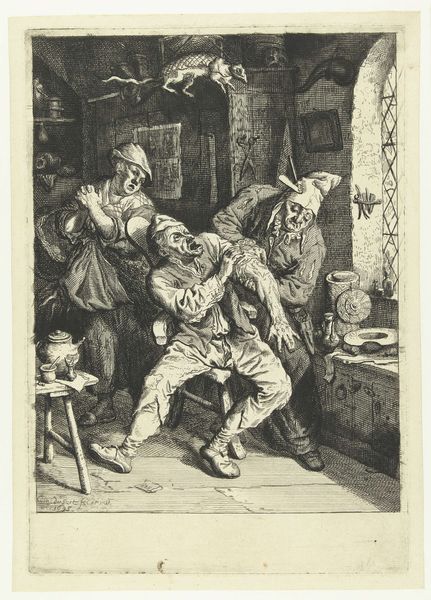
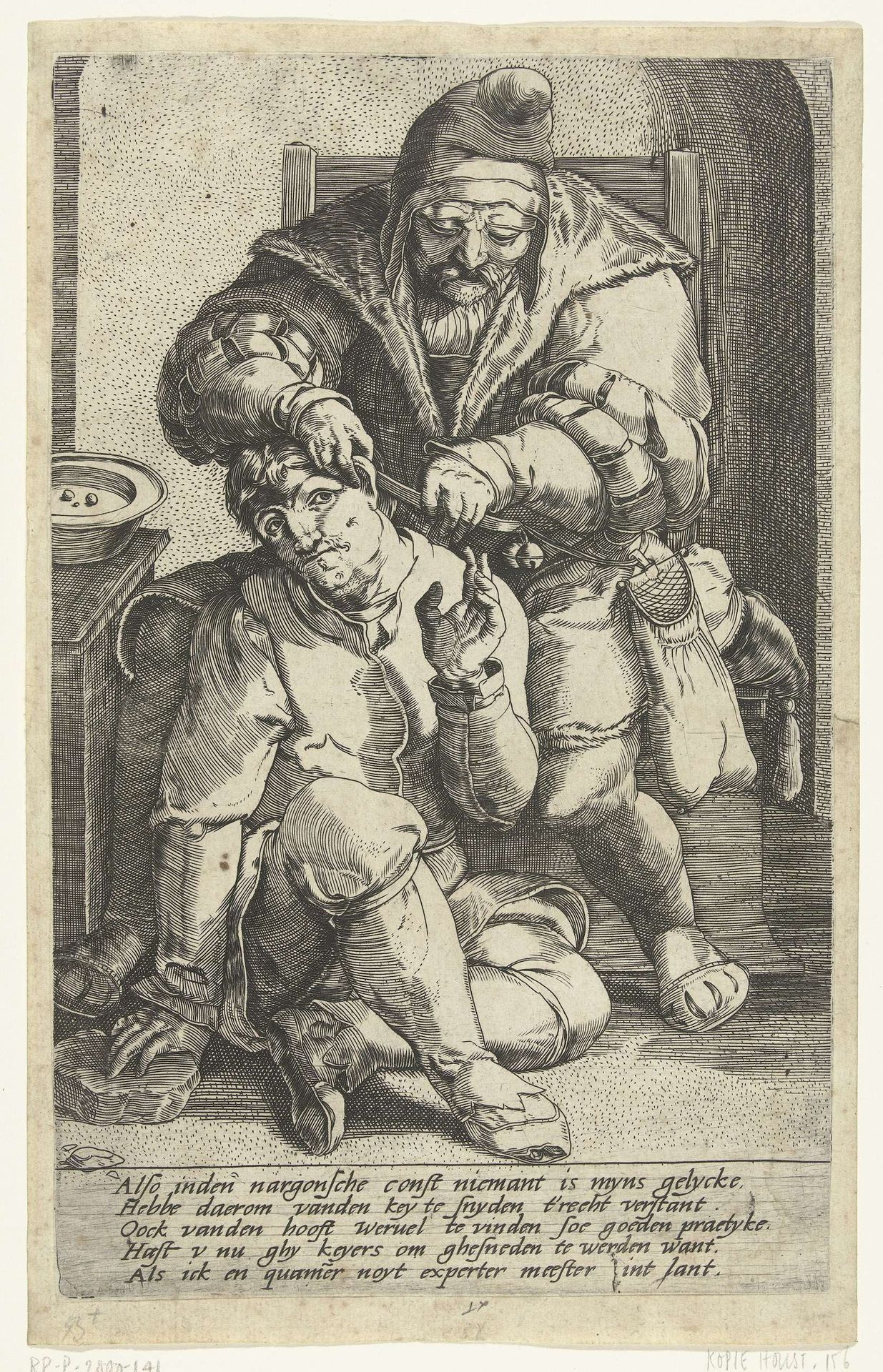
This print, made by an anonymous artist, depicts a surgeon operating on a patient’s head. It offers a glimpse into the world of medicine and popular beliefs of the time. Created in the Netherlands, likely in the 16th or 17th century, this image reflects a society where medical practice was still evolving. The surgeon, with his somewhat crude tools and informal attire, contrasts sharply with the modern image of a medical professional. The text at the bottom suggests a boastful claim of expertise, which may reflect a competitive environment among practitioners. The procedure itself hints at the prevailing theories about health and the body, where practices like bloodletting or trepanation were considered valid treatments. Understanding this print requires delving into the history of medicine, social hierarchies, and the role of visual culture in shaping public perceptions of health and healing. Scholarly articles, historical texts, and institutional records of medical practices in the Netherlands can shed light on its meaning.

Artwork details
- Medium
- print, engraving
- Dimensions
- height 264 mm, width 165 mm
- Location
- Rijksmuseum
- Copyright
- Rijks Museum: Open Domain
Tags
portrait
baroque
pen sketch
figuration
genre-painting
engraving
Comments
Be the first to share your thoughts about this work.
About this artwork
This print, made by an anonymous artist, depicts a surgeon operating on a patient’s head. It offers a glimpse into the world of medicine and popular beliefs of the time. Created in the Netherlands, likely in the 16th or 17th century, this image reflects a society where medical practice was still evolving. The surgeon, with his somewhat crude tools and informal attire, contrasts sharply with the modern image of a medical professional. The text at the bottom suggests a boastful claim of expertise, which may reflect a competitive environment among practitioners. The procedure itself hints at the prevailing theories about health and the body, where practices like bloodletting or trepanation were considered valid treatments. Understanding this print requires delving into the history of medicine, social hierarchies, and the role of visual culture in shaping public perceptions of health and healing. Scholarly articles, historical texts, and institutional records of medical practices in the Netherlands can shed light on its meaning.
Comments
Be the first to share your thoughts about this work.