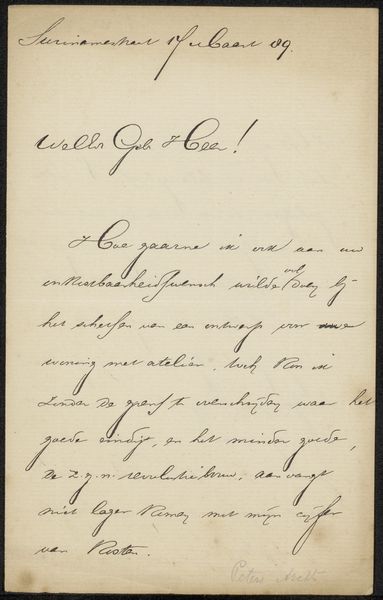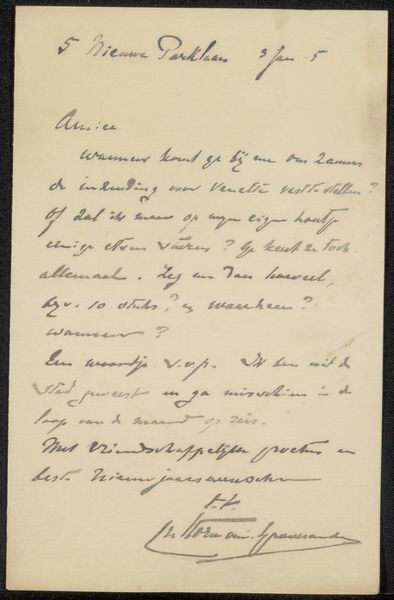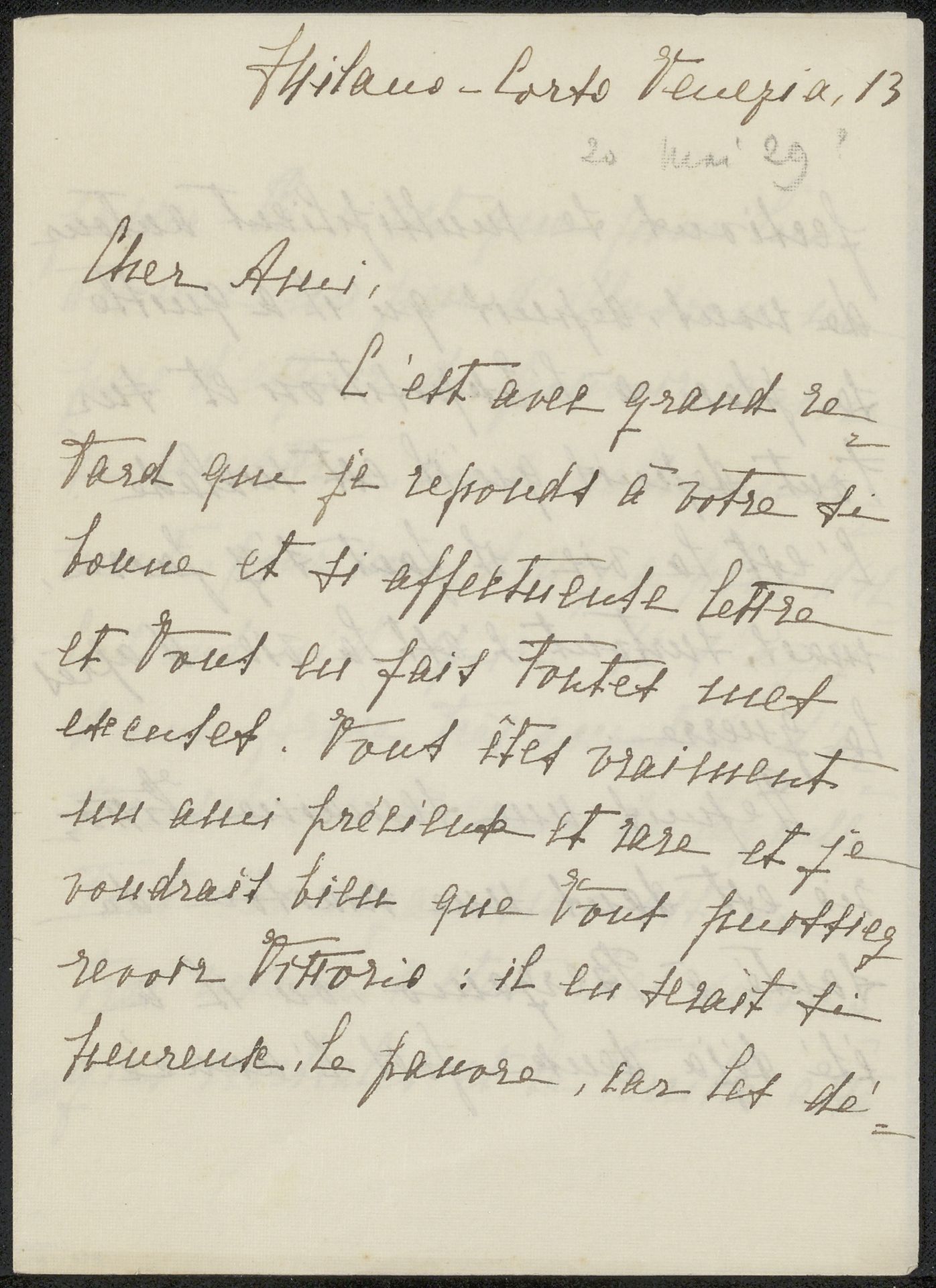
Possibly 1929
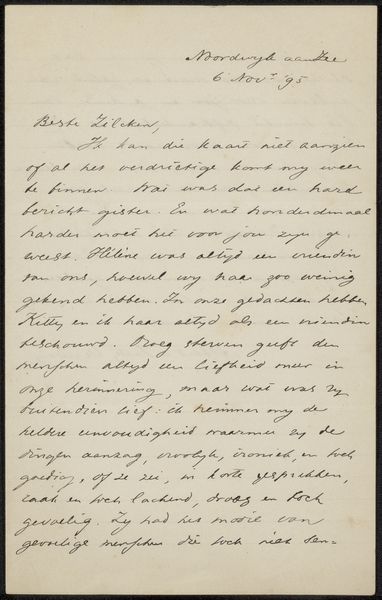
Brief aan Philip Zilcken

Listen to curator's interpretation
Curatorial notes
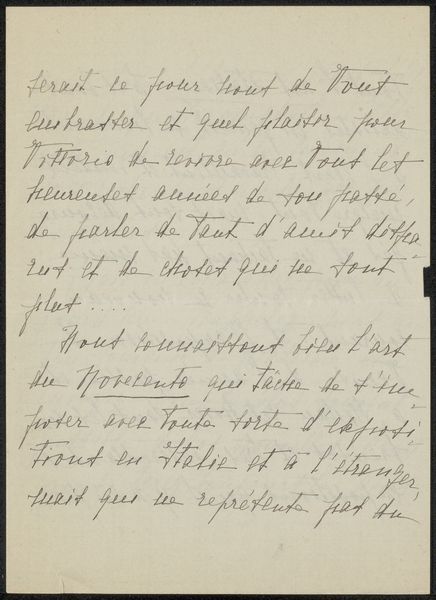
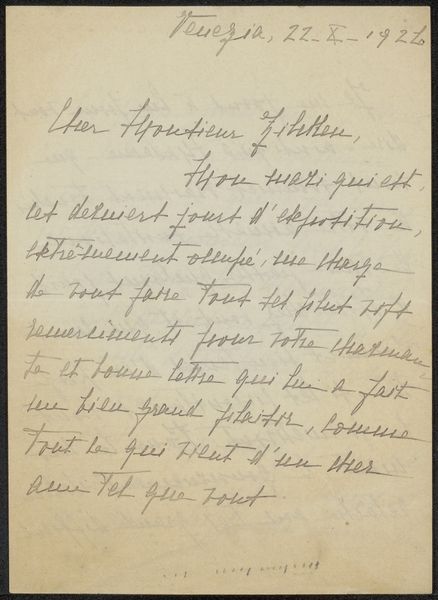
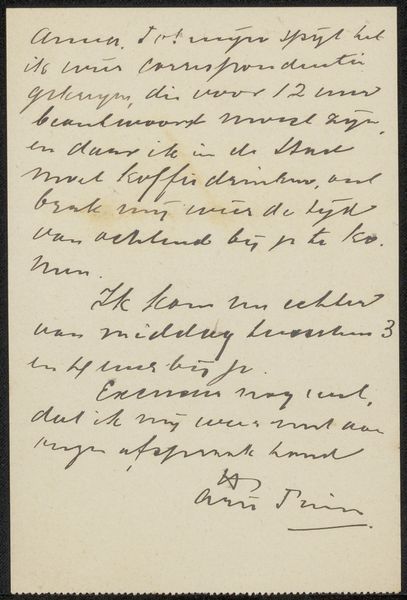
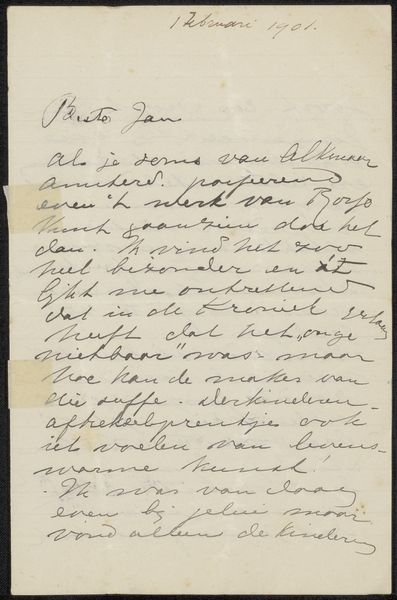
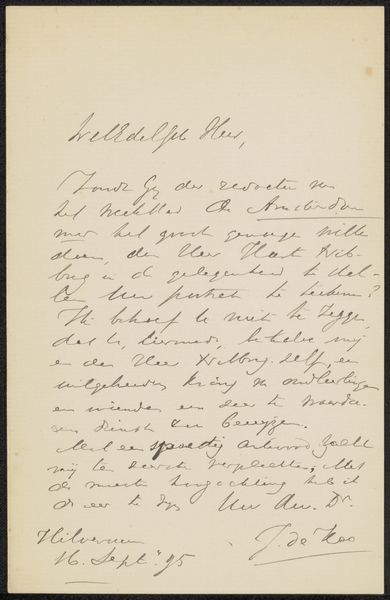
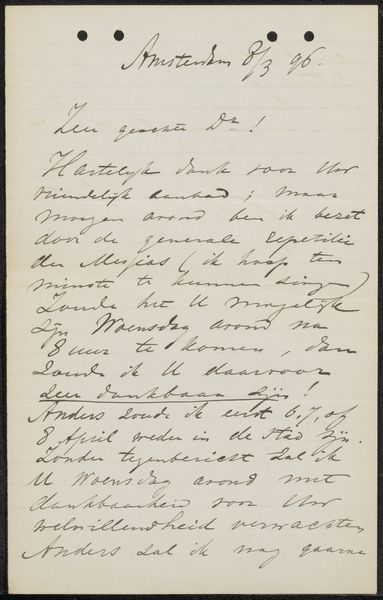
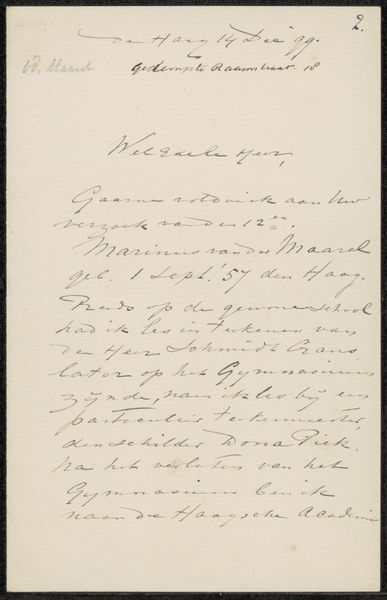
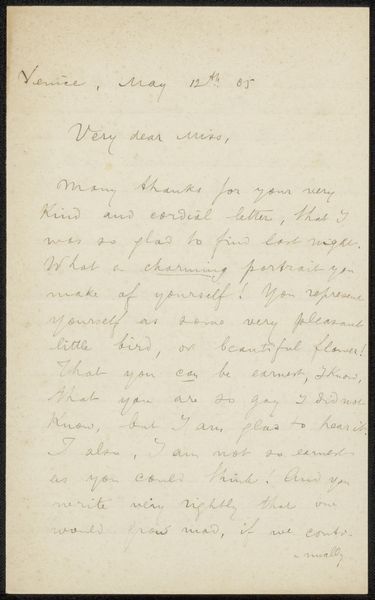
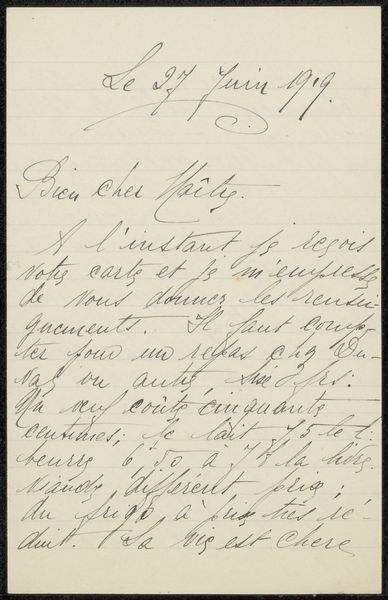
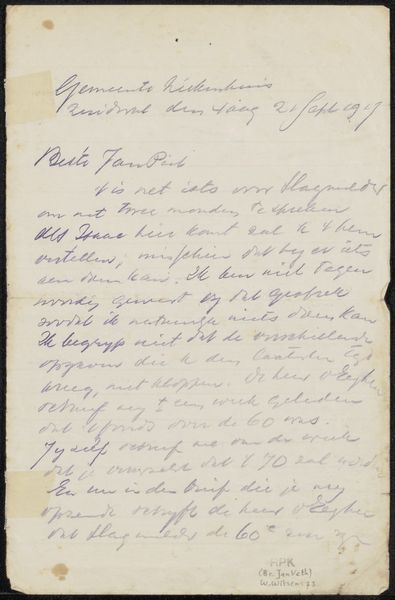
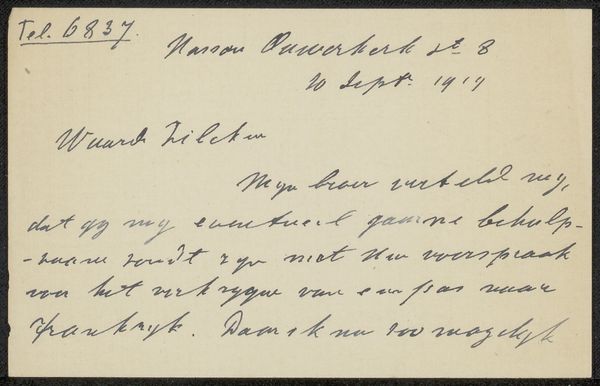
Curator: Seeing this handwritten letter gives me such a rush, like finding a time capsule meant just for my eyes! Editor: I can appreciate that enthusiasm. What we’re looking at is a letter, perhaps penned around 1929, titled "Brief aan Philip Zilcken." It seems to be a personal correspondence rendered in ink on paper. Curator: Exactly! It feels like an intimate peek into someone's world. The elegant calligraphy itself, slightly faded now, is so expressive. Look at those looping 'L's and swirling 'T's—there's a personality embedded right in the strokes. Editor: What strikes me is the way the handwritten text creates a dialogue across time, which is not without its sociopolitical context, when written language had unique power for many disenfranchised communities excluded from the mainstream narrative. Each word, formed with deliberation, resists the flattening effects of mechanical reproduction that have been further eroded by technology. Curator: I love that—resistance woven into ink! It's not just about the message; it’s about the human hand connecting directly with the paper, leaving a trace, a unique energy. Does that resonate at all with what we are thinking of in terms of "style" nowadays? I suppose some would relate it to sketchbooks. Editor: Perhaps "calligraphy" isn’t quite encompassing enough. We must consider how practices like hand-lettering provide alternative frameworks for creative resistance and historical recuperation within visual culture. Curator: Precisely! So this isn't simply writing; it’s visual poetry. It’s texture. Editor: It invites a conversation that bridges formal composition with radical expression. To truly decipher what it is that it suggests, it must become deeply interdisciplinary. Curator: Well, for me, this piece becomes not just a historical document, but also an active, breathing participant in our present, still whispering secrets to those who will listen. Editor: A sentiment I share. Looking closer reveals not merely the remnants of correspondence, but a reminder of art’s powerful capacity to link private reflections to expansive, enduring public dialogue.